
Dabney Carr
Virginia politician, brother-in-law of Thomas Jefferson
About Dabney Carr
Lived 1743 – 1773 (aged 29). Dabney Carr was an American.
Dabney Carr (October 26, 1743 – May 16, 1773) was a Virginia lawyer and militiaman who served a partial term in the House of Burgesses shortly before the American Revolutionary War. He is known for his friendship since boyhood with Thomas Jefferson and as the husband of Martha Jefferson, Thomas' younger sister. Carr introduced the Committee of correspondence in Virginia, which after his early death became a leading factor in formation of the Continental Congress. Pursuant to a boyhood pact, Jefferson buried Carr on Jefferson's Monticello estate in a newly created graveyard under a particular tree, and also helped oversee the upbringing of Carr's children, including politicians Peter and Samuel Carr and Judge Dabney Carr.
Early life and education Wren Building, College of William & Mary. With a construction history dating back to 1695, it is part of the college's ancient campus. Carr was born on October 26, 1743, to planter John Carr (1706–1778) and his second wife, Barbara Overton Carr (died 1794), daughter of Captain James and Elizabeth Overton. His planter father John, who attained the title of Colonel, also served as a justice of the peace and sheriff in Louisa County, and provided provisions to the patriot forces as the American Revolutionary War began not long after this man's death. Carr descended from early settlers and men who performed public service and had large landholdings throughout Virginia. His grandfather, Major Thomas Carr (1678-1738) had emigrated from England and developed a plantation in what became Caroline County (but was then King William County, which that Carr represented for a term in the House of Burgesses), as well as acquired lands to the west which his progeny would develop. Dabney had an older half-brother, Thomas who died not long after this boy's birth. His full siblings who reached adulthood were Samuel, Overton, Garland, Mary (who married cousin John Minor of Albemarle County), and Elizabeth. Both Jefferson and Carr then traveled to the colony's capital, Williamsburg to study law at College of William & Mary.
Marriage and children
Carr married Jefferson's younger sister, Martha Jefferson (May 29, 1746 - September 3, 1811), on July 20, 1765, and they lived in Goochland County at his plantation, Spring Forest.
In 1784, when Jefferson was leaving for Paris, he wrote to James Madison to entrust the education of Peter Carr, Dabney's oldest son, to him, saying "... it is the son of my friend, the dearest friend I know, who, had fate reversed our lots, would have been a father to my children."
Career As a young man, in 1763, Carr served in French and Indian War in the Volunteer Rangers under Captain Phillips and received a land bounty for his service. Relations between the colonists and the King of England were contentious by 1773 and a special session of the House of Burgesses was held by John Murray, Lord Dunmore, the governor of Virginia. The next day, a standing committee, which included Carr, began corresponding with other colonies. This became a factor in creating the Continental Congress in 1774. Carr died of a fever on May 16, 1773, at one of Jefferson's plantations but while Jefferson was away Pursuant to a boyhood promise, Jefferson buried Carr on the grounds of Monticello, the first person to be buried there, and ultimately next to Jefferson. His grave marker notes that Jefferson "of all men, loved him most."
At the time of Carr's death and Martha's widowhood, their children ranged in age from three weeks (Dabney) to six years (Jane). She was an active presence there, particularly after the death of Jefferson's wife, Martha. She was described as "a gifted woman, and every way worthy of her husband; and their married life was one of peculiar felicity." After what Thomas Jefferson described as "wasting complaint which has for two or three years been gaining upon her," Martha Jefferson Carr died in September 1811 and was buried at the Monticello family graveyard next to her husband
Don’t just read it —
keep it.
Full-length biographies made to live with: read them, listen on the way to work, watch them tonight.
- E-book
- Audio
- Video
Instant download · yours to keep · every purchase keeps this site free
Important facts
Family & relationships
People in Dabney Carr's life
Named in this biography and alive at the same time

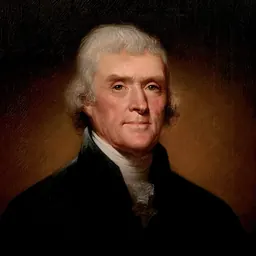

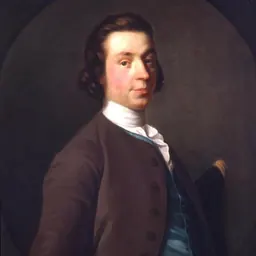
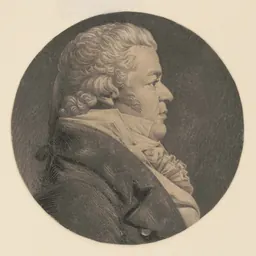

Contemporaries
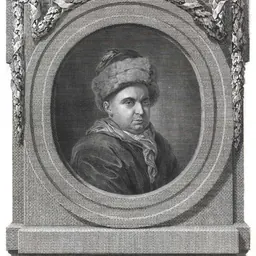
People whose lives overlapped Dabney Carr's




Frequently asked questions
Who was Dabney Carr?
Virginia politician, brother-in-law of Thomas Jefferson
When was Dabney Carr born?
Dabney Carr was born on 26 October 1743 in Louisa County.
When did Dabney Carr die?
Dabney Carr died on 16 May 1773.
What nationality was Dabney Carr?
Dabney Carr was American.
Sources & further reading
· DBpedia: Dabney Carr (Virginia assemblyman)
Cite this page
APA: Biography.guide. (2026). Dabney Carr. https://biography.guide/dabney-carr/
MLA: "Dabney Carr." Biography.guide, https://biography.guide/dabney-carr/.
Chicago: "Dabney Carr." Biography.guide. https://biography.guide/dabney-carr/.
Data last updated: 2026-09-22 · Spot an error? Report a correction.
Page generated 2026-09-27 05:26 UTC