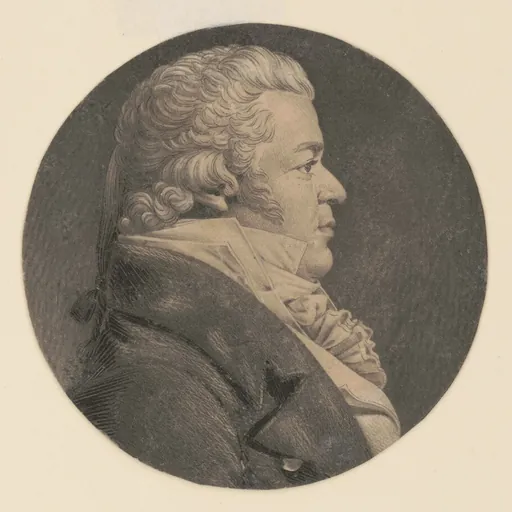
About Peter Carr
Lived 1770 – 1815 (aged 45). Peter Carr was an American politician.
Peter Carr (January 2, 1770 – February 17, 1815) was a Virginia planter, lawyer and politician who served several terms in the Virginia House of Delegates representing Albemarle County. While he founded an academy which evolved into the University of Virginia, he may now be known primarily for his correspondence with his uncle Thomas Jefferson, or for fathering children by enslaved women per the Jefferson–Hemings controversy.
Early life and education Carr was born in Goochland County, Virginia on January 2, 1770, to Dabney and Martha Jefferson Carr, sister to Thomas Jefferson. His father died when he was three years old, and his mother while initially remaining at their Spring Forest plantation, by 1781 moved to Monticello with her three sons and three daughters. While his younger brothers were educated in Maryland near the new national capital under an uncle's supervision (and ultimately married two of Overton Carr's daughters), Peter Carr was educated at a boarding school run by Rev. Walker Maury in Orange and continued after it was moved to Williamsburg. Carr then attended the College of William and Mary (1786–1789) and read law with first George Wythe, then Thomas Jefferson at Spring Forest and Monticello. By the time of his death, Carr also owned 199 acres that adjoined Carrsbrook, but only 14 slaves and ten horses. Carr's campaign for Virginia State Senate also failed.
Carr triggered the final breach between his uncle and George Washington by writing a seemingly sympathetic letter to the president on September 27, 1797 under the pseudonym "John Langhorne." Washington was suspicious, and John Nicholas (the Federalist clerk of Albemarle County, Jefferson's home county), informed Washington that "Langhorne" was actually Carr and leagued with Republican interests, and thus may have been attempting to bait Washington into revealing High Federalist principles. Nonetheless, Carr's exact purpose in writing the letter remains unknown.
Educator Carr long supported education, and in 1811, he opened up a short-lived academy at Carrsbrook. Eventually the Albemarle Academy evolved into the Central College then the University of Virginia.
Jefferson–Hemings controversy
In 1802 journalist James Thomson Callender claimed that Thomas Jefferson had fathered at least three sons and three daughters with one of his slaves, Sally Hemings. These claims were given some credence because of Jefferson's presence at Monticello during the time periods that the children were conceived and the lack of pregnancies when he was not present, but the controversy exploded long after both men had died, as discussed below.
Military service, death and legacy After British forces burned Washington, D.C. in August 1814, despite his corpulence and reputation for "extreme indolence", Carr joined the Virginia militia guarding approaches to Richmond, although the British armies instead moved northward against Baltimore. Carr returned home, but his delicate health worsened. Carr wrote Jefferson about his rheumatism, ague and fever two weeks before his death. Carr died in his home at Carrsbrook on February 17, 1815. Because his last will and testament requested that he be buried alongside his parents, he is presumed buried in the family cemetery at Monticello, but no grave marker survives. Further literary paternity analyses in the 1950s continued to blame the Carrs. However, in 1997 historian Annette Gordon-Reed made a strong case for Jefferson's paternity, prompting DNA analyses of descendants of Eston Hemings, which concluded neither Carr brother could have fathered that child, and suggested Jefferson as the father. Some scholars nonetheless give credence to these claims for Hemings' other children, or those of other enslaved women at Jefferson's residences.
Don’t just read it —
keep it.
Full-length biographies made to live with: read them, listen on the way to work, watch them tonight.
- E-book
- Audio
- Video
Instant download · yours to keep · every purchase keeps this site free
Important facts
Family & relationships
People in Peter Carr's life
Named in this biography and alive at the same time
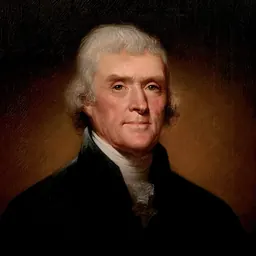

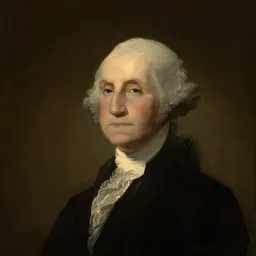
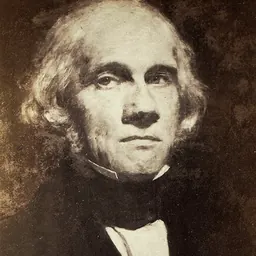



Related people
Same field, nearest in time



Contemporaries
People whose lives overlapped Peter Carr's



Frequently asked questions
Who was Peter Carr?
American politician, nephew of Thomas Jefferson (1770-1815)
When was Peter Carr born?
Peter Carr was born on 2 January 1770 in Goochland County.
When did Peter Carr die?
Peter Carr died on 17 February 1815 in Carrsbrook.
What was Peter Carr's occupation?
Peter Carr was a politician.
What nationality was Peter Carr?
Peter Carr was American.
Sources & further reading
· DBpedia: Peter Carr (Virginia politician)
Cite this page
APA: Biography.guide. (2026). Peter Carr. https://biography.guide/peter-carr-politician/
MLA: "Peter Carr." Biography.guide, https://biography.guide/peter-carr-politician/.
Chicago: "Peter Carr." Biography.guide. https://biography.guide/peter-carr-politician/.
Data last updated: 2026-09-22 · Spot an error? Report a correction.
Page generated 2026-09-27 05:10 UTC