
Crispijn van de Passe the Younger
German engraver, draughtsman and publisher (1594/5 - 1670)
About Crispijn van de Passe the Younger
Lived 1593 – 1670 (aged 76–77). Crispijn van de Passe the Younger was a German and Dutch engraver, draftsperson, painter, copper engraver, graphic artist and art theorist.
Backgammon players, first half of the 17th century. Amsterdam University Library
Sinne-beeld, tot ’s vaderlands welvaert, 1665. Caricature by Van de Passe showing William III of Orange as the saviour of the fatherland. The Dutch Maiden lies sick in bed. After the original print was banned from publication in 1665, Van de Passe created a new version. Rijksmuseum Crispijn (van) de Passe (born 1594/1595 in Cologne — buried 19 January 1670 in Amsterdam), also known as Crispijn (van) de Passe the Younger (Dutch: Crispijn (van) de Passe de Jonge) or Crispijn (van) de Passe (II), was a Dutch Golden Age engraver, draughtsman and publisher of prints. He was a member of the large printmaking Van de Passe family, son of the engraver and print publisher Crispijn van de Passe the Elder.
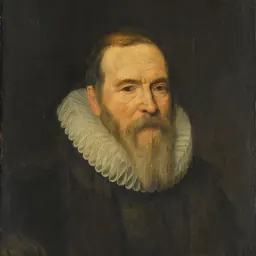
Work Originally close to his father in artistic style, he began to develop a remarkably fine, sketch-like use of the burin in the 1620s. He produced portraits of a number of prominent European royals and nobles, including the French royal couple Louis XIII and Marie de' Medici. He also portrayed Frederick Henry, Prince of Orange and other prominent members of Dutch society, such as Gerardus Vossius, Johan van Oldenbarnevelt and Piet Hein.
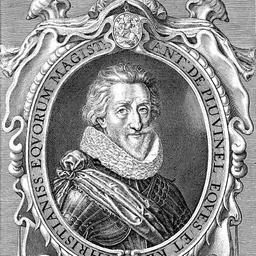
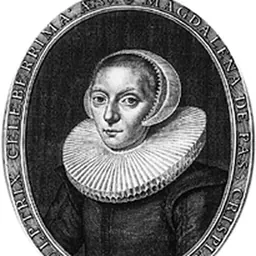
In addition to portraits, he produced engravings of Biblical and historical themes and book illustrations. He created 60 engravings for an influential work on dressage, Maneige royal by Antoine de Pluvinel (Paris, 1623), later published under the title L'Instruction du Roy en l'exercice de monter à cheval. Van de Passe's own Hortus Floridus, published in 1614—1616, was a collection of 160 engravings depicting flowering plants. The work was so popular that the original Latin edition was translated into Dutch, French and English. contained two verses dedicated to his sister, the engraver Magdalena van de Passe, who had died two years earlier. In 1643—1644 Joan Blaeu published Van de Passe's Van 't Licht der teken en schilderkonst., a book teaching drawing techniques.
Prints and other works by Van de Passe are in the collections of the Rijksmuseum in Amsterdam, Museum Boijmans Van Beuningen in Rotterdam, the Centraal Museum in Utrecht, the Metropolitan Museum of Art in New York City, the National Portrait Gallery in London and the National Gallery of Denmark in Copenhagen, among others.
Biography Van de Passe was a son of engraver and print publisher Crispijn van de Passe the Elder (1564—1637), a Mennonite from Zeeland who had fled from Antwerp to Germany, and Magdalena de Bock (died in 1635). Van de Passe was born during the period (1589—1611) when the family lived in Cologne. In 1611, the family was forced to leave Cologne and moved to Utrecht, where he, along with his brothers Simon (1595—1647) and Willem (c. 1597—c. 1637) and sister Magdalena (1600—1638) learned the art of engraving in their father's workshop.
In 1648 he married Geertraut van dem Brauch, also known as Geertruyt van den Broeck, who hailed from the German town of Solingen. Van de Passe found little success as an engraver in Amsterdam and died in poverty. He was buried in Amsterdam on 19 January 1670.
Don’t just read it —
keep it.
Full-length biographies made to live with: read them, listen on the way to work, watch them tonight.
- E-book
- Audio
- Video
Instant download · yours to keep · every purchase keeps this site free
Important facts
more
Krispiaen van de Pas de Jonghe, Crispijn van de (II) Passe, Crispin de Passe the Younger, Crispijn II de Passe, Cr. de Passe IIPeople in Crispijn van de Passe the Younger's life
Named in this biography and alive at the same time


Related people
Same field, nearest in time



Contemporaries
People whose lives overlapped Crispijn van de Passe the Younger's



Frequently asked questions
Who was Crispijn van de Passe the Younger?
German engraver, draughtsman and publisher (1594/5 - 1670)
When was Crispijn van de Passe the Younger born?
Crispijn van de Passe the Younger was born in 1593 in Cologne.
When did Crispijn van de Passe the Younger die?
Crispijn van de Passe the Younger died in 1670 in Amsterdam.
What was Crispijn van de Passe the Younger's occupation?
Crispijn van de Passe the Younger was an engraver, draftsperson, painter, copper engraver, graphic artist and art theorist.
What nationality was Crispijn van de Passe the Younger?
Crispijn van de Passe the Younger was German and Dutch.
Sources & further reading
· Wikipedia: Crispijn van de Passe the Younger
· DBpedia: Crispijn van de Passe the Younger
Cite this page
APA: Biography.guide. (2026). Crispijn van de Passe the Younger. https://biography.guide/crispijn-van-de-passe-the-younger/
MLA: "Crispijn van de Passe the Younger." Biography.guide, https://biography.guide/crispijn-van-de-passe-the-younger/.
Chicago: "Crispijn van de Passe the Younger." Biography.guide. https://biography.guide/crispijn-van-de-passe-the-younger/.
Data last updated: 2026-09-20 · Spot an error? Report a correction.
Page generated 2026-09-27 05:01 UTC