
About Johan van Oldenbarnevelt
Lived 1547 – 1619 (aged 71). Johan van Oldenbarnevelt was a Dutch politician, lawyer and diplomat.
Johan van Oldenbarnevelt (; 14 September 1547 – 13 May 1619), Heer van Berkel en Rodenrijs, Gunterstein (1611) and Bakkum (1613), was a Dutch statesman and revolutionary who played an important role in the Dutch struggle for independence from Spain.
Van Oldenbarnevelt was born in Amersfoort. He studied law at the universities of Leuven, Bourges, Heidelberg, and Padua, and traveled in France and Italy before settling permanently in The Hague. He favored William the Silent in his revolt against Philip II of Spain, and fought in William's army. In his later years he was a supporter of the Arminians during the religious-political controversy which split the young Dutch Republic. He was the founder of the Dutch East India Company.
Early political life
Van Oldenbarnevelt served as a volunteer for the relief of Haarlem (1573) and again at Leiden (1574). He was married in 1575 to Maria van Utrecht. In 1576 he obtained the important post of pensionary of Rotterdam, an office which carried with it official membership of the States of Holland. In this capacity his industry, singular grasp of affairs, and persuasive powers of speech speedily gained for him a position of influence. He was active in promoting the Union of Utrecht (1579) and the offer of the countship of Holland and Zeeland to William the Silent (prevented by William’s death in 1584). He was a fierce opponent of the policies of the Earl of Leicester, the governor‐general at the time, and instead favoured Maurice of Nassau, a son of William. Leicester left in 1587, leaving the military power in the Netherlands to Maurice. During the governorship of Leicester, Van Oldenbarnevelt was the leader of the strenuous opposition offered by the States of Holland to the centralizing policy of the governor.
Land's Advocate
On 16 March 1586, Van Oldenbarnevelt, in succession to Paulus Buys, became Land's Advocate of Holland for the States of Holland and West Friesland, an office he held for 32 years. This great office, given to a man of commanding ability and industry, offered unbounded influence in a multi-headed republic without any central executive authority. Though nominally the servant of the States of Holland, Van Oldenbarnevelt made himself the political personification of the province which bore more than half the entire charge of the union. As mouthpiece of the ridderschap (College of Nobles), with one vote in the States of Holland, he practically dominated that assembly. In a brief period, he became entrusted with such large and far-reaching authority in all details of administration, that he became the virtual Prime minister of the Dutch republic.
Holland declares sovereign independence (Scherpe Resolutie) The Advocate now took a bold step. He proposed that the States of Holland should, on their own authority, as a sovereign province, raise a local force of 4000 men (waardgelders) to keep the peace. His last words to the gathered crowd were: "Men, do not believe I am a traitor; I have acted sincerely and piously, as a good patriot, and I shall die this way." Van Oldenbarnevelt's last words to the executioner were purportedly: "Make it short, make it short." He was buried under the Court Chapel (Hofkapel) at the Binnenhof.
During Van Oldenbarnevelt's captivity, his servant Jan Francken kept a diary, forty pages long at the time of his execution; a copy was made by a pastor, the Rev Adrian Stolker, in 1825 for wider dissemination, but the original then disappeared until it was rediscovered in 2018 in Van Oldenbarnevelt's home city of Amersfoort.
Van Oldenbarnevelt left two sons: Reinier van Oldenbarnevelt, lord of Groeneveld, and Willem van Oldenbarnevelt, lord of Stoutenburg, and two daughters. A conspiracy against the life of Maurice, in which both sons of Van Oldenbarnevelt took part, was discovered in 1623. Stoutenburg, who was the chief accomplice, made his escape and entered the service of Spain; Groeneveld was executed.
Health Until 1612, van Oldenbarnevelt was rarely ill. He sometimes suffered, especially in 1610 and 1611, from gout and third-day fever or malaria tertiana. In February 1613 he fell during a visit to Huis Westcamp, which meant that he had to miss out for two weeks. At the age of seventy, he began to walk worse on stairs, and had rheumatic complaints. From 1617 he started walking with his iconic "stockske" (walking stick).
Namesakes The Nederland Line ship Johan van Oldenbarnevelt carried his name from 1930 to 1963. The school that he attended in Amersfoort, the former "Latin School", was also named after him, and still exists as the "Stedelijk Gymnasium Johan van Oldenbarnevelt". The Dutch fort on the Bacan Islands in the Moluccas in the 1600s was named for him. Furthermore, several streets and squares have been named after Johan van Oldenbarnevelt. Streets and squares named after van Oldenbarnevelt can be found in many Dutch cities, including Amsterdam, Rotterdam, Utrecht, Middenbeemster, and Bergen op Zoom.
Don’t just read it —
keep it.
Full-length biographies made to live with: read them, listen on the way to work, watch them tonight.
- E-book
- Audio
- Video
Instant download · yours to keep · every purchase keeps this site free
Important facts
People in Johan van Oldenbarnevelt's life
Named in this biography and alive at the same time
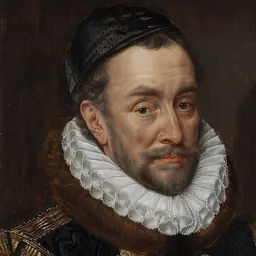
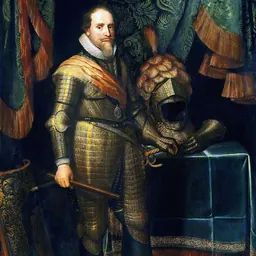

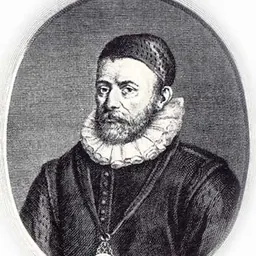


Related people
Same field, nearest in time
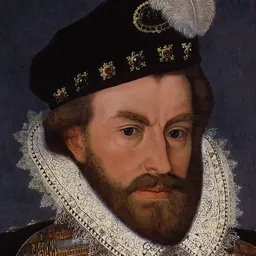


Contemporaries
People whose lives overlapped Johan van Oldenbarnevelt's

Frequently asked questions
Who was Johan van Oldenbarnevelt?
Dutch statesman and revolutionary (1547-1619)
When was Johan van Oldenbarnevelt born?
Johan van Oldenbarnevelt was born on 14 September 1547 in Amersfoort.
When did Johan van Oldenbarnevelt die?
Johan van Oldenbarnevelt died on 13 May 1619 in The Hague.
What was Johan van Oldenbarnevelt's occupation?
Johan van Oldenbarnevelt was a politician, lawyer and diplomat.
What nationality was Johan van Oldenbarnevelt?
Johan van Oldenbarnevelt was Dutch.
Sources & further reading
· Wikipedia: Johan van Oldenbarnevelt
· DBpedia: Johan van Oldenbarnevelt
Cite this page
APA: Biography.guide. (2026). Johan van Oldenbarnevelt. https://biography.guide/johan-van-oldenbarnevelt/
MLA: "Johan van Oldenbarnevelt." Biography.guide, https://biography.guide/johan-van-oldenbarnevelt/.
Chicago: "Johan van Oldenbarnevelt." Biography.guide. https://biography.guide/johan-van-oldenbarnevelt/.
Data last updated: 2026-09-26 · Spot an error? Report a correction.
Page generated 2026-09-27 05:13 UTC