
About Constantia Grierson
Lived 1706 – 1732 (aged 25–26). Constantia Grierson was a poet, scholar, writer and classical scholar.
Constantia Grierson (née Crawley; c. 1705 – 2 December 1732), was an editor, poet, and classical scholar from County Kilkenny, Ireland.
Life Constantia Crawley was born to an impoverished rural family in County Kilkenny. Her parents recognized her intelligence at an early age and encouraged her desire to learn. She was tutored in Hebrew, Greek, Latin, English, and French by her local vicar, but was mostly self-educated. According to one editor she was "a most excellent scholar, not only in Greek and Roman literature, but in history, divinity, philosophy, and mathematics: and what makes her character the more remarkable is, that she died so early as the age of 27, and that she acquired this great learning merely by the force of her own genius, and continual application." Laetitia Pilkington felt "her Learning appeared like the Gift poured out of the Apostles, of speaking all languages without the Pains of Study; or, like the intuitive Knowledge of Angels."
At about eighteen Crawley moved to Dublin and began to study midwifery under Dr. Van Lewen, a Dutch physician and the father of Laetitia Pilkington. She ceased her studies when she met printer and publisher George Grierson (c.1679–1753) for whom she edited many works. The date of their marriage is unrecorded. By 1727 she had edited titles in the pocket classics edition, including Terence's Comediae, to which she prefixed a Greek epigram from her own pen, inscribing it to Robert, son of Lord Carteret; in 1730 she edited the work of Tacitus, inscribing it to Lord Carteret himself.
Jonathan Swift was so impressed with her editing that he wrote to Alexander Pope on 6 February 1730: "She is a very good Latin and Greek scholar, and hath lately published a fine edition of Tacitus, and she writes carmina Anglicana non-contemnenda." The edition was also much praised by the classical scholar Edward Harwood and "her editions of Terence and Tacitus printed by Grierson were to be favoured by scholars for many generations."
Grierson played an important role in her husband's business and household, which included apprentices and journeymen as well as domestic servants. Highly regarded by Dublin's literary élite for her gifts as an editor as well as a poet, and for her remarkable memory, women from the landed gentry of Ireland were attracted to her and became some of her husband's most valued customers. Her husband emphasised her contributions in his successful petition to the Irish House of Commons in 1729 to be granted the patent for King's Printer: "the Editions corrected by her have been approved of, not only in this Kingdom, but in Great Britain, Holland and elsewhere, and the Art of Printing, through her care and assistance, has been brought to greater perfection than has been hitherto in this Kingdom."
In addition to her editorial work she was a poet. More than four decades after her death, she was praised in The Female Advocate (1775), Mary Scott's poem in praise of women writers and intellectuals.
Works
Editing Publius Virgilius Maro, P.V.M. opera. Nunc emendatiora, (ed.) (Dublin: G. Grierson, 1724). Publius Afer Terentius, P. Terentii Afri Comoediae ad optimorum exemplarium fidem recensitae. Praefixa sunt huic editioni Loca Menandri et Apollodori quae Terentius Latine interpretatus est. Accesserunt emendationes omnes Bentleianae. Editio novissima (ed.) (Dublin: G. Grierson, 1727). Publius Cornelius Tacitus, C. Cornelii Taciti Opera quae extant ex recensione et cum animadversionibus T. Ryckii. T. Ryckii de Vita et Morte Sigani Oratio, 3 vols. (ed.) (Dublin: G. Grierson, 1730). Sallust (unfinished)
Poetry "Poems on Several Occasions", Poems, ed. Mary Barber (London: Printed for the author, 1734) . The Poetry of Laetitia Pilkington (1712-1750) and Constantia Grierson (1706-1733), ed. Bernard Tucker (Lewiston, NY: Edward Mellen Press, 1996).
Don’t just read it —
keep it.
Full-length biographies made to live with: read them, listen on the way to work, watch them tonight.
- E-book
- Audio
- Video
Instant download · yours to keep · every purchase keeps this site free
Important facts
Family & relationships
People in Constantia Grierson's life
Named in this biography and alive at the same time
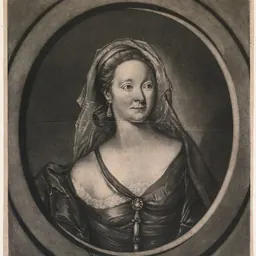
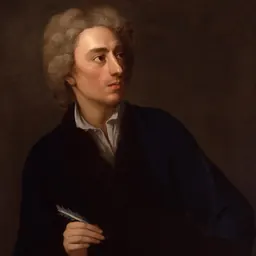
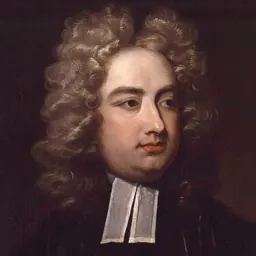



Related people
Same field, nearest in time
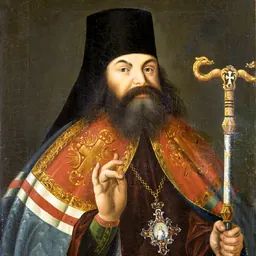


Contemporaries
People whose lives overlapped Constantia Grierson's





Frequently asked questions
Who was Constantia Grierson?
Irish writer
When was Constantia Grierson born?
Constantia Grierson was born in 1706 in Kilkenny.
When did Constantia Grierson die?
Constantia Grierson died on 2 December 1732 in Dublin.
What was Constantia Grierson's occupation?
Constantia Grierson was a poet, scholar, writer and classical scholar.
What nationality was Constantia Grierson?
Constantia Grierson's recorded nationality: Kingdom of Ireland.
Sources & further reading
· Wikipedia: Constantia Grierson
· DBpedia: Constantia Grierson
Cite this page
APA: Biography.guide. (2026). Constantia Grierson. https://biography.guide/constantia-grierson/
MLA: "Constantia Grierson." Biography.guide, https://biography.guide/constantia-grierson/.
Chicago: "Constantia Grierson." Biography.guide. https://biography.guide/constantia-grierson/.
Data last updated: 2026-09-20 · Spot an error? Report a correction.
Page generated 2026-09-27 05:08 UTC