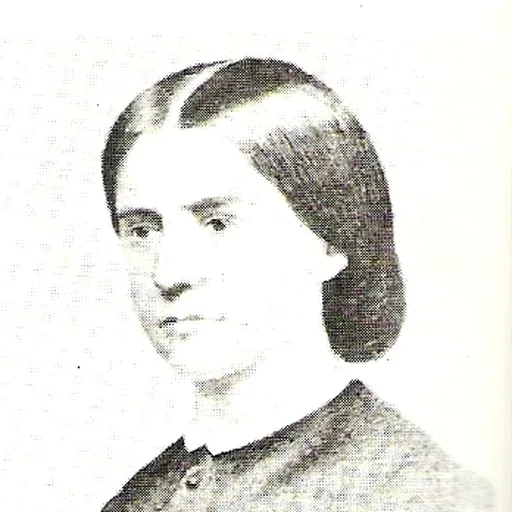
About Constance Kent
Lived 1844 – 1944 (aged 100). Constance Kent was a nurse.
Constance Emily Kent (1844–1944) was an English woman who confessed in 1865 to the murder of her half-brother, Francis Saville Kent, in 1860, when she was aged 16 and he aged three. The case led to high-level pronouncements that there was no longer any ancient priest-penitent privilege in England and Wales. Kent's death sentence was commuted to life imprisonment, and she was released after serving twenty years. In later life, she changed her name to Ruth Emilie Kaye, became a nurse and, for twenty years, was matron of a nurses' home in East Maitland, New South Wales. She died at the age of 100.
Early life Constance Kent was born in Sidmouth, Devon, England, on 6 February 1844, the fifth daughter and ninth child of Samuel Saville (or Savill) Kent (1801–1872), an Inspector of Factories for the Home Office, and his first wife, Mary Ann (1808–1852), daughter of prosperous coachmaker and expert on the Portland Vase, Thomas Windus of Stamford Hill, London. The child, still dressed in his nightshirt and wrapped in a blanket, had knife wounds on his chest and hands, and his throat was slashed so deeply that he was almost decapitated.
Francis's nursemaid, Elizabeth Gough, was initially arrested. However, Gough was released when the suspicions of Detective Inspector Jack Whicher of Scotland Yard moved to the boy's 16-year-old half-sister, Constance. She was arrested on 16 July but released without trial owing to public opinion against the accusations of a working-class detective against a young lady of breeding.
After the investigation collapsed, the Kent family moved to Wrexham and sent Constance to a finishing school in Dinan, France.
The substance of Constance's confession was that, after waiting until the family and servants were asleep, she had opened the shutters and window in the drawing room, taken Francis from his room wrapped in a blanket that she had taken from between sheet and counterpane in his cot (leaving both these undisturbed or readjusted), left the residence and then killed him in the privy-house with a razor stolen from her father. It had been necessary to hide matches in the privy-house beforehand for a light to see by during the act of murder. The murder was not a spontaneous act, it seems, but one of revenge, and it was suggested that Constance had at certain times been mentally unbalanced.
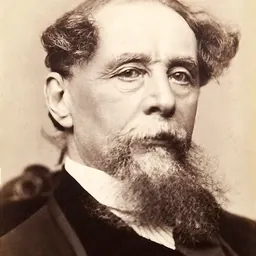
There was much speculation at the time that Constance's confession was false. Many supposed that her father, a known adulterer, was having an affair with Elizabeth Gough and murdered the child in a fit of rage after coitus interruptus. The theory fitted a pattern with the senior Kent, who had romanced the family nanny, Mary Drewe Pratt, while his first wife Mary Ann Kent (Constance's mother) was dying, and subsequently married Pratt (Francis's mother). Many were suspicious of the senior Kent from the start, including the novelist Charles Dickens.
However, in her book The Suspicions of Mr Whicher or The Murder at Road Hill House (2008), author Kate Summerscale concluded that if Constance's confession was indeed false and merely an act to shield another person, it was for the benefit of not her father but her brother, William Saville-Kent, with whom she shared a very close sibling relationship, which was further deepened by her father turning his paternal attentions away from the children of his first marriage to the children he had with his second wife. William was indeed suspected during the investigations but was never charged. Summerscale suggests that if William was not the culprit solely responsible for Francis's death, he was at least an accomplice to Constance.
Constance never recanted her confession, even after her father's and her brother's deaths. She also kept her silence about the motive for the murder. In all of her statements, she emphasised and insisted that she bore no hatred nor jealousy toward her half-brother. As a result of her research, Summerscale comes to the conclusion that no matter whether the murder of Francis was committed by Constance or William alone, or by both of them, it was an act of revenge against their father for turning his attention to the children of his second marriage, of whom Francis was his reported favourite. who wrote a pamphlet on the question of priest–penitent privilege. From the bishop's reply to Lord Westbury's answer to his letter, it is apparent that Lord Westbury had expressed the opinion that the 113th canon of 1603 simply meant that the "clergyman must not ex mero motu and voluntarily and without legal obligation reveal what is communicated to him in confession". He appears, also, to have expressed an opinion that the public was not at the time in a temper to bear any alteration of the rule compelling the disclosure of such evidence.
Later life Constance emigrated to Australia early in 1886 and joined her brother William in Tasmania, where he worked as a government adviser on fisheries.
In arts, media and entertainment
Film The anthology horror film, Dead of Night (1945), included in its five separate stories a section called "Christmas Party" with Sally Ann Howes as Sally O'Hara. This story is loosely based on the Constance Kent case; "Christmas Party" was an original screenplay based on an original story by the screenplay author Angus MacPhail. While playing hide-and-seek in an old house, Sally hears a child sobbing and comes into a bedroom where she meets a little boy named Francis Kent whose sister Constance is mean to him. Sally comforts the child, and then leaves him when he is asleep. Then she finds the others from the party and learns that Francis was killed by Constance over 80 years before.
Literature Mary Elizabeth Braddon used elements of the case in Lady Audley's Secret (1862). Charles Dickens based the flight of Helena Landless in The Mystery of Edwin Drood (1870) on Kent's early life. It won Britain's Samuel Johnson Prize for Non-Fiction in 2008. F. Tennyson Jesse included a chapter on the Constance Kent case in her 1924 study, Murder and Its Motives.
Television The eight-part BBC series about three female murderers, titled A Question of Guilt (1980), features Prue Clarke as Constance Kent and Joss Ackland as Samuel Kent. An episode of the Investigation Discovery channel series Deadly Women, "A Daughter's Revenge" (2010), features a segment on Constance Kent who is portrayed by Miranda Daisy Herman. The television film The Suspicions of Mr Whicher: The Murder at Road Hill House (25 April 2011, ITV) is a dramatization of the case. The Swedish crime TV series Veckans Brott (2012) had six special episodes about English murders, one of which was about the murder at Road Hill House.
Don’t just read it —
keep it.
Full-length biographies made to live with: read them, listen on the way to work, watch them tonight.
- E-book
- Audio
- Video
Instant download · yours to keep · every purchase keeps this site free
Important facts
People in Constance Kent's life
Named in this biography and alive at the same time





Related people
Same field, nearest in time

Contemporaries
People whose lives overlapped Constance Kent's
Frequently asked questions
Who was Constance Kent?
English murderer (1844–1944)
When was Constance Kent born?
Constance Kent was born on 6 February 1844 in Sidmouth.
When did Constance Kent die?
Constance Kent died on 10 April 1944 in Strathfield.
What was Constance Kent's occupation?
Constance Kent was a nurse.
Sources & further reading
Cite this page
APA: Biography.guide. (2026). Constance Kent. https://biography.guide/constance-kent/
MLA: "Constance Kent." Biography.guide, https://biography.guide/constance-kent/.
Chicago: "Constance Kent." Biography.guide. https://biography.guide/constance-kent/.
Data last updated: 2026-09-20 · Spot an error? Report a correction.
Page generated 2026-09-27 05:10 UTC