
About Conor O'Mahony
Lived 1594 – 1656 (aged 61–62). Conor O'Mahony was a writer and professor.
Conor O'Mahony (Irish: Conchobhar Ó Mathghamhna; 1594–28 February 1656) was an Irish Catholic priest, academic and author who belonged to the Society of Jesus. He was educated in Spain and Portugal, spending much of his life in the latter country. O'Mahony is best known for his 1645 work Disputatio apologetica de iure regni Hiberniae pro catholicis Hibernis adversus haereticos Anglos ("An Argument Defending the Right of the Kingdom of Ireland for Irish Catholics against English Heretics"), which, in the context of the Irish Confederate Wars was one of the most radical Irish nationalist arguments for full national sovereignty, calling for the restoration of the Gaelic kingship and creation of an explicitly Catholic state. Under the name "Mercurius Ibernicus" he is also the most likely candidate for having authored an anonymous news pamphlet in Lisbon.
Biography Early life and education O'Mahony was born in Muskerry, in what is today western County Cork. He was born during the last days of the Gaelic Kingdom of Desmond, which was under the rule of the MacCarthy dynasty. The O'Mahony (Ó Mathghamhna) clan were their kinsmen, as fellow members of the Eóganachta. His childhood was thus during the years of the Tudor conquest of Ireland and harsh suppression of the native Irish Catholic population.
He travelled to Habsburg Spain in 1614 for his education, attending Theobald Stapleton's Irish College in Seville. Here he graduated as a Master of Arts and a Doctor of Divinity, having studied philosophy and theology.
In the work, O'Mahony laid out all of the arguments used to legitimise the presence of the English monarchy in Ireland, from Laudabiliter onwards and seeks to debunk them point by point, using a legal and moral basis. he called upon the Irish Catholics to choose "a Catholic king, an indigenous or native-born Irishman who will be able to govern them as Catholics", as well as this, the remaining Protestant "heretics" in Ireland should either be driven out or killed. He warns the native Irish to be unified by a common cause in the campaign, as the English had always succeeded in playing Irish princes off against each other. Although the work was intended as a boost to the radical wing of the Catholic Confederacy; that of Owen Roe O'Neill and Cardinal Giovanni Battista Rinuccini, contrary to the more "moderate", compromising, pro-Stuart Old English Irish Catholic royalists who wanted to make peace with the Marquess of Ormond; it became a taboo and banned book. In general, the Confederates wanted to distance themselves from some killings of Protestant civilians which took place earlier in 1641 and also, leave the door open to at least the possibility of the rights of Catholics being restored under a Stuart monarchy. The Supreme Council of the Confederacy had it burned in Kilkenny and Franciscan Fr. Peter Valesius Walsh attacked it nine different sermons in St Canice's Cathedral. Even in Portugal, after pressure was applied by Sir Henry Compton, the book was condemned twice and banned by the state.
Influence and death Although it had minimal influence, the book had a quasi-Black Legend afterlife in politics. The radical faction within the Confederates referred to the Confederate Oath of Association as their foundation, rather than the Disputatio apologetica. Nevertheless, Sir Kenelm Digby, an English Catholic diplomat, who represented Charles I in Rome, complained that Cardinal Rinuccini tolerated the Disputatio apologetica (he had refused to hand Athlone priest Fr. John Bane over to the authorities after he was found with a copy) and for the Old English within the Irish Confederacy they feared that the book was on the backburner to endorse making Owen Roe O'Neill the High King of Ireland in place of the Stuart dynasty if the opportunity availed itself.
Sometime after the defeat of the Irish Confederates (and also the Irish Royalists) following the Cromwellian conquest of Ireland, O'Mahony did eventually go public with the fact that he had authored the document. He admitted this to Patrick Plunkett, the Bishop of Ardagh. Although he was healthy and in good shape, soon after, he suddenly fell ill and died at the Jesuit House in Lisbon on 28 February 1656. The circumstances of his death have never been fully investigated. The "go-to" reference work for the Irish view of the period has tended to have been the six-volume Commentarius Rinuccinianus compiled by Fr. Barnabas O'Ferrall and Fr. Daniel O'Connell (later edited by Fr. Stanislaus Kavanagh) and makes no mention of the work. Protestants used the document as evidence of "Catholic treason" sporadically, even printing copies in 1826 in the campaign against Catholic Emancipation. The work was finally translated into English from the Latin by John Minahane of the Aubane Historical Society in 2010.
Works Disputatio apologetica de iure regni Hiberniae pro catholicis Hibernis adversus haereticos Anglos — "An Argument Defending the Right of the Kingdom of Ireland for Irish Catholics against English Heretics" (1645)
The Prague-based Franciscan Fr. Anthony Bruodin published Propugnaculum Catholicae Veritatis — a catalogue of Irish Catholic martyrs under Henry VIII, Edward VI, Elizabeth I and James I — under the name of "Cornelius O'Mollony" (a reference to Conor O'Mahony), but O'Mahony was already dead in 1671 when it was published.
Don’t just read it —
keep it.
Full-length biographies made to live with: read them, listen on the way to work, watch them tonight.
- E-book
- Audio
- Video
Instant download · yours to keep · every purchase keeps this site free
Important facts
People in Conor O'Mahony's life
Named in this biography and alive at the same time
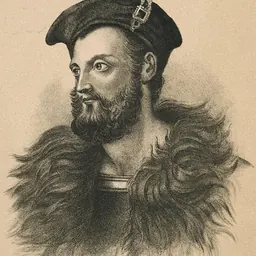
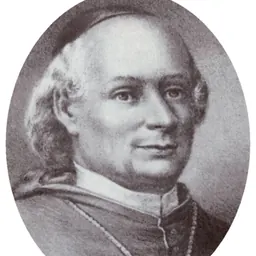





Related people
Same field, nearest in time

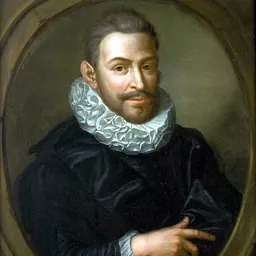
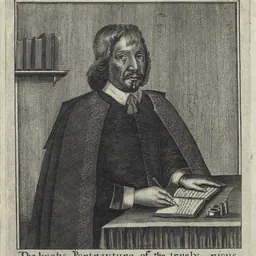
Contemporaries
People whose lives overlapped Conor O'Mahony's




Frequently asked questions
Who was Conor O'Mahony?
Irish Catholic priest
When was Conor O'Mahony born?
Conor O'Mahony was born in 1594.
When did Conor O'Mahony die?
Conor O'Mahony died on 28 February 1656 in Lisbon.
What was Conor O'Mahony's occupation?
Conor O'Mahony was a writer and professor.
Sources & further reading
· DBpedia: Conor O'Mahony (priest)
Cite this page
APA: Biography.guide. (2026). Conor O'Mahony. https://biography.guide/conor-o-mahony-writer/
MLA: "Conor O'Mahony." Biography.guide, https://biography.guide/conor-o-mahony-writer/.
Chicago: "Conor O'Mahony." Biography.guide. https://biography.guide/conor-o-mahony-writer/.
Data last updated: 2026-09-20 · Spot an error? Report a correction.
Page generated 2026-09-27 05:14 UTC