
About Kenelm Digby
Lived 1603 – 1665 (aged 61). Kenelm Digby was an English philosopher, diplomat, astrologer, bretteur, bibliophile and botanist.
Sir Kenelm Digby (11 July 1603 – 11 June 1665) was an English courtier and diplomat. He was also a highly reputed natural philosopher, astrologer and known as a leading Roman Catholic intellectual and Blackloist. For his versatility, he is described in John Pointer's Oxoniensis Academia as the "Magazine of all Arts and Sciences, or (as one stiles him) the Ornament of this Nation".
Early life and education Digby was born at Gayhurst, Buckinghamshire, England. He was of landed gentry stock, but his family's Roman Catholicism impeded his career. His father, Sir Everard, was executed in 1606 for his part in the Gunpowder Plot. Kenelm was sufficiently in favour with James I to be proposed as a member of Edmund Bolton's projected Royal Academy (with George Chapman, Michael Drayton, Ben Jonson, John Selden and Sir Henry Wotton). His mother was Mary, daughter of William Mushlo. His uncle, John Digby, was the first Earl of Bristol.
He went to Gloucester Hall, Oxford, in 1618, where he was taught by Thomas Allen, but left without taking a degree.
He spent three years on the Continent between 1620 and 1623, where Marie de Medici fell madly in love with him (as he later recounted). In 1623, in Madrid, Digby was appointed to the household of Prince Charles, who had just arrived there. Returning to England the same year, he was knighted by James I and appointed gentleman of the privy chamber to Charles. He was granted a Cambridge Master of Arts on the King's visit to the university in 1624.
Career Around 1625, he married Venetia Stanley, whose wooing he cryptically described in his memoirs. He had also become a member of the Privy Council of Charles I of England. As his Roman Catholicism hindered appointment to government office, he converted to Anglicanism.
Digby became a privateer in 1627. he arrived off Gibraltar on 18 January and captured several Spanish and Flemish vessels. He seized a Dutch vessel near Mallorca, and after other adventures gained a victory over the French and Venetian ships in the harbour of Iskanderun on 11 June.
At that period, public servants were often rewarded with patents of monopoly; Digby received the regional monopoly of sealing wax in Wales and the Welsh Borders. This was a guaranteed income; more speculative were the monopolies of trade with the Gulf of Guinea and with Canada. These were doubtless more difficult to police.
Marriage and children
Digby married Venetia Stanley in 1625.
Catholicism and Civil War Digby became a Catholic once more in 1635. He went into voluntary exile in Paris, where he spent most of his time until 1660. There he met both Marin Mersenne and Thomas Hobbes.
Returning to support Charles I in his struggle to establish episcopacy in Scotland (the Bishops' Wars), he found himself increasingly unpopular with the growing Puritan party. In the time between 1639 and 1640, he supported Charles I's expedition against the Presbyterian Scots. He left England for France again in 1641. Following an incident in which he killed a French nobleman, Mont le Ros, in a duel, he returned to England via Flanders in 1642, and was jailed by the House of Commons. He was eventually released at the intervention of Anne of Austria, and went back again to France. He remained there during the remainder of the period of the English Civil War. Parliament declared his property in England forfeit.
Queen Henrietta Maria had fled England in 1644, and he became her Chancellor. He was then engaged in unsuccessful attempts to solicit support for the English monarchy from Pope Innocent X. Digby was received by the government as a sort of unofficial representative of English Roman Catholics, and was sent in 1655 on a mission to the Papacy to try to reach an understanding. This again proved unsuccessful.
At the Restoration, Digby found himself in favour with the new regime due to his ties with Henrietta Maria, the Queen Mother. However, he was often in trouble with Charles II, and was once even banished from Court. Nonetheless, he was generally highly regarded until his death, a month before his 62nd birthday, from "the stone", likely caused by kidney stones. He was buried in his wife's tomb (which was damaged in the great fire of 1666), in Christ Church, Newgate Street, London.
Character and works Digby published a work of apologetics in 1638, A Conference with a Lady about choice of a Religion. He lived in a time when scientific enquiry had not settled down in any disciplined way. He spent enormous time and effort in the pursuits of astrology, and alchemy which he studied in the 1630s with Van Dyck.
Notable among his pursuits was the concept of the powder of sympathy. This was a kind of sympathetic magic; one manufactured a powder using appropriate astrological techniques, and daubed it, not on the injured part, but on whatever had caused the injury. His book on this mythical salve went through 29 editions. Synchronising the effects of the powder, which allegedly caused a noticeable effect on the patient when applied, was actually suggested in 1687 as a means of solving the longitude problem.
In 1644 he published together two major philosophical treatises, The Nature of Bodies and On the Immortality of Reasonable Souls. The latter was translated into Latin in 1661 by John Leyburn. These Two Treatises were his major natural-philosophical works, and showed a combination of Aristotelianism and atomism.
He was in touch with the leading intellectuals of the time, and was highly regarded by them; he was a founding member of the Royal Society His Discourse Concerning the Vegetation of Plants (1661) proved controversial among the Royal Society's members. It was published in French in 1667. Digby is credited with being the first person to note the importance of "vital air", or oxygen, to the sustenance of plants. He also came up with a crude theory of photosynthesis.
Digby is also considered the father of the modern wine bottle. During the 1630s, Digby owned a glassworks at Newnham-on-Severn and manufactured glass onions, which were globular in shape with a high, tapered neck, a collar, and a punt. His manufacturing technique involved a coal furnace, made hotter than usual by the inclusion of a wind tunnel, and a higher ratio of sand to potash and lime than was customary. Digby's technique produced wine bottles which were stronger and more stable than most of their day, and which due to their translucent green or brown color protected the contents from light. During his exile and prison term, others claimed his technique as their own, but in 1662 Parliament recognised his claim to the invention as valid.
In fiction Digby and his wife are the subjects of the 2014 literary novel Viper Wine by Hermione Eyre.
He is mentioned in Nathaniel Hawthorne's novel The Scarlet Letter. In the chapter titled "The Leech", the narrator describes the antagonist, Chillingworth, as having an impressive knowledge of medicine, remarking that Chillingworth claims to have been a colleague of Digby "and other famous men" in the study of natural philosophy. Digby's "scientific attainments" are called "hardly less than supernatural".
Digby also appears in Umberto Eco's novel The Island of the Day Before as "Mr. d'Igby". He explains the principle of his sympathetic powder (unguentum armarium) to the main character.
Don’t just read it —
keep it.
Full-length biographies made to live with: read them, listen on the way to work, watch them tonight.
- E-book
- Audio
- Video
Instant download · yours to keep · every purchase keeps this site free
Important facts
People in Kenelm Digby's life
Named in this biography and alive at the same time
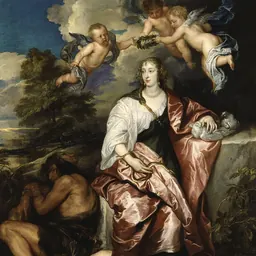
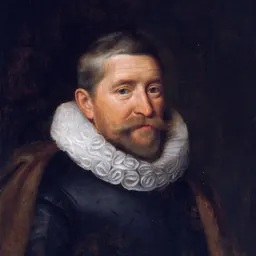

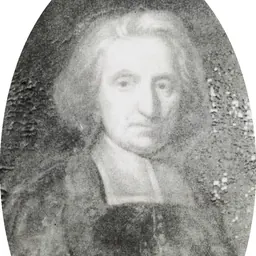

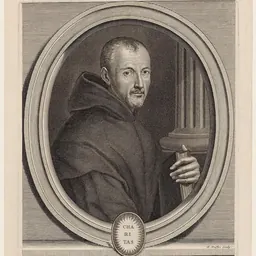

Related people
Same field, nearest in time

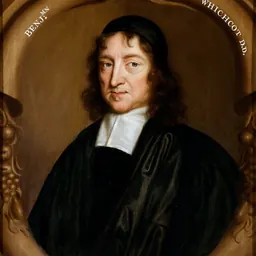
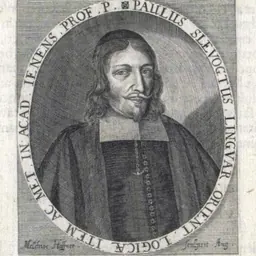

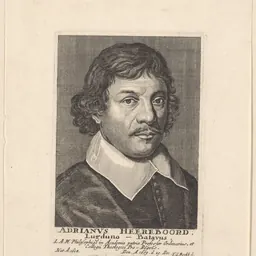
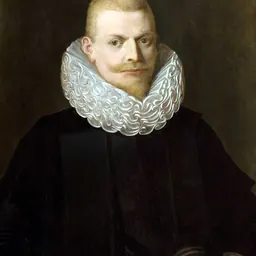
Contemporaries
People whose lives overlapped Kenelm Digby's





Frequently asked questions
Who was Kenelm Digby?
English courtier and diplomat (1603–1665)
When was Kenelm Digby born?
Kenelm Digby was born on 11 July 1603 in Gayhurst.
When did Kenelm Digby die?
Kenelm Digby died on 11 June 1665 in London.
What was Kenelm Digby's occupation?
Kenelm Digby was a philosopher, diplomat, astrologer, bretteur, bibliophile and botanist.
What nationality was Kenelm Digby?
Kenelm Digby was English.
Sources & further reading
Cite this page
APA: Biography.guide. (2026). Kenelm Digby. https://biography.guide/kenelm-digby/
MLA: "Kenelm Digby." Biography.guide, https://biography.guide/kenelm-digby/.
Chicago: "Kenelm Digby." Biography.guide. https://biography.guide/kenelm-digby/.
Data last updated: 2026-09-20 · Spot an error? Report a correction.
Page generated 2026-09-27 05:23 UTC