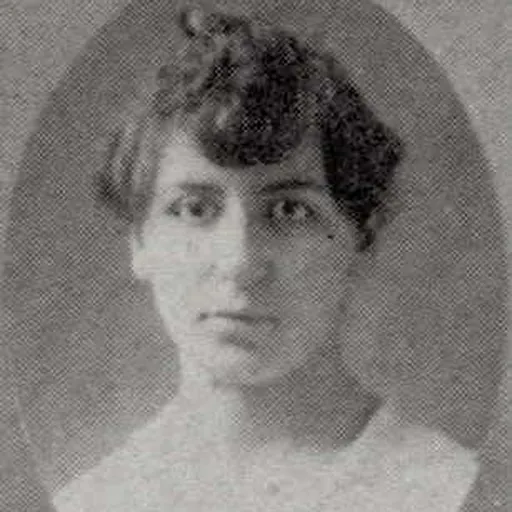
About Cleo Damianakes
Lived 1895 – 1979 (aged 84). Cleo Damianakes was an American illustrator, printmaker and painter.
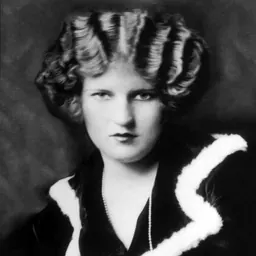
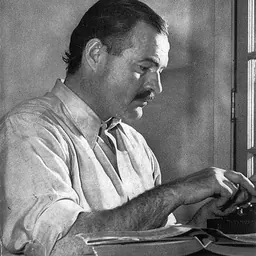
Cleo Theodora Damianakes (March 1, 1895 – August 27, 1979), nom de plume Cleon or Cleonike, was an American etcher, painter, and illustrator. She was widely known for designing dust jackets for Lost Generation writers in the 1920s and early 1930s, including cover art for the first editions of Ernest Hemingway's The Sun Also Rises and A Farewell to Arms, as well as F. Scott Fitzgerald's All the Sad Young Men, which were published by Charles Scribner's Sons. Other authors she designed covers for included novelists such as Zelda Fitzgerald, Conrad Aiken, John Galsworthy, and Arthur B. Reeve.
A Greek American, Damianakes was critically acclaimed for the classical Greek influence in her etchings, Her work is now part of the permanent collections of the National Gallery of Art, the Art Institute of Chicago, the Smithsonian American Art Museum, and others. Married to fellow artist and book jacket designer Ralph Brooks Wilkins, she was known later in life as Cleo Wilkins.
Early life and education Born in Berkeley, California in 1895, Cleo Damianakes was one of six children from a prominent Greek American family in the San Francisco Bay Area. was the founder and president of the California Peanut Company and a charter council member of the Holy Trinity Church, Cleo had four sisters, Alexandra, Marie, Stephanie, and Dorothy, with whom she performed Greek dance. She also had a brother named Solon. As a teen, her drawings were frequently published in St. Nicholas, the national literary magazine for children. She studied at The California School of Fine Arts in San Francisco, then enrolled in a two-year course in anatomy alongside medical students at the University of California.
Career
Etching exhibitions
Damianakes's artwork was exhibited in many galleries across the United States in the early 1920s. In 1921, The New York Times Book Review and Magazine published a reprint of her etching, The Boudoir, and noted her other works featuring "trees and dancers resembling one another, pillowy anatomies", and "Rosalindish daring and gaiety and irresponsibility". In 1922, the Chicago Society of Etchers awarded Damianakes the Frank G. Logan prize for her etching Fountain.
In 1923, Damianakes's The Oak Tree, was singled out as "extraordinary" in an exhibit in Boston, where 11 of her prints were on display. while The Art News noted that "She has gone back to the Greeks for motifs and her figures of dancing nymphs are at once graceful, decorative and superbly handled." Later that year, The Fruit Bearers by Damianakes was shown at the National Academy of Design in New York.
Covers for Hemingway
In 1925, "Cleon", the name she used to sign her commercial art during this period, designed the cover for the October issue of Scribner's Magazine. to appeal to "the feminine readers who control the destinies of so many novels".
For The Sun Also Rises, Damianakes etched a Hellenic figure lounging in front of a small desiccated tree, head bent, wearing a billowing robe exposing her left thigh. With her right hand draped over her left knee and an apple in the other hand, the design "breathed sex yet also evoked classical Greece." Published in October 1926, sales of The Sun Also Rises were strong for a debut novel, and went through three printings that year, with five more in 1927.
Damianakes found it more challenging to design a cover for Hemingway's A Farewell to Arms. In the same letter, he conceded, "I never liked the jacket on the Sun but side by side with this one The Sun jacket looks very fine now—So maybe this one is fine too..."
Following the success of A Farewell to Arms, Charles Scribner's Sons published Hemingway's In Our Time, a compilation of short stories which had first been published 1925 when he was relatively unknown. Once again, Cleon was selected to design the cover for the new edition of In Our Time, published by Scribners in October 1930. which Scribners debuted in February 1926. The first edition sold well, with three printings of 16,170 copies in 1926.
She also designed the front cover for Zelda Fitzgerald's only novel, Save Me the Waltz, published by Scribners in October 1932. For Harper & Brothers, she designed the cover for Arthur B. Reeve's Pandora (1926).
Damianakes's career as a commercial artist declined as her style fell out of fashion, and abstract art became vogue. In later years, she continued to enter her work into local art shows as Mrs. Cleo Wilkins, winning second prize for an oil painting from the Port Jefferson chapter of the Art League of Long Island in 1957, and second prize for her etching Girl With Fruit in Bay Shore, New York, in 1964. In 1975, her paintings and etchings were exhibited at the Parrish Art Museum, then located in Southampton, New York, under the name Cleonike Wilkins.
Personal life In 1924, she married Ralph Brooks Wilkins (1898–1986), a painter, designer, and illustrator, in Oakland, California, and was known socially as Cleo Wilkins. and designed book jackets for Harper, Scribners, Dodd Mead & Co., Morrow, Appleton-Century, and Farrar & Rinehart. In December 1925, his artwork depicting a scene in old Chester, England, appeared on the cover of Scribner's Magazine, which noted that he was "the husband of Cleo Damianakes, who did the October cover". Cleo Damianakes Wilkins died in Alameda, California, on August 27, 1979.
Legacy Five of Cleo Damianakes's etchings are in the permanent collection of the National Gallery of Art. Her work is also in the permanent collections of the Art Institute of Chicago, the Smithsonian American Art Museum, the Indianapolis Museum of Art, and the Fine Arts Museums of San Francisco.
Gallery
Don’t just read it —
keep it.
Full-length biographies made to live with: read them, listen on the way to work, watch them tonight.
- E-book
- Audio
- Video
Instant download · yours to keep · every purchase keeps this site free
Important facts
more
Cleo Theodora DamianakesPeople in Cleo Damianakes's life
Named in this biography and alive at the same time




Related people
Same field, nearest in time






Contemporaries
People whose lives overlapped Cleo Damianakes's




Frequently asked questions
Who was Cleo Damianakes?
American etcher and illustrator (1895–1979)
When was Cleo Damianakes born?
Cleo Damianakes was born on 1 March 1895 in Berkeley.
When did Cleo Damianakes die?
Cleo Damianakes died on 27 August 1979 in Alameda, California.
What was Cleo Damianakes's occupation?
Cleo Damianakes was an illustrator, printmaker and painter.
What nationality was Cleo Damianakes?
Cleo Damianakes was American.
Sources & further reading
Cite this page
APA: Biography.guide. (2026). Cleo Damianakes. https://biography.guide/cleo-damianakes/
MLA: "Cleo Damianakes." Biography.guide, https://biography.guide/cleo-damianakes/.
Chicago: "Cleo Damianakes." Biography.guide. https://biography.guide/cleo-damianakes/.
Data last updated: 2026-09-22 · Spot an error? Report a correction.
Portrait: Wikimedia Commons · author & licence
Page generated 2026-09-27 05:00 UTC