
Claudia Jones
Trinidad & Tobago-born black communist and political activist
About Claudia Jones
Lived 1915 – 1964 (aged 49). Claudia Jones was a journalist, political activist, activist and communist, known for Notting Hill Carnival and West Indian Gazette.
Claudia Vera Jones (; 21 February 1915 – 24 December 1964) was a Trinidad and Tobago-born journalist and activist. As a child, she migrated with her family to the United States, where she became a Communist political activist, feminist and Black nationalist, adopting the name Jones as "self-protective disinformation". Due to the political persecution of Communists in the US, she was deported in 1955 and subsequently lived in the United Kingdom. Upon arriving in the UK, she immediately joined the Communist Party of Great Britain and would remain a member for the rest of her life. In 1958, she founded Britain's first major Black newspaper, the West Indian Gazette (1958–1965), and from 1959 she organised a series of indoor Caribbean carnivals that have been cited as an influence on what became the Notting Hill Carnival, the second-largest annual carnival in the world.
Early life Claudia Vera Cumberbatch was born in Belmont, Port of Spain in Trinidad, which was then a colony of the British Empire, on 21 February 1915. When she was eight years old, her family emigrated to New York City following the post-war cocoa price crash in Trinidad.
United States career Despite Jones being academically bright, being classed as an immigrant woman severely limited her career choices. Instead of going to college, she began working in a laundry, and subsequently found other retail work in Harlem. During this time, she joined a drama group, and began to write a weekly column called "Claudia Comments" for a Black nationalist newspaper in Harlem, with a circulation of about 4,000–5,000 readers. She discovered that the editor had passed her writing off as his own, and she became "critical of the newspaper and its leadership". She went on to work on the YCL newspaper, the Weekly Review—first as a writer, and then as an associate editor, editor, and ultimately editor-in-chief. One of her earliest articles at the Weekly Review was a review of Richard Wright's 1940 novel Native Son. She represented the YCL at the Second World Youth Congress at Vassar College. As a member of the Communist Party USA and a Black nationalist and feminist, Jones made her main focus the creation of "an anti-imperialist coalition, managed by working-class leadership, fueled by the involvement of women." She campaigned for job training programs, equal pay for equal work, government controls on food prices, and funding for wartime childcare programs. Jones supported a subcommittee to address the "women's question". She insisted on the development in the party of theoretical training of women comrades, the organisation of women into mass organisations, daytime classes for women, and "babysitter" funds to allow for women's activism.
"An End to the Neglect of the Problems of the Negro Woman!" (1949) Jones's best-known work, "An End to the Neglect of the Problems of the Negro Woman!", published in 1949 in the magazine Political Affairs, exhibits her development of what later came to be termed "intersectional" analysis within a Marxist framework. In the article, Jones theorized a "layered" oppression faced by Black women due to race, gender, and economic status, concluding that advocacy for Black women was integral to the broader fight for social justice.
Building on Marx's theory of exploitation, Jones introduces the concept of "super-exploitation" of women, particularly Black women, who she describes as "the most oppressed stratum in the United States". In the article, she concludes that Black women are systematically pushed out of most productive industries and confined to low-paying (mainly domestic) employment, using income statistics from northeastern American cities evidencing the racial pay gap. According to Jones' analysis, the income disparity, compounded by other exploitative practices like high rents, further increased economic burdens on Black women and contributed to pervasive social and health issues among Black people, such as high maternal and infant mortality rates. Jones also makes a feminist argument against the exploitation of marginally employed Black women by their husbands, arguing that misogynistic dynamics within Black families allowed Black men to feel greater agency in a racist society. Simultaneously, she argues for the importance of Black women within their families will necessarily increase their militancy.
A section of the article is devoted to the continuous damage incurred by white chauvinist ideology, embodied in southern lynchings and what she terms "legal lynchings" in the north. Ingram also criticizes her fellow progressives for ingrown racism, noting the exclusion of Black women by white and Black party cadres and moves by white communist families to stymie integration between the black and white youth. Ingram concludes that the struggle for Black women's liberation is instrumental to the partnership of the Black and white working classes for equality and the defeat of "Wall Street imperialism". She notes the development of domestic workers unions and the then-contemporary case of Rosa Lee Ingram as urgent areas for development on the issue of Black women's rights. Widely regarded as a landmark text within the tradition of Black feminism, one scholar has gone as far as to identify it as the origin of cohesive Black feminist thought.
Deportation
An elected member of the National Committee of the Communist Party USA, Jones also organised and spoke at events. As a result of her membership of CPUSA and various associated activities, in 1948 she was arrested and sentenced to the first of four spells in prison. Incarcerated on Ellis Island, she was threatened with deportation to Trinidad.
Following a hearing by the Immigration and Naturalization Service, she was found in violation of the McCarran Act for being an alien (non-US citizen) who had joined the Communist Party. Several witnesses testified to her role in party activities, and she had identified herself as a party member since 1936 when completing her Alien Registration on 24 December 1940, in conformity with the Alien Registration Act. She was ordered to be deported on 21 December 1950.
In 1951, aged 36 and in prison, she suffered her first heart attack.
She was refused entry to Trinidad and Tobago, in part because the colonial governor Major General Sir Hubert Elvin Rance was of the opinion that "she may prove troublesome". On 7 December 1955, at Harlem's Hotel Theresa, 350 people gathered to see her off.
United Kingdom activism
Jones arrived in London two weeks later, at a time when the British African-Caribbean community was expanding. Upon her arrival, the Communist Party of Great Britain (CPGB) sent several Caribbean communists to greet her. These communist activists included Billy Strachan, Winston Pinder, and Jones's cousin Trevor Carter. However, on engaging the political community in the UK, she was disappointed to find that many British communists were hostile to a Black woman. She immediately joined the CPGB upon her arrival in Britain and remained a member until her death. She became involved in the British African-Caribbean community to organise both access to basic facilities, as well as the early movement for equal rights.
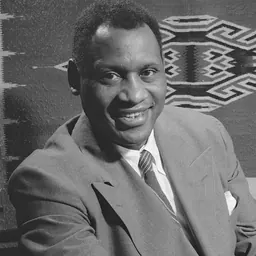
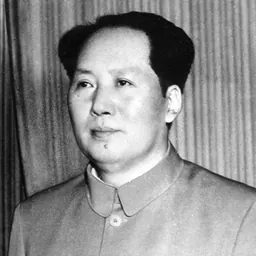
Supported by her cousin Trevor Carter, and her friends Nadia Cattouse, Amy Ashwood, Beryl McBurnie, Pearl Prescod and her lifelong mentor Paul Robeson, Jones campaigned against racism in housing, education and employment. She addressed peace rallies and the Trades Union Congress, and visited Japan, Russia, and China, where she met with Mao Zedong.
In the early 1960s, her health failing, Jones helped organise campaigns against the Commonwealth Immigrants Bill (passed in April 1962), which would make it harder for non-whites to migrate to Britain. To this end, she founded the Conference of Afro-Asian-Caribbean Organisations (CAACO). She also campaigned for the release of Nelson Mandela, and spoke out against racism in the workplace. The paper became a key contributor to the rise of consciousness within the Black British community.
Always strapped for cash, WIG folded eight months and four editions after Jones's death in December 1964. directed by Edric Connor (who in 1951 had arranged for the Trinidad All Steel Percussion Orchestra to appear at the Festival of Britain) and with the Boscoe Holder Dance Troupe, jazz guitarist Fitzroy Coleman and singer Cleo Laine headlining;
A footnote on the front cover of the original 1959 souvenir brochure states: "A part of the proceeds [from the sale] of this brochure are to assist the payments of fines of coloured and white youths involved in the Notting Hill events." Jones and the West Indian Gazette also organised five other annual indoor Caribbean Carnival cabarets at such London venues as Seymour Hall, Porchester Hall and the Lyceum Ballroom, which events are seen as precursors of the celebration of Caribbean Carnival that culminated in the outdoor Notting Hill Carnival that began on the streets in the mid-1960s.
Death
Jones died in London on Christmas Eve 1964, aged 49, and was found on Christmas Day at her flat. A post-mortem declared that she had suffered a massive heart attack, due to heart disease and tuberculosis. A message from Paul Robeson was read out:
Articles "Discussion Article", Political Affairs (August 1943) "For New Approaches to Our Work among Women", Political Affairs (August 1948) "Women Crusade for Peace," The Worker Magazine (1950) "100 Women's Delegates Back World Peace Plea", Daily Worker (1950) "International Women's Day and the Struggle for Peace", Political Affairs (March 1950) "Claudia Jones Writes from Ellis Island", Daily Worker (8 November 1950) "For the Unity of Women in the Case of Peace", Political Affairs (1951) "Warmakers Fear America's Women," Daily Worker (1951) "For the Unity of Women in the Cause of Peace!", Political Affairs (February 1951) "Foster's Political and Theoretical Guidance to Our Work among Women", Political Affairs (March 1951) "Call Negro Women to Sojourn for Justice", Daily Worker (20 September 1951) "Sojourners for Truth and Justice", The Worker Magazine (1952) "The Struggle for Peace in the United States", Political Affairs (1952) "Her Words Rang Out beyond the Walls of the Courthouse", Daily Worker (21 November 1952) "American Imperialism and the British West Indies", Political Affairs (April 1958) "The Caribbean Community in Britain", Freedomways (1964) "First Lady of the World: I Talk with Mme Sun Yat–Sen", West Indian Gazette and Afro-Asian Caribbean News (November 1964) "An End to the Neglect of the Problems of Negro Women, June 1949", Political Affairs (March 1974)
Book chapters "Claudia Jones," Communists Speak to the Court (1953)
Books Autobiographical History (6 December 1955 – unpublished) Claudia Jones: Beyond Containment: Autobiographical Reflections, Essays, and Poems (2011)
Legacy and influence
Impact on Journalism The National Union of Journalists' Black Members' Council holds a prestigious annual Claudia Jones Memorial Lecture every October, during Black History Month, to honour Jones and celebrate her contribution to Black-British journalism.
Many British communists have argued that her participation in the British communist movement has been both obscured and denied by organisations keen to use her image. to support and empower women and families of African-Caribbean heritage.
Feminist and Anti-Imperialist Legacy In May 2008, Caribbean-American academic Carole Boyce Davies published Left of Karl Marx: The Political Life of Claudia Jones, detailing Jones' radical political organising, writing, and enduring legacy as Black feminist Marxist. The name of Davies' book is also a nod to the resting place of Jones, in London's Highgate Cemetery, where she is buried to the left of Karl Marx's grave.
Jones is named on the list of 100 Great Black Britons (2003 and 2020) and in the 2020 book.
Recognition and Memorials
Theatrical and Film Portrayals
Plaque erected in 2023 by English Heritage at 6 Meadow Road, Vauxhall, Lambeth. Winsome Pinnock's 1989 play A Rock in Water was inspired by the life of Claudia Jones.
Jones is the subject of a documentary film by Z. Nia Reynolds, Looking for Claudia Jones (2010).
Jones appeared as a prominent character in Yasmin Joseph's 2019 play J'Ouvert, which premiered at Theatre 503 before transferring to the Harold Pinter Theatre in 2021.
Commemorative art and honours In August 2008, a blue plaque was unveiled on the corner of Tavistock Road and Portobello Road commemorating Claudia Jones as the "Mother of Caribbean Carnival in Britain".
In October 2008, Britain's Royal Mail commemorated Jones with a special postage stamp.
On 14 October 2020, Jones was honoured with a Google Doodle.
A sculpture of Claudia Jones by artist Favour Jonathan, created as part of the 2021 Sky Arts series Landmark, is on display at Black Cultural Archives in Brixton.
In January 2023, English Heritage announced that a blue plaque would be unveiled later that year on a house in Vauxhall that Jones shared for almost four years.
Public Acknowledgment In 2018 Jones was named by the Evening Standard on a list of 14 "Inspirational Black British women throughout history" (alongside Phillis Wheatley, Mary Seacole, Adelaide Hall, Margaret Busby, Olive Morris, Connie Mark, Joan Armatrading, Tessa Sanderson, Doreen Lawrence, Maggie Aderin-Pocock, Sharon White, Malorie Blackman, Diane Abbott and Zadie Smith).
Bustle magazine included Jones on a list of "7 Black British Women Throughout History That Deserve To Be Household Names In 2019", together with Mary Prince, Evelyn Dove, Olive Morris, Margaret Busby, Olivette Otele, and Shirley Thompson.
In June 2023, Jones was listed as one of the Windrush generation who struggled for civil rights in the UK.
Commemoration of the 100th anniversary of her birth Beginning in June 2014, various events celebrated Claudia Jones's centenary. Community Support led extensive research into her life, uncovering new details beyond the three existing biographies and films.
They organised A Claudia Jones 100 Day on 21 February 2015 at Kennington Park Estate Community Centre, including a guided tour of her two main London residences and the former West Indian Gazette office nearby.
There was also a celebration at The Cloth, in Belmont, Port of Spain, Trinidad and Tobago, near to her birthplace, on the same day.
The day was preceded by a film screening of Looking for Claudia Jones by Z. Nia Reynolds at the Claudia Jones Organization in Hackney.
Don’t just read it —
keep it.
Full-length biographies made to live with: read them, listen on the way to work, watch them tonight.
- E-book
- Audio
- Video
Instant download · yours to keep · every purchase keeps this site free
Important facts
People in Claudia Jones's life
Named in this biography and alive at the same time





Related people
Same field, nearest in time



Contemporaries
People whose lives overlapped Claudia Jones's




Frequently asked questions
Who was Claudia Jones?
Trinidad & Tobago-born black communist and political activist
When was Claudia Jones born?
Claudia Jones was born on 15 February 1915 in Port of Spain.
When did Claudia Jones die?
Claudia Jones died on 24 December 1964 in London.
What was Claudia Jones's occupation?
Claudia Jones was a journalist, political activist, activist and communist.
What was Claudia Jones known for?
Claudia Jones was known for Notting Hill Carnival and West Indian Gazette.
What nationality was Claudia Jones?
Claudia Jones's recorded nationality: Trinidad and Tobago.
Sources & further reading
Cite this page
APA: Biography.guide. (2026). Claudia Jones. https://biography.guide/claudia-jones/
MLA: "Claudia Jones." Biography.guide, https://biography.guide/claudia-jones/.
Chicago: "Claudia Jones." Biography.guide. https://biography.guide/claudia-jones/.
Data last updated: 2026-09-22 · Spot an error? Report a correction.
Page generated 2026-09-27 05:31 UTC