
Olive Morris
British community leader and Black feminist activist
About Olive Morris
Lived 1952 – 1979 (aged 27). Olive Morris was a British women's rights activist.
Olive Elaine Morris (26 June 1952 – 12 July 1979) was a Jamaican-born British-based community leader and activist in the feminist, black nationalist, and squatters' rights campaigns of the 1970s. At the age of 17, she was assaulted by Metropolitan Police officers following an incident involving Clement Gomwalk, a Nigerian diplomat in Brixton, South London. She joined the British Black Panthers, becoming a Marxist–Leninist communist and a radical feminist. She squatted buildings on Railton Road in Brixton; one hosted Sabarr Books and later became the 121 Centre, another was used as offices by the Race Today collective. Morris became a key organiser in the Black Women's Movement in the United Kingdom, co-founding the Brixton Black Women's Group and the Organisation of Women of African and Asian Descent in London.
When Morris studied at the Victoria University of Manchester, her activism continued. She was involved in the Manchester Black Women's Co-operative and travelled to China with the Society for Anglo-Chinese Understanding. After graduating, Morris returned to Brixton and worked at the Brixton Community Law Centre. She became ill and received a diagnosis of non-Hodgkin lymphoma. She died at the age of 27. Her life and work have been commemorated both by official organisations – Lambeth Council named a building after her – and by the activist group the Remembering Olive Collective (ROC). Friends and comrades recalled her as fearless and dedicated to fighting oppression on all levels. She was depicted on the B£1 note of the Brixton Pound and has featured on lists of inspirational black British women.
Early life Olive Morris was born on 26 June 1952 in Harewood, St Catherine, Jamaica. Her parents were Vincent Nathaniel Morris and Doris Lowena (née Moseley), and she had five siblings. When her parents moved to England, she lived with her grandmother and then followed them to South London at the age of nine. Her father was employed as a forklift driver and her mother worked in factories. Morris went to Heathbrook Primary School, Lavender Hill Girls' Secondary School, and Dick Sheppard School in Tulse Hill, leaving without qualifications. Lavender Hill Girls' School was attended by Morris and later closed down in 1979; Dick Sheppard School was for girls only until its closure in 1994 and was attended by Morris; She did not go to Tulse Hill School since it was for boys only. She later studied for O-Levels and A-levels, and attended a class at the London College of Printing (now named the London College of Communication).
Adult life and activism
In the late 1960s and early 1970s, black British activists embraced the multi-ethnic political discussions concerning black nationalism, classism and imperialism in Africa, Asia and the Caribbean, as well as in the United Kingdom. Their overriding goals were to find their identity, cultural expression and political autonomy by helping their own communities, and others with similar struggles.
Morris was drawn into this movement because it allowed her to affirm her Caribbean roots and blackness, while also providing a means for her to fight against problems affecting her community. African-American scholar Tanisha C. Ford observes that Morris was gender-nonconforming in the same way as the activists of the Student Nonviolent Coordinating Committee in the US, who cut their hair short and switched from wearing dresses and pearls to overalls. The Mercedes-Benz car he was driving bore a different number on the licence plate to that on the licence disc; police officers pulled him from the car and questioned him under the "sus law" (a stop and search power), disputing that he was a diplomat. A crowd formed around them and then a physical altercation took place. Local journalist Ayo Martin Tajo wrote up an account of the events a decade later which stated that Morris pushed through the crowd and attempted to stop the police hitting the diplomat; this led to the police assaulting her and several others. On Morris's own account as published in the Black People's News Service (the newsletter of the British Black Panthers), she arrived after Gomwalk had been arrested and taken away in a police van. This was a formative experience for Morris, who became a Marxist–Leninist communist and a radical feminist. Her politics were intersectional, focusing on racism worldwide whilst aware of the connections to colonialism, sexism and class discrimination.
British Black Panthers Morris decided to campaign against police harassment and joined the youth section of the British Black Panthers at the beginning of the 1970s. The group was not affiliated with the Black Panther Movement in the United States, but shared its focus on improving local communities. Morris was introduced to Altheia Jones-LeCointe, Farrukh Dhondy and Linton Kwesi Johnson and in August 1972, she attempted to meet Eldridge Cleaver, a leader of the US movement, in Algeria; travelling with her friend Liz Obi, she only made it as far as Morocco. They ran out of money and had to ask at the British consulate in Tangier for help to return home.
In the early 1970s, there were many court cases involving black activists on trumped up charges.
Upon the demise of the British Black Panthers, Morris founded the Brixton Black Women's Group with Obi and Beverley Bryan in 1973. It was critical of white feminism, finding that issues such as abortion and wages for housework were not central to the black experience, since participants were more concerned about childcare and getting paid for their cleaning jobs. The Advisory Service for Squatters used a photograph of Morris climbing up the back wall of the squat on the cover of its 1979 Squatters Handbook. Morris and Obi then moved on to another squat at 65 Railton Road.
The 121 squat later became an anarchist self-managed social centre known as the 121 Centre, which existed until 1999. C. L. R. James lived on the top floor of the building. The offices later became the Brixton Advice Centre. Locke had set up the Manchester Black Women's Co-operative (MBWC) in 1975 with Coca Clarke and Ada Phillips; Morris got involved and members later recalled her vigour. She also campaigned against the university's plans to increase tuition fees for overseas students.
Morris helped to establish a supplementary school after campaigning with local black parents for better education provision for their children, and a black bookshop.
At the conference, 300 African, Asian and Caribbean women from cities including Birmingham, Brighton, Bristol, Leeds, London, Manchester and Sheffield came together to discuss issues that concerned them, such as housing, employment, health and education. OWAAD aimed to be an umbrella group linking struggles and empowering women, whilst also opposing racism, sexism and other forms of oppression. The cancer treatment was unsuccessful and she died on 12 July 1979 at St Thomas' Hospital, Lambeth, at the age of 27. Her grave is at Streatham Vale Cemetery. The Brixton Black Women's Group published an obituary in the third issue of its newsletter praising Morris for her "total dedication to the struggles for liberation, democracy and socialism". In his 1980 poetry collection Inglan Is A Bitch, Linton Kwesi Johnson published "Jamaica Lullaby" in memory of Morris. Lambeth Council named its new building at 18 Brixton Hill after her in 1986, following a campaign by the Brixton Black Women's Group.
The naming of the building followed the 1985 Brixton riot, which had been triggered by the police shooting of Cherry Groce; it was demolished in 2020. A playground was also named after Morris in Myatt's Fields. It commemorated the life of Morris, collating information and situating her experiences within a broader history of black Brixton; the pamphlet Do You Remember Olive Morris? was published in 2010 and distributed to local schools in Lambeth. ROC set up the Olive Morris Memorial Awards in 2011, in order to offer financial support to women of African or Asian descent aged between 16 and 27. In 2019, the collective was re-launched as ROC 2.0 since the council building bearing Morris's name was scheduled for demolition and the group wanted to ensure that she would continue to be remembered.
Ford sees ROC as driven by community historians, who in the UK are often behind projects such as the Black Cultural Archives, the Feminist Library and the George Padmore Institute.
Morris is depicted on the B£1 note of the Brixton Pound, a local currency. In 2017, a mural entitled "SAY IT LOUD" was painted in the Blenheim Gardens housing estate in Brixton, as part of the Watch This Space initiative. It was painted by the South African artist Breeze Yoko and draws on his character "Boniswa", while also paying homage to Morris. In celebration of the 100th anniversary of most women gaining the right to vote in 2018, The Voice listed eight black women who have contributed to the development of Britain: Morris, Kathleen Wrasama, Connie Mark, Fanny Eaton, Diane Abbott, Lilian Bader, Margaret Busby, and Mary Seacole. Morris was also named by the Evening Standard on a list of 14 "Inspirational Black British Women Throughout History" alongside Seacole, Mark, Busby, Abbott, Claudia Jones, Adelaide Hall, Joan Armatrading, Tessa Sanderson, Doreen Lawrence, Maggie Aderin-Pocock, Sharon White, Malorie Blackman, and Zadie Smith. Morris was recognised with a Google Doodle in the UK on 26 June 2020 to mark what would have been her 68th birthday. Morris's life and activism was dramatised in the BAFTA-nominated 2023 short film The Ballad of Olive Morris.
In 2021, Olive Morris Court opened in Tottenham, on the site of a former storage yard. The project included 33 modular-homes designed to support people experiencing homelessness and rough-sleeping .
In October 2024, Morris was commemorated with an English Heritage blue plaque that was unveiled at 121 Railton Road.
Don’t just read it —
keep it.
Full-length biographies made to live with: read them, listen on the way to work, watch them tonight.
- E-book
- Audio
- Video
Instant download · yours to keep · every purchase keeps this site free
Important facts
People in Olive Morris's life
Named in this biography and alive at the same time
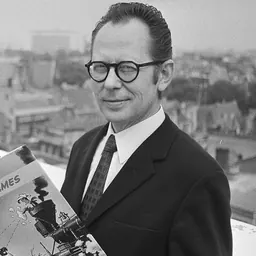

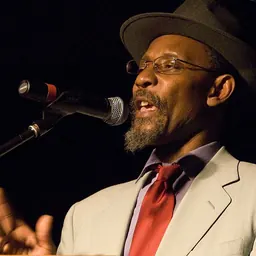


Related people
Same field, nearest in time



Contemporaries
People whose lives overlapped Olive Morris's




Frequently asked questions
Who was Olive Morris?
British community leader and Black feminist activist (1952-1979)
When was Olive Morris born?
Olive Morris was born on 26 June 1952 in Saint Catherine Parish.
When did Olive Morris die?
Olive Morris died on 12 July 1979 in St Thomas' Hospital.
What was Olive Morris's occupation?
Olive Morris was a women's rights activist.
What nationality was Olive Morris?
Olive Morris was British.
Sources & further reading
Cite this page
APA: Biography.guide. (2026). Olive Morris. https://biography.guide/olive-morris/
MLA: "Olive Morris." Biography.guide, https://biography.guide/olive-morris/.
Chicago: "Olive Morris." Biography.guide. https://biography.guide/olive-morris/.
Data last updated: 2026-09-22 · Spot an error? Report a correction.
Page generated 2026-09-27 05:31 UTC