
About Claude Hamilton Verity
Lived 1880 – 1949 (aged 69). Claude Hamilton Verity was an inventor, engineer and merchant.
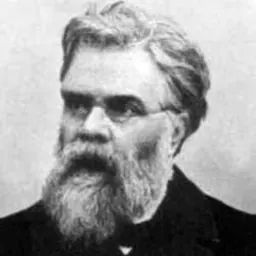
Claude Hamilton Verity (1 May 1880 – 15 August 1949) was an English hardware merchant, sound engineer and inventor, working mainly in Harrogate and Leeds, England. He was one of the earliest inventors of methods of synchronisation of sound with silent films. For that purpose, and working alone, he invented the Veritiphone, a sound box which could be operated by staff in cinema projection rooms. In the 1920s he demonstrated his invention in various locations in England, and also in New York for the Vitagraph Company of America.
Background Claude Hamilton Verity came from a Yorkshire family. His grandfather was railway ganger and stonemason Charles Verity, "a man of comparatively little education" who recalled "the days when he went from town to town in search of work, with his tools on his back, [and] the humble meals he was wont to eat under the shelter of the friendly hedge". He rose to be a wealthy contractor, building bridges and houses, and became mayor of Doncaster.
One of Verity's uncles was Charles Henry Verity, who, according to the South Yorkshire Times and Mexborough and Swinton Times completed his apprenticeship as an engineer at Manchester. He joined his father in railway and viaduct construction, then constructed the wagon building and repairing sheds in White Lee Road, Mexborough, purchased land, and built the wheel works. For over thirty years, and "principal in the firm of Verity & Son, wheel, tire (sic), and axle manufacturers at Swinton" as reported by the Bridlington and Quay Gazette. Another uncle was ironmonger Joshua Marland "Fred" Verity, who started the family hardware manufacturing and wholesale business Fred Verity & Son at 174-178 Lower Briggate and 60-68 Call Lane. This address was on part of the site where Louis Le Prince made his first moving picture. Edwin and his elder brother Fred, known as Verity Brothers, were brought up by their uncle James Rogers, a shoemaker and farmer, because their mother died in the year when Fred was born and Edwin was two years old. Edwin and Fred ran the hardware business together, and Edwin served on the Leeds Board of Guardians. Edwin moved or expanded his business to new premises at 189 Briggate, and continued in the business until his sudden death in 1909. By 1891 the family had moved to number 34 in the same street, his brother, Charles Frederick, was apprenticed as an ironmonger, and Claude (now spelled with an "e") was a scholar at board school. Verity and his brother inherited their father's business in 1909.
On 7 September 1917 in Kensington, Verity married Riva Alice Mary Seller, who was sixteen years his junior. They had three children: Diane "Diana" Faith Verity, and Stuart Hamilton Verity. By April 1921, Verity and his family were living at 9 East Park Road, Harrogate. At the end of his life, Verity was living in Torquay, Devon, and he played bowls at the Lynton and Lynmouth Bowling Club. Verity died in Devon on 15 August 1949.
Career During his early adult life, Verity's career was apparently unsettled. In 1901, the census shows a Leeds-born Claude Verity, aged 20, as a student of an agricultural college, living in a bedsit in Moot Villa, Moot Lane, Downton, Wiltshire. His father Edwin died suddenly of heart failure in 1909, and he and his brother inherited the family business, but by 1910 he was describing himself as an "engineering draughtsman" at Seacombe, Liverpool. In 1912 he was in Scarborough, the birthplace of his future wife.
[Verity's earliest experimentation was built on] the earlier experiments of Dickson's 1893 Kinetoscope, Gaumont's Paris demonstration of 1900, and Oskar Messters Kosmograph demonstrated in Berlin in 1903. Important though those efforts were, it was the general opinion that synchronisation was less than perfect, and it was this problem that Verity attempted to overcome in his laboratory [in Harrogate]. The main laboratory for his inventions between 1915 and 1920 was at the back of his home in Harrogate where, according to historian Malcolm Neesam: "it was reached by an external folding staircase which guaranteed complete privacy". In obtaining the required sound recordings, Verity was assisted by Julian Clifford and his musicians.
Verity worked for five years in secrecy before patenting his work. It was in effect a type of dubbing operation, in which he used the gramophone record system to record voice-actors synchronising their words with the lip-movements of silent-film actors. Much of the patented material concerned the maintenance of the synchronisation between gramophone and film playback. Nigel McClea, of Harrogate Civic Society, said:
In April 1922, the Yorkshire Evening News said that Verity was looking for financial backers, but "did not intend to work on the lines of a monopoly in regard to his invention". In 1921 and 1922, Verity was showing his synchronisation of sound and movement in film, first in Harrogate as described above, then in Bradford, London and Leeds, where "[his] system worked well and was popular".
By 1922, Verity was calling his invention the Veritiphone system, and by September of that year, he had improved its sound amplification. The Civil & Military Gazette of Lahore published a description of Verity's demonstration in the Waldorf Hotel, London, naming the apparatus as the Veritiphone. It said:
The new instrument is composed of an ordinary quite cheap sound-box, with a tone-arm, attached to the end of which an amplifying chamber is fitted. In this chamber is placed an electric element, and, by means of suitably-arranged holes in the sound-box and tone-arm, induced draught passes through, so that the apparatus is working under similar conditions to the human throat. Certainly, the result is excellent, and while one still cannot feel that the sounds are absolutely divorced from the mechanism producing them, the clearness in diction of the human voice was quite remarkable ... By means of amplifying instruments the volume of sound emitted can be graduated according to the size of the room. On 9 November 1923 Verity embarked for New York City on the RMS Aquitania, to be met on Ellis Island by J. Stuart Blackton, the vice president of the Vitagraph Company of America. In New York he showed his developments in "synchronisation of music and talking pictures". This led to Verity being mentioned in the New York press.
In June 1923, Kinematograph Weekly published a letter from Verity, who spelled his name "Claud" on this occasion. He defined the Veritiphone as the "Verity system of synchronised pictures". He said that he used two machines, the projector and the Veritiphone. This equipment could now be used in the projection room, instead of its previous position behind the projection screen, so that projection-room staff could "control synchronised production from the standard projectors at present fitted in any kinema where the synchroniser is installed".
In the New York Times on 20 January 1924, Verity had his say about the "technical difficulty of the sound film", "the prospects for the sound film" and Verity's improvements, and "the need for the sound film to reinvigorate the interest of audiences". He believed that the contemporary need to pad out silent film showings with music and additional acts, and the fact that small venues could not provide such additions, meant that silent film needed to provide more entertainment by itself. He wanted governments to support inventors and to invest in the future of sound and film. 28 August 1915. Patent no.12,394. "Synchronisation of Kinetograph and Photograph". 11 May 1916. Patent no. GB103407. "The synchronisation of machines for recording and reproducing sounds & movements".
Brown plaque On 13 August 2024 a planned recognition of Verity's achievement was announced. On 17 September 2025 at 9 East Park Road, Harrogate, the mayor of Harrogate Chris Aldred unveiled a brown plaque commemorating Verity's work. The exhibition was later held in the West Park Centre, Harrogate.
Don’t just read it —
keep it.
Full-length biographies made to live with: read them, listen on the way to work, watch them tonight.
- E-book
- Audio
- Video
Instant download · yours to keep · every purchase keeps this site free
Important facts
People in Claude Hamilton Verity's life
Named in this biography and alive at the same time



Related people
Same field, nearest in time


Contemporaries
People whose lives overlapped Claude Hamilton Verity's



Frequently asked questions
Who was Claude Hamilton Verity?
British inventor
When was Claude Hamilton Verity born?
Claude Hamilton Verity was born on 1 May 1880 in Leeds.
When did Claude Hamilton Verity die?
Claude Hamilton Verity died on 15 August 1949 in Newton Abbot.
What was Claude Hamilton Verity's occupation?
Claude Hamilton Verity was an inventor, engineer and merchant.
Sources & further reading
· Wikipedia: Claude Hamilton Verity
· DBpedia: Claude Hamilton Verity
Cite this page
APA: Biography.guide. (2026). Claude Hamilton Verity. https://biography.guide/claude-hamilton-verity/
MLA: "Claude Hamilton Verity." Biography.guide, https://biography.guide/claude-hamilton-verity/.
Chicago: "Claude Hamilton Verity." Biography.guide. https://biography.guide/claude-hamilton-verity/.
Data last updated: 2026-09-20 · Spot an error? Report a correction.
Page generated 2026-09-27 05:19 UTC