
About Claude André Deseine
Lived 1740 – 1823 (aged 82–83). Claude André Deseine was a French sculptor.
Claude-André Deseine (12 April 1740 – 30 December 1823) was a French sculptor and the elder brother of Louis-Pierre Deseine.
Life Deseine was the son of an artisan and his wife, and was one of many (perhaps more than fifteen) children. His father died in 1777 and a court ruled that Deseine, "being deaf and dumb from birth", could control his own income but had to have his possessions managed by guardians. Deseine had been a former pupil of l'Abbe de l'Eppe, a priest who had opened the world's first free school for the deaf, and developed a form of sign language.
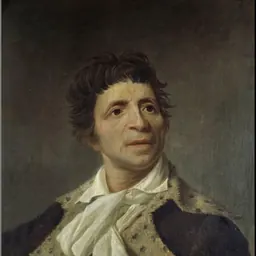
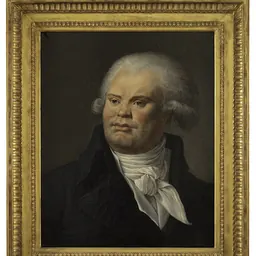
Deseine's work gained prominence during the French Revolution. The art historian Michael Levey has contrasted his Republican sensibilities, and the exaggerated character of his portrait studies, with the work of his royalist younger brother Louis-Pierre. Deseine was often at the Jacobin Club, where he obtained a prize for his 1791 bust of Mirabeau and sold a number of busts of other deputies. He successfully petitioned the Assembly for the right to make a full-size statue of l'Eppe based upon his earlier bust, but never completed this work: as time went on, all priests soon became objects of suspicion to the revolutionary authorities.
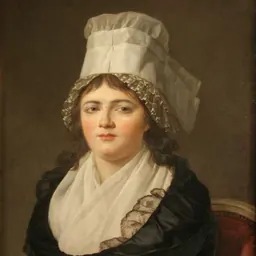
One of Deseine's more notorious commissions took place on the night of 17 February 1793. The sculptor was recruited by Georges Danton and brought to Sainte-Catherine cemetery, to the grave of Danton's recently deceased wife. The body of Antoinette Gabrielle Danton was excavated so that Deseine could make her death mask. This was then used to create an accurate commemorative bust.
After the fall of Robespierre in 1794 many Jacobins, including Deseine, went underground. Little is known of his later years.
Partial List of Works
Portrait bust of Madame Saint-Huberty (1783) Portrait bust of Voltaire (1783) Portrait bust of Rousseau (1783) Portrait bust of a young girl with wreath of flowers (1784) Portrait bust of l’Abbé de l’Épée (1786) Portrait bust of Muhammad Osman Khan (1788) Allegory of Liberty, with M. d'Orléans (1791) Portrait bust of Mirabeau (1791) Portrait bust of Robespierre (1792) Portrait bust of Antoinette Gabrielle Danton (1793) Portrait bust of Lepeletier de Saint-Fargeau (1793) Portrait bust of Jean-Paul Marat (1793) Portrait bust of Mucius Scaevola (1793)
Don’t just read it —
keep it.
Full-length biographies made to live with: read them, listen on the way to work, watch them tonight.
- E-book
- Audio
- Video
Instant download · yours to keep · every purchase keeps this site free
Important facts
People in Claude André Deseine's life
Named in this biography and alive at the same time

Related people
Same field, nearest in time




Contemporaries
People whose lives overlapped Claude André Deseine's





Frequently asked questions
Who was Claude André Deseine?
French artist (1740–1823)
When was Claude André Deseine born?
Claude André Deseine was born in 1740 in Paris.
When did Claude André Deseine die?
Claude André Deseine died on 30 December 1823 in Gentilly.
What was Claude André Deseine's occupation?
Claude André Deseine was a sculptor.
What nationality was Claude André Deseine?
Claude André Deseine was French.
Sources & further reading
· Wikipedia: Claude André Deseine
· DBpedia: Claude André Deseine
Cite this page
APA: Biography.guide. (2026). Claude André Deseine. https://biography.guide/claude-andre-deseine/
MLA: "Claude André Deseine." Biography.guide, https://biography.guide/claude-andre-deseine/.
Chicago: "Claude André Deseine." Biography.guide. https://biography.guide/claude-andre-deseine/.
Data last updated: 2026-09-20 · Spot an error? Report a correction.
Page generated 2026-09-27 05:26 UTC