
About Clarence Chamberlin
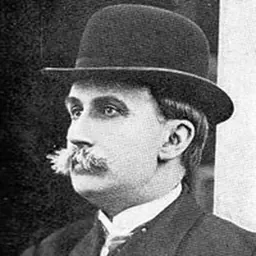
Lived 1893 – 1976 (aged 82). Clarence Chamberlin was an American aircraft pilot and flieger.
Clarence Duncan Chamberlin (November 11, 1893 – October 31, 1976) was an American aviation pioneer. He was the second man to pilot a fixed-wing aircraft across the Atlantic Ocean, from New York to the European mainland, while carrying the first transatlantic passenger.
Early life and education Clarence Duncan Chamberlin was born in the small town of Denison, Iowa, to Elzie "EC" Clarence and Jessie Duncan Chamberlin. "EC" was the local jeweler and the owner of the first automobile in Denison, which was notorious throughout Crawford County for the clattering sounds it emitted while in operation. Maintaining the vehicle was a near constant endeavor, and in this way Chamberlin first developed an interest in all things mechanical. Additionally, he found great delight in using his mechanical skills to repair the clocks and watches that would be brought into his father's jewelry shop on an almost daily basis. It was also in Denison that Chamberlin would see his first airplane, an early pusher type plane, which had put on a show for a Firemen's Convention that had been held in Denison. From that moment on, a desire grew within Chamberlin to one day take to the skies himself.
After completing his education in the Denison Public Schools system in 1912, Chamberlin enrolled at the Denison Normal and Business College. While at the school, Chamberlin took college prep courses to help him in his pursuit of a degree in electrical engineering at Iowa State College in Ames, Iowa. In order to pay for those classes, Chamberlin simultaneously worked nights as a tender for the Ft. Dodge, Des Moines, and Southern Railroad Company in the railroad's electrical power sub-station in Ankeny, Iowa. This arrangement forced Chamberlin to live on trains, where he would study, eat, and sleep during travel between work and classes. In 1914, Chamberlin left Denison Normal and Business College as a sophomore in order to run a local Harley-Davidson dealership. Yet Chamberlin aspired to even greater heights of public fame; he wanted to win the Orteig Prize, a $25,000 reward offered by New York hotel owner Raymond Orteig to the first aviator(s) to fly non-stop from New York City to Paris. However, before he could attempt such a flight, Chamberlin needed to show that he could stay up in the air long enough to cover the from New York to Paris. Chamberlin would do this by breaking the endurance record for flight, which at that time was held by Drouhin and Landry of France, who in August 1925 had stayed in the air for 45 hours, 11 minutes, and 59 seconds of continual flight.
On Tuesday, April 12, 1927, Chamberlin, along with friend and fellow aviator Bert Acosta, took off from Roosevelt Field in New York at 9:30 a.m. Loaded with of fuel and other necessities, they flew the Wright-Bellanca WB-2 monoplane (which would later be named Miss Columbia) back and forth over Long Island. While the flight was marred with difficulties, including accidentally-triggered gasoline cut-off valves and a lack of water for the pilots, it ultimately proved successful. On April 14—51 hours, 11 minutes, and 25 seconds after takeoff—Chamberlin and Acosta finally landed, having exceeded the Frenchmen's record by nearly six hours. "The craft had flown approximately 4,100 miles [3,600 nmi; 6,600 km], about 500 miles [430 nmi; 800 km] further than that needed for a New York to Paris flight and the $25,000 Raymond Orteig Prize." However, as Chamberlin so bluntly stated, "Bert and I had won a record, but had not won the right to fly the Bellanca to Paris".
Miss Columbia The Wright-Bellanca WB-2 monoplane—now called Miss Columbia—was designed by Giuseppe Bellanca. He had been commissioned by the Wright Aeronautical Corporation to produce a plane for their new J-5 Whirlwind engine. After breaking the endurance record for flight in 1927, Chamberlin would go on to use the plane later that same year to make his famous trans-Atlantic flight. While the WB-2 appeared to be "just another straightforward high-wing monoplane with clean if rather angular lines", it was, unlike others of its class, able to lift a huge payload. This was due mainly to two features: "a profiled fuselage and wide aerofoil-section wing struts, both [of which] contribut[ed] considerably to [the plane's] total lift.
Prior to Chamberlin's successful endurance flight, the WB-2 was purchased by Charles A. Levine, the wealthy, millionaire salvage dealer and the president of the Columbia Aircraft Corporation. Charles Lindbergh himself had tried to buy the plane before Chamberlin's endurance flight, but Levine refused Lindbergh's offer. Soon after its purchase, the "aeroplane was christened Miss Columbia by two little girls who performed the ceremony with ginger ale. Afterwards they were treated to a joy-ride by Clarence Chamberlin". However, the joy ride almost ended in tragedy when part of the undercarriage tore loose on take-off, but Chamberlin was able to safely and skillfully land the plane.
Miss Columbia holds the distinction of not only being the first plane to carry a trans-Atlantic passenger, but also of being the first plane to make the trans-Atlantic crossing twice. Three years after its record-breaking flight with Chamberlin, the now newly-renamed Maple Leaf—flown by Canadian Captain J. Erroll Boyd and U.S. Naval Air Service Lieutenant Harry P. Connor—flew the plane from Harbour Grace, Newfoundland, to Pentle Bay, Tresco, in the Isles of Scilly.
Transatlantic flight Chamberlin and Acosta's successful endurance flight convinced Levine that an attempt at a crossing of the Atlantic was feasible and that the Orteig Prize was within reach. In Chamberlin and Acosta, Levine had a superb flying team; however, in a move that surprised many, Levine replaced Acosta with Lloyd W. Bertaud, an acclaimed pilot of the east, as the navigator. However, near constant arguments over the choice of crew, the route to be followed, and whether wireless equipment should be installed plagued preparations for the Trans-Atlantic flight. Yet, it still appeared that Chamberlin and Bertaud would beat Charles Lindbergh as the first people to successfully cross the Atlantic. On May 19, Lindbergh even met with Chamberlin, who gave him his weather charts for the Atlantic Ocean. On May 20, Lindbergh took off for Paris and his date with destiny. Chamberlin, on the other hand, was still grounded by the court injunction and bad weather. However, while the injunction had been dropped, two questions remained to be answered: who would fly with Chamberlin? And what was the purpose of their flight going to be now that Lindbergh had beaten them for the Orteig Prize? Even Chamberlin's participation in the flight seemed uncertain. Levine had started to entertain doubts about Chamberlin, not because of his flying ability, but about his homely appearance, fearing he might not be photogenic enough to get much publicity. But in the end, Levine decided to keep Chamberlin. It was soon decided by the two men that since they could not achieve the distinction of being the first to cross the Atlantic via airplane, they would instead work to achieve the distance record, and outshine Lindbergh in that way. Exactly two weeks after Lindbergh's historic flight, Miss Columbia was ready to take off. The plane was grossly overloaded with 455 gallons of gasoline, food, water, and instrumentation, but in order for Chamberlin to beat the distance record, the overloading was a necessary evil. On June 4, 1927, Chamberlin was ready to begin his historic flight from Roosevelt Field; however, the plane still lacked a navigator.
Chamberlin responded in the affirmative, and construction began on a runway for the Leviathans deck under his supervision upon docking in Boston:
After the rains slackened, the seas calmed down, and all of the reporters were seasick, Chamberlin attempted takeoff:
Chamberlin's original destination was Teterboro Airport in Teterboro, New Jersey. Unfortunately, thick fog forced him to take a detour to Curtiss Field where he waited an hour for the fog to lift. He then took off for Teterboro Airport to deliver the "first ship-to-shore mail". He was greeted at the airfield by all 17 inhabitants of Teterboro and 15,000 others. With his days of breaking records coming to an end, Chamberlin switched his focus to designing, manufacturing and selling planes out of his factory in New Jersey. "Clarence Chamberlin's Aircraft Plant produced a line of aircraft that he'd intended airlines to use to transport passengers to all parts of the United States." The Chamberlin Eight-Seater—or Crescent Aircraft as it was more commonly known—"was an improved airplane incorporating designs that his ample flying experience had shown him were needed for a better aircraft". The plane could carry eight passengers in addition to the pilot, and featured "rest room facilities for the comfort of the passengers". During the 1930s, he traveled around the United States in his 26-passenger Curtiss Model 53 Condor plane giving rides to people, not so much as a "barnstormer" but as more of a hobbyist. His Curtiss Condor at the time was the largest passenger-carrying airship in the United States which landed on solid ground. Only the China Clipper, which could only land on water, and the Army bomber, which could not carry passengers, exceeded the Curtiss Condor in size. "His purpose for [traveling around the United States was] to take passengers for short flights at a nominal fee as a means of popularizing travel in passenger ships."
Chamberlin received recognition in his hometown when "On August 24, 1930, a Chamberlin Day took place at the Weberg brothers' airport [in Denison], which at that time was known as 'Weberg Airways Inc.'"
During the period of renewed hostilities in Europe, Chamberlin "trained workers in his aircraft factory to work in defense plants during World War II, giving the plants skilled workers. He trained several thousand such workers, [which greatly] assist[ed] the war effort". He went on to adopt her son, Philip (1925–2011), and the family added two more children with the births of Clarisse (b. 1940) and Kathy (b. 1942).
Final years and death In 1970, the city of Denison hosted a Flight Fair at the new Denison Municipal Airport to honor native aviators Clarence Chamberlin and Charles Fink, and to celebrate the airfield's new designation as Chamberlin-Fink Field. Chamberlin was unable to attend. In the years prior to 1977, Denison had planned to invite Chamberlin to return to the city for the celebration of the 50th anniversary of his Trans-Atlantic flight, but the aviator died on October 31, 1976 In the 1940s, he published a revised version of the book that included information about his adventures after the trans-Atlantic flight, and his efforts during World War II. On the cover, the newly revised book read Record Flights Book One, and below it, a second title was Give 'em Hell Book Two. and the Iowa Aviation Hall of Fame. The Clarence D. Chamberlin House is on the National Register of Historic Places.
Selected aviation records April 14, 1927 – Endurance Flight: 51 hours, 11 minutes, and 25 seconds June 4–6, 1927 – First Transatlantic Passenger Flight (Charles A. Levine, passenger) June 4–6, 1927 – Distance Flight: 3,905 miles Summer 1927 – First ship-to-shore flight off of the
In popular culture Clarence Chamberlin: Fly First & Fight Afterward, a documentary by independent filmmaker Billy Tooma, covers Chamberlin's life and historic transatlantic flight in great depth. The film saw its world première on April 21, 2011, at the Myrtle Beach International Film Festival and was nominated for the National Aviation Hall of Fame's 2011 Combs-Gates Award. The documentary was recut in 2017, in honor of the 90th anniversary of Chamberlin's flight, and re-released under its new title.
Don’t just read it —
keep it.
Full-length biographies made to live with: read them, listen on the way to work, watch them tonight.
- E-book
- Audio
- Video
Instant download · yours to keep · every purchase keeps this site free
Important facts
People in Clarence Chamberlin's life
Named in this biography and alive at the same time
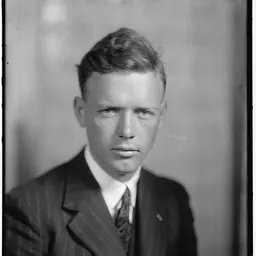
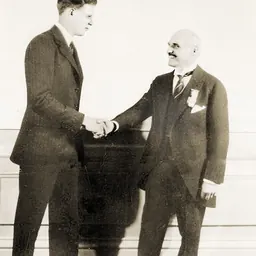
Related people
Same field, nearest in time
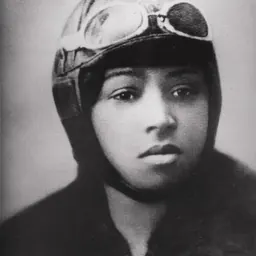
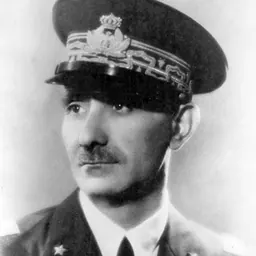


Contemporaries
People whose lives overlapped Clarence Chamberlin's


Frequently asked questions
Who was Clarence Chamberlin?
American aviator (1893-1976)
When was Clarence Chamberlin born?
Clarence Chamberlin was born on 11 November 1893 in Denison.
When did Clarence Chamberlin die?
Clarence Chamberlin died on 30 October 1976 in Derby.
What was Clarence Chamberlin's occupation?
Clarence Chamberlin was an aircraft pilot and flieger.
What nationality was Clarence Chamberlin?
Clarence Chamberlin was American.
Sources & further reading
· Wikipedia: Clarence Chamberlin
· DBpedia: Clarence Chamberlin
Cite this page
APA: Biography.guide. (2026). Clarence Chamberlin. https://biography.guide/clarence-chamberlin/
MLA: "Clarence Chamberlin." Biography.guide, https://biography.guide/clarence-chamberlin/.
Chicago: "Clarence Chamberlin." Biography.guide. https://biography.guide/clarence-chamberlin/.
Data last updated: 2026-09-26 · Spot an error? Report a correction.
Page generated 2026-09-27 05:14 UTC