
About Clara Reeve
Lived 1729 – 1807 (aged 78). Clara Reeve was a British novelist, writer and translator.
Clara Reeve (23 January 1729 – 3 December 1807) was an English novelist best known for the Gothic novel The Old English Baron. She also wrote an innovative history of prose fiction, The Progress of Romance (1785). Her first work was a translation from Latin, at the time a language unusual for a woman to learn. She was a near-contemporary of the bluestockings ladies of Elizabeth Montague's circle.
Biography Early life Clara Reeve was born in Ipswich, one of the eight children of Reverend William Reeve MA, Rector of Freston and of Kirton, Suffolk, and perpetual curate of St Nicholas, Ipswich. Her mother Hannah
Career After the death of her father in 1755, Reeve lived for a time with her mother and sisters in Colchester, where her sister Lucia ran a millinery, before moving into her own house in Ipswich. There her first piece of authorship was a translation from Latin of the historical allegory Argenis by John Barclay, which she entitled The Phoenix (1772).
Reeve published at least 24 volumes over a 33-year career as an author. It would have a noticeable influence on Mary Shelley's Frankenstein (1818).
Reeve also wrote an epistolary novel, The School for Widows (1791), followed by Plans of Education (1792), whose focus was on issues of female education. Her innovative history of prose fiction, The Progress of Romance (1785), can be seen as a precursor to modern histories of the novel. It specifically upholds the tradition of female literary history heralded by Elizabeth Rowe (1674–1737) and Susannah Dobson (died 1795). One story in the work, "The History of Charoba, Queen of Egypt", inspired Walter Savage Landor's first major piece, Gebir (1798).
Reeve seems to have managed her publishing career personally, rather than relying on male relations to deal with publishers on her behalf. Henrietta Mosse was to use this story as a model for her own novel, The Old Irish Baronet in 1808.
Although Reeve's The Progress of Romance, was long overlooked by scholars, Garry Kelly has called it "not only a pioneering history and defense of "romance" from antiquity to the mid-eighteenth century but also a ground- breaking work of literary scholarship by a woman". Secondly, Reeve also sought to find an appropriate formula for ensuring that fiction is believable and coherent. She spurned specific aspects of Walpole's style, such as his tendency to blend in humour or comedy that diminishes the Gothic tale's ability to induce fear. In 1777, Reeve enumerated Walpole's excesses: a sword so large as to require an hundred men to lift it; a helmet that by its own weight forces a passage through a court-yard into an arched vault, big enough for a man to go through; a picture that walks out of its frame; a skeleton ghost in a hermit's cowl... Although successive Gothic writers did not fully heed Reeve's emotional realism, she posited a framework that keeps Gothic fiction within the realm of the probable. This remained a challenge for authors after publication of The Old English Baron. Beyond its providential context, the supernatural often risked veering towards the absurd.
Works The Phoenix (1772), an abridged translation of John Barclay's Argenis The Champion of Virtue (1777), republished as The Old English Baron (1778) The Two Mentors: A Modern Story (1783) The Progress of Romance (1785) The Exiles, or, Memoirs of the Count de Cronstadt (1788) The School for Widows: A Novel (1791) Plans of Education (1792) The Memoirs of Sir Roger de Clarendon (1793) Destination, or, Memoirs of a Private Family (1799) Edwin, King of Northumberland: A Story of the Seventh Century (1802)
Don’t just read it —
keep it.
Full-length biographies made to live with: read them, listen on the way to work, watch them tonight.
- E-book
- Audio
- Video
Instant download · yours to keep · every purchase keeps this site free
Important facts
People in Clara Reeve's life
Named in this biography and alive at the same time
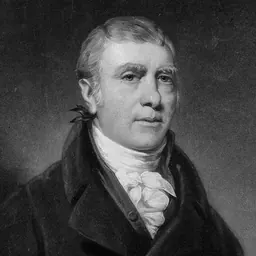
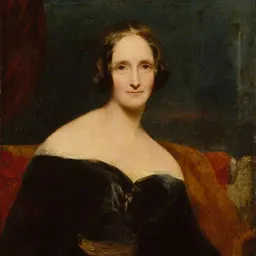
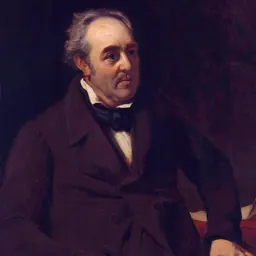
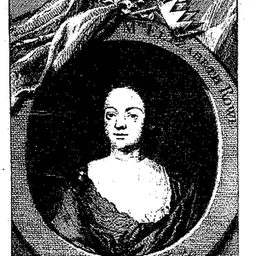


Related people
Same field, nearest in time
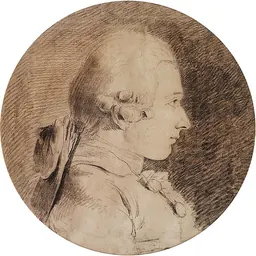

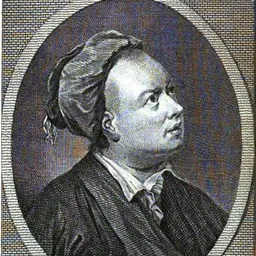
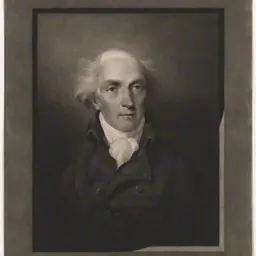

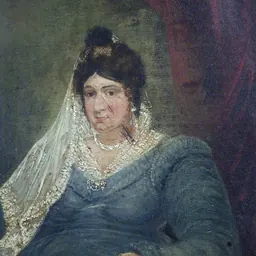
Contemporaries
People whose lives overlapped Clara Reeve's





Frequently asked questions
Who was Clara Reeve?
English writer, novelist, translator (1729-1807)
When was Clara Reeve born?
Clara Reeve was born on 23 January 1729 in Ipswich.
When did Clara Reeve die?
Clara Reeve died on 3 December 1807 in Ipswich.
What was Clara Reeve's occupation?
Clara Reeve was a novelist, writer and translator.
What nationality was Clara Reeve?
Clara Reeve was British.
Sources & further reading
Cite this page
APA: Biography.guide. (2026). Clara Reeve. https://biography.guide/clara-reeve/
MLA: "Clara Reeve." Biography.guide, https://biography.guide/clara-reeve/.
Chicago: "Clara Reeve." Biography.guide. https://biography.guide/clara-reeve/.
Data last updated: 2026-09-20 · Spot an error? Report a correction.
Page generated 2026-09-27 05:29 UTC