
About Cipriani Potter
Lived 1792 – 1871 (aged 78). Cipriani Potter was a British composer, pianist, music educator, music arranger and music teacher.
Philip Cipriani Hambly Potter (3 October 1792 – 26 September 1871) was an English composer, pianist, conductor and teacher. After an early career as a performer and composer, he was a teacher in the Royal Academy of Music in London and was its principal from 1832 to 1859.
Life and career Early years Potter was born in London to a musical family. He was the third son of the seven children of Richard Huddleston Potter (1755–1821), a flautist, violinist, and teacher, and his wife, Charlotte, née Baumgarten (1757–1837). The name Cipriani, by which he was known throughout his life, came from his godmother, who was said to have been a sister of the artist Giovanni Battista Cipriani.
When Potter was seven his musical instruction began, first with his father and then with Thomas Attwood, William Crotch and, from 1805 to 1810, Joseph Wölfl. The last, who, like Attwood, was a former pupil of Mozart, is considered by the biographer Philip Olleson to have been the teacher who most influenced the young Potter. At 21 Potter was accepted as an associate member of the recently founded Philharmonic Society, and was elected to full membership in 1815.
Vienna and concert career In 1817, Potter travelled to Vienna, where he stayed for eight months, before moving on to other cities in Austria and Germany and then going to Italy. Looking back at Potter's life, the composer and academic Sir George Macfarren observed in 1884 that Potter's temporary residence in continental Europe was "as much for the purpose of study as for the sake of obtaining experience of other musical performances than were to be heard in London. At that time London was not, as it is now, the centre of all that is to be heard in music."
In Vienna, Potter met Beethoven, who approved of him but declined to teach him composition, advising him to study with Aloys Förster. During his time in Italy, Potter developed an admiration of Italian opera, and particularly the works of Rossini. Twelve years later he wrote Variazioni di bravura on a theme by Rossini, using a melody from Matilde di Shabran.
Returning to England in 1819, Potter became a central figure in London concert life as both a pianist and conductor. He regularly programmed the piano concertos of Mozart, which were scarcely known in London: there had been only six performances of a Mozart piano concerto there before Potter's return. |group= n He also gave the English premieres of Beethoven's Third and Fourth piano concertos.
Overture in E minor (1815, revised 1848) Symphony [No. 1] in G minor (1819, revised 1824–26 & 1833) [styled No. 1 by the composer] Symphony [No. 2] in B major (1821, revised 1839) [unnumbered by the composer] Symphony [No. 3] in C minor (1826) [styled No. 6 by the composer] Symphony [No. 4] in F major (1826) [styled No. 7 by the composer] Symphony [No. 5] in E major (1828, revised 1846 with replacement slow movement) [styled No. 8 by the composer] Symphony [No. 6] in G minor (1832) [styled both No. 10 and No. 2 in G minor by the composer] Symphony [No. 7] in D major (1833) [styled No. 2 in D major by the composer] Symphony [No. 8] in C minor (1834) [unnumbered by the composer] Symphony [No. 9] in D major (1834) [styled No. 4 in D major by the composer] Antony and Cleopatra, overture (1835) Cymbeline, overture (1836) The Tempest overture (1837) March (1854)
Concertante Introduction and Rondo Alla Militaire for piano and orchestra (1827) Duo concertante for piano, violin and orchestra (1827) Concertante for violin, cello, double bass, piano and orchestra on Les folies d'Espagne Bravura Variations on a theme by Rossini for piano and orchestra (1829) Ricercata 'on a favourite French theme for piano and orchestra (1830) Piano Concerto in D minor (1832) Piano Concerto in E major (1833) Piano Concerto in E major (1835)
Chamber Grand Trios for clarinet, bassoon and piano No.1 in E major No 2 in D major No 3 in B major Piano trio, Op. 12 (c. 1824) Sonata di bravura for horn and piano, Op. 13 (alternative version for bassoon, cello and piano) (c. 1824) Sextet for flute, string quartet and piano, Op. 11 (c. 1827) Sextet in E major, for flute, cello, viola cello, bouble basse and piano (1836) String Quartet in G major (1837)
Piano (Solo except where otherwise stated) 3 Waltzes in German Style (1816) Recueil de valzers (1816) Trio, piano 5 hands (c. 1816) Andante "La placidità" (1817) Sonata in C major, Op. 1 (1818) Variations on Mozart's "Fin ch'han dal vino", Op. 2 (1816) Sonata in D major, Op. 3 (1818) Sonata in E minor Op. 4 (1818) Polonaise (1818) Rondeau (1818) Thirteen Variations, on "Bekränzt mit Laub" (c. 1818) [no.1] (c. 1818) Fantasia, March and Trio (c. 1820) Grand duo, piano 4 hands, Op. 6 (c. 1821) Fantasia, on "Chi dice mal d'amore" (c. 1822) Mes rêveries (c. 1823) Le départ de Vienne (c. 1823) Pezzi di bravura, Op. 15 (c. 1824) Andante and Allegretto "Il compiacente", Op. 16 (c. 1824) The Parade, military divertimento, Op. 17 (c. 1824) Impromptu, on the Scottish air "Auld Robin Gray", Op. 8 (1825) Enigma Variations, Op. 5 (c. 1825) 3 Toccatas, Op. 9 Studies in All the Major and Minor Keys, Op. 19 (1826) Introduction and Rondo giocoso, Op. 20 (c. 1826) Introduction and Variations, with coda and cadenza (c. 1826) Allegro di bravura "Il vispo e la fuggita" (before 1827) no.2, Op. 21 (1827) Fugue in E major for 3 pianos (1827) Fantasia and Fugue for 2 pianos (c. 1818) 54 Impromptus, Op. 22 (1832) Celebrated Octave Lesson (1834–48) Introduction and Variations, on "Alice Gray" (before 1837) Impromptu in B (1841) 3 amusements, Op. 28 (c. 1848–51) Impromptu in D (c. 1850) Introduction and Rondoletto, Op. 23 (c. 1851) Impromptu in G major and G minor Eine Grille (1868) Rondo scherzando "Il sollievo" (undated)
Vocal When evening draws her curtain round, for voice and piano (c. 1817) No More, canzonet, for voice and piano (1825) Medora e Corrado, cantata for solo voices, chorus and orchestra (1830) Source: Grove's Dictionary of Music and Musicians. In Foreman's view, the symphonies are, for their time, ambitious in their use of the orchestra, showing the influence of early Beethoven, and reminiscent of Schubert's symphonies although the latter were completely unknown in Britain at the time. Symphony No. 7 [also listed above as No. 4, 1826] in F major. Czech Chamber Philharmonic Orchestra, Douglas Bostock, OCLC 767869392 Symphony No. 8 [also listed above as No. 5, 1828] in E-flat. Milton Keynes Chamber Orchestra, Hilary Davan Wetton OCLC 28508988 Symphony No. 10 [also listed above as No. 6, 1832] in G minor. Milton Keynes Chamber Orchestra, Hilary Davan Wetton OCLC 28508988 Cymbeline overture. BBC National Orchestra of Wales/Howard Griffiths, CPO 555 274–2 Introduzione e Rondo (alla militaire) for Piano and Orchestra. Claire Huangci (piano), BBC National Orchestra of Wales, Howard Griffiths, CPO 555 274–2 Piano concerto No. 2 in D minor. Tasmanian Symphony Orchestra, Howard Shelley OCLC 993050841 Piano concerto No. 4 in E major. Tasmanian Symphony Orchestra, Howard Shelley OCLC 993050841 Variazioni di bravura on a theme by Rossini. Tasmanian Symphony Orchestra, Howard Shelley OCLC 993050841 Sonata di bravura for horn and piano. Louis-Pierre Bergeron (natural horn); Meagan Milatz (fortepiano). 2023 ATMA Classique ACD22864. Sonata di bravura for horn and piano. John Stobart (horn); Barbro Jansson (piano) OCLC 648758081 Source: WorldCat.
Notes, references and sources
Don’t just read it —
keep it.
Full-length biographies made to live with: read them, listen on the way to work, watch them tonight.
- E-book
- Audio
- Video
Instant download · yours to keep · every purchase keeps this site free
Important facts
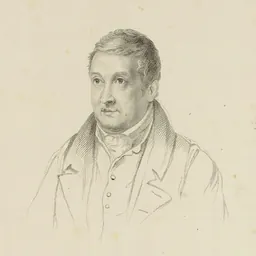
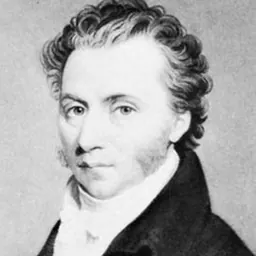
People in Cipriani Potter's life
Named in this biography and alive at the same time


Related people
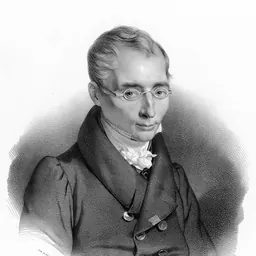
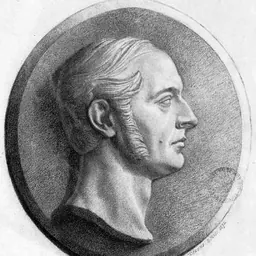
Same field, nearest in time



Contemporaries
People whose lives overlapped Cipriani Potter's


Frequently asked questions
Who was Cipriani Potter?
British composer (1792-1871)
When was Cipriani Potter born?
Cipriani Potter was born on 3 October 1792 in London.
When did Cipriani Potter die?
Cipriani Potter died on 26 September 1871 in London.
What was Cipriani Potter's occupation?
Cipriani Potter was a composer, pianist, music educator, music arranger and music teacher.
What nationality was Cipriani Potter?
Cipriani Potter was British.
Sources & further reading
Cite this page
APA: Biography.guide. (2026). Cipriani Potter. https://biography.guide/cipriani-potter/
MLA: "Cipriani Potter." Biography.guide, https://biography.guide/cipriani-potter/.
Chicago: "Cipriani Potter." Biography.guide. https://biography.guide/cipriani-potter/.
Data last updated: 2026-09-20 · Spot an error? Report a correction.
Page generated 2026-09-27 05:29 UTC