
About Chu Chi-chan
Lived 1892 – 1996 (aged 103). Chu Chi-chan was a Chinese painter and artist.
Zhu Qizhan (; May 27, 1892 – April 20, 1996) was a Chinese painter known for merging the color concepts of Western art and the calligraphic brushwork of traditional Chinese painting into a personal style.
Zhu Qizhan, courtesy name Qizhai, art name Erzhan Laomin, was a native of Taicang, Jiangsu province. In 1912, he entered the Shanghai Fine Arts College. In 1917 he studied Western oil painting with the prominent painter Fujishima Takeji (1867-1945) at the Kawabata Art School in Tokyo.
He taught in the Shanghai Fine Arts College and Shanghai Xinhua Private Art School when he was young. He became a first-class artist in the Shanghai Academy of Chinese Painting, an honorary professor of East China Normal University, and an honorary professor of the Fine Arts Department of Shanghai University. He also worked as the standing secretary of the Shanghai Artist Association, a consultant to the China Artist Association, and a consultant to the Xiling Seal Art Society. In 1991, he received the first Shanghai Literature and Art Outstanding Contribution Award.
In the 1950s, Zhu Qizhan traveled extensively in China sketching with brush and ink in the plein air. He drew on his impressions of the scenery during his lifetime. Although already in his nineties as China opened up again to the West, Zhu traveled internationally, initially to San Francisco where he painted a large artwork for the San Francisco International airport and a few years later to New York for his first solo exhibition in America at L.J. Wender Fine Chinese Painting where he demonstrated ink painting on ABC Eyewitness News.
The Chinese government has built a museum dedicated to him. He was present in May 1995 for the opening of the Zhu Qizhan Museum of Art in Shanghai. In 1996, he died at the age of 105 (East Asian age reckoning).
Biography Zhu Qizhan was born into a wealthy merchant family with a fine collection of Chinese painting in Taicang, Jiangsu province. He received a traditional education as a child and in 1912 entered the Shanghai Fine Arts College. He was an excellent student, resulting in his appointment as a professor in the College the following year. In 1917 he left for Japan to study Western oil painting with the prominent painter Fujishima Takeji (1867-1945) at the Kawabata Art School in Tokyo.
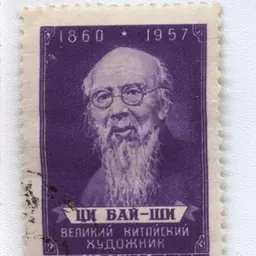
He returned to China for the May Fourth Movement of 1919. Under its influence, he left behind the literati intellectual style, and founded his work on the more basic expressions of artists who arose from the common people, like Qi Baishi (1964-1957).
Zhu was very active in the Shanghai art circle. He co-founded the Yiyuan Painting Institute with his contemporaries Wang Jiyuan, Jiang Xiaowei, Li Qiujun, Pan Yuliang, and Zhang Chenbo; became a member of the China Artists Association, Baishe Chinese painting society; exhibited both his oil painting and Chinese ink paintings; and researched and taught art in other institutes. In 1934, he was appointed director of the Shanghai Xinhua Art College.
At the start of the Cultural Revolution in 1966, Zhu Qizhan, at the age of 75, had to report to the Shanghai Painting Academy every morning. He was forced to write papers of self-criticism and sweep the streets of Shanghai. Zhu was allowed to remain at home because of ill health for five years from 1971 until the end of the Cultural Revolution in 1976. (Chu, 1994, p. 64)
After the Cultural Revolution, Zhu resumed his career. He was invited to paint murals for the Beijing Hotel, the Capital Airport in Beijing, and the Peace Hotel in Shanghai. He became a first-class artist in the Shanghai Academy of Chinese Painting, an honorary professor of the East China Normal University, and an honorary professor of the Fine Arts Department of Shanghai University. He also worked as the standing secretary of the Shanghai Artist Association, a consultant to the China Artist Association, and a consultant to the Xiling Seal Art Society.
Zhu Qizhan traveled a lot during his lifetime. He traveled to different places and sketched using the plein air method with Chinese ink and brush in the 1950s. Examples are prevalent in his early works. In 1983, he traveled to San Francisco and painted a large artwork for the San Francisco International airport. In 1986, at the age of 95, he traveled to New York and had his first solo exhibition in America at L.J. Wender Fine Chinese Painting where he demonstrated ink painting on American Broadcasting Company (ABC) Eyewitness News.
At the age of 100, the Zhu Qizhan Centennial Art Exhibition was held in the Shanghai Art Museum.
In 1991, he received the first Shanghai Literature and Art Outstanding Contribution Award.
Artistic Style Zhu Qizhan wrote that, “For many years I have gone out of my way to achieve three aims. They are independence, strength, and succinctness. Independence means a painter should have his own features instead of being dependent on or blindly worshipping those of other schools. Strength is viewed in the bold and vigorous strokes of a painter but it needs to come from his mental effort or inner world. As for succinctness, it is embodied in being terse and concise. These three principles are the criterion for creation I have closely followed.” (Wender, 2002, pp. 34–35)
Zhu Qizhan's style is marked by a vigorous and powerful presence with a great depth of expression to each brush stroke. It is a style which has evolved by fusing a dominant concept of two artistic traditions, the color concepts of Western art and the calligraphic brushwork of traditional Chinese painting. In the West, color theory was first explored by Kandinsky (1866-1944), and later systematically advanced by Josef Albers (1888-1976). Zhu Qizhan knows it intuitively. He knows which colors feel heavy, and which light, and that by placing colors side by side he can describe edges which create shadow, density, transparency, weight, and the lightness of being.
In traditional Chinese literati painting, color was considered to be only an accent upon the brushstrokes. Zhu shows us that brushstrokes in color can be as meaningful as those in ink.
"In evolving his use of strong colors, Zhu Qizhan also paid homage to the heavy pigments of the traditional blue and green style. However, he enriched the older methods with exuberantly colored, more abstract forms. Even when he toned down his pigments, the harmonies are evocative. He also became fond of free, curvilinear rhythms, but mostly through the use of colors. By means of skillful harmonies of colors, which like music is vibration, he achieved nature’s innermost force." (Chu, 1994, p. 67)
"In his use of saturated colors, he demonstrated that when color is at its richest, form is at its fullest. The form-building property of Zhu’s color manipulation is an artistic venture never previously attempted in the history of Chinese painting." (Chu, 1994, p. 67)
In Zhu's still life paintings, objects are painted with bold and suggestive colors and just the minimal number of strokes to convey their essence, which goes beyond a two-dimensional depiction on paper.
Calligraphy A solid background in calligraphy is essential for Chinese painters. Zhu Qizhan practiced various calligraphy styles, and was especially fond of the ancient styles of Mi Fei, and Yan Zhenqing. Their influence can be seen in both his calligraphy and painting. (Chu, 1994, p. 54) Metropolitan Museum in New York, Asian Art Museum in San Francisco, The Eskenazi Museum of Art in Indiana, Yale University Art Gallery, Connecticut, National Gallery of Victoria, Australia, Art Gallery of New South Wales, Australia, The UNESCO works of art collection, the Baur Collection, Geneva, Switzerland, and the Zhu Qizhan Art Museum
Don’t just read it —
keep it.
Full-length biographies made to live with: read them, listen on the way to work, watch them tonight.
- E-book
- Audio
- Video
Instant download · yours to keep · every purchase keeps this site free
Important facts
more
Chu Ch'i-chan, Jizhan Zhu, Ch'i-chan Chu, Chʻi-chan Chu, Erzhan Laomin, Zhu QizhanPeople in Chu Chi-chan's life
Named in this biography and alive at the same time




Related people
Same field, nearest in time



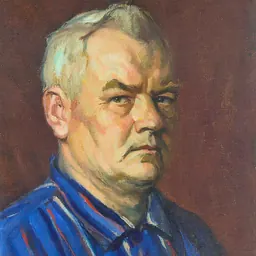
Contemporaries
People whose lives overlapped Chu Chi-chan's

Frequently asked questions
Who was Chu Chi-chan?
Chinese artist (1892-1996)
When was Chu Chi-chan born?
Chu Chi-chan was born on 27 May 1892 in Taicang.
When did Chu Chi-chan die?
Chu Chi-chan died on 20 April 1996 in Huadong Hospital.
What was Chu Chi-chan's occupation?
Chu Chi-chan was a painter and artist.
What nationality was Chu Chi-chan?
Chu Chi-chan was Chinese.
Sources & further reading
Cite this page
APA: Biography.guide. (2026). Chu Chi-chan. https://biography.guide/chu-chi-chan/
MLA: "Chu Chi-chan." Biography.guide, https://biography.guide/chu-chi-chan/.
Chicago: "Chu Chi-chan." Biography.guide. https://biography.guide/chu-chi-chan/.
Data last updated: 2026-09-20 · Spot an error? Report a correction.
Page generated 2026-09-27 05:27 UTC