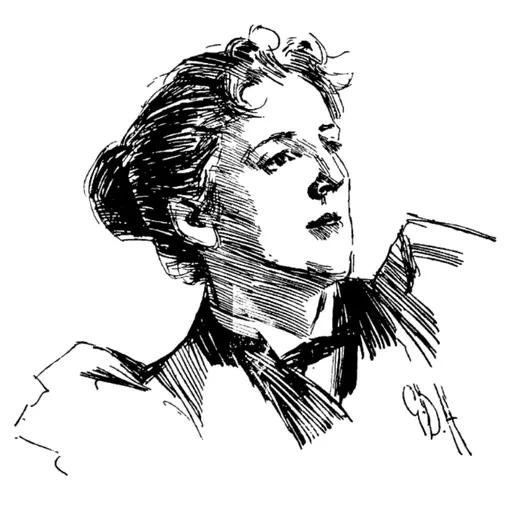
About Christine M. Demain Hammond
Lived 1860 – 1900 (aged 39–40). Christine M. Demain Hammond was a British painter and illustrator.
Christiana Mary Demain Hammond (6 August 186011 May 1900), known as Chris Hammond, was an English painter and illustrator. She was a member of the Cranford School of illustration, and illustrated reissues of classic English texts from the 19th century. Her illustrations were frequently found in Cassell's Magazine, The Quiver, and St. Paul's. She exhibited occasionally at the Royal Academy and Royal Institute of Painters in Watercolours.
Early life
Christiana Mary Demain Hammond was born in Coldharbour Lane, Brixton, London on 6 August 1860," and baptised on 16 September 1860. She was not named on her birth registration, but simply registered as a female child. Her parents were Horatio Demain Hammond, a bank clerk, and Eliza Mary Hammond ( Wood); they married in St. George's, Bloomsbury, London on 5 May 1858.
The couple had three children, all of whom were artists: Christiana Mary Demain (186011 May 1900); the only sibling who never married. Gertrude Ellen Demain (baptised 6 July 186221 July 1951). Gertrude and Christiana trained together, first at the Lambeth School of Art and then at the Royal Academy Schools. She was a painter and illustrator like Hammond. Gertrude was a prolific illustrator of books, including children's books and the retelling of historical stories. Gertrude married Henry Going McMurdie (c. 186028 November 1948) in Fulham, London on 14 June 1898 and the couple lived with Hammond at 2 St. Paul's Studios, in what is now Talgath Road, Kensington. Percy Edward Demain (6 December 18653 April 1946) described himself as a stained-glass artist in the 1901 census and as a decorative artist in 1911 and 1939. In 1906 he was working as an artist for Crittall Manufacturing Company, famous for their involvement in the Art-Deco movement, both as suppliers of steel windows used in art deco buildings, and for commissioning buildings in the art deco style. He was described as a Poster Artist in 1907, suggesting that he was involved in advertising for Crittall. Percy married Martha Cantwell in Lambeth in 1904. The couple had at least one son, Seymour Edward Demain (baptised 7 July 190515 October 1948).
Education Hammond received her first training in drawing from her Governess, and then attended the Lambeth School of Art with her sister Gertrude in 1879. At the Lambeth School, Hammond won the Cressy for the best sketch on a particular subject, a competition open to all the students at the school, with the award made by Sir Lawrence Alma-Tadema.
Hammond and her sister both won scholarships for three years tuition at the Royal Academy Schools, where they began in 1889. Here, Hammond distinguished herself by passing through the various schools almost as rapidly as was possible. However, she was not eligible for a second three year scholarship as, although she had passed all her exams, she had missed many lectures due to illness, and a good attendance record was a requirement for a further scholarship. Thus her artistic education ended three years earlier than she would have liked. It was this foreshortening of her education that led her to concentrate on pen and ink work rather than oil painting.
Works Hammond painted, and exhibited at the Royal Academy in 1886, 1891, 1892, 1893, and 1894, and at the Royal Society of Painters in Watercolours in 1886 and 1895. While still a student at the Royal Academy Schools she came to the attention of James Barr, editor of the Detroit Free Press and Henry Reichardt, art-editor of Pick-Me-Up, both of whom gave her commissions. Hammond also contributed to the first issue of Reichardt's new illustrated weekly St. Paul's in 1884. After this first appearance of her work in St. Paul's she was approached not only by publishers such as Macmillan and Allen, but also by Sir William Ingram, the proprietor of both the Illustrated London News and The Sketch. From then on she was turning away work, as she was offered more commissions than she could complete.
She was also published in Cassell's Magazine, The Quiver, The English Illustrated Magazine, The Queen, Pall Mall Magazine, Pearson’s Magazine, The Idler, Madame, Good Words, The Ludgate Monthly, and The Temple Magazine
Hammond is regarded as a member of the Cranford School along with the C. E. Brock, H. M. Brock, Fred Pegram, F. H. Townsend and the inaugurator Hugh Thomson. The school was strictly speaking a shared style, as the individual artists had no particular relationship with each other. It was a style which celebrated a sentimental, pre-industrial notion of ‘old England’.
Books illustrated by Hammond The following list is based on the list presented in the Argosy obituary. Most of the Hammond's work were for posthumous editions. However, in three cases she illustrated first editions.
Serial Year Author Title Publisher Edition+ List of books illustrated by Hammond 1 1895 Maria Edgeworth Castle Rackrent London: Macmillan Posthumous 2 1895 Maria Edgeworth The Absentee London: Macmillan Posthumous 3 1895 Maria Edgeworth Popular Tales London: Macmillan Posthumous 4 1895 Jean-François Marmontel Moral Tales London: George Allen Posthumous 5 1895 Samuel Richardson Sir Charles Grandison London: George Allen Posthumous 6 1896 Maria Edgeworth Helen London: Macmillan Posthumous 7 1896 Maria Edgeworth Belinda London:Macmillan Posthumous 8 1896 Oliver Goldsmith Comedies London: George Allen Posthumous 9 1897 Maria Edgeworth The Parent's Assistant London: Macmillan Posthumous 10 1897 William Makepeace Thackeray The History of Henry Esmond London: Service & Paton Posthumous 11 1897 William Makepeace Thackeray Pendennis London: Service & Paton Posthumous 12 1897 R. D. Blackmore Dariel London: Blackwood First Edition 13 1898 William Makepeace Thackeray Vanity Fair London: Service & Paton Posthumous 14 1898 William Makepeace Thackeray The Newcomes London: Service & Paton Posthumous 15 1898 Robert Bulwer-Lytton The Caxtons London: Service & Paton Posthumous 16 1898 Jane Austen Emma London: George Allen Posthumous 17 1898 Mary Catherine Rowsell The Boys of Fairmead London: Warne First Edition 18 1899 Jane Austen Sense and Sensibility London: George Allen Posthumous 19 1899 Mrs. Craik John Halifax, Gentleman London: E. Nisbet Posthumous 20 1899 Oliver Vernon Caine In the Year of Waterloo London: E. Nisbet First Edition 21 1899 Maria Edgeworth Lazy Laurence, and Other Stories London: Macmillan Posthumous 22 1899 Mrs. Gaskell Cranford Glasgow: Gresham Publishing Co. Posthumous 23 1899 Mrs. Gaskell Mary Barton Glasgow: Gresham Publishing Co. Posthumous 24 1899 Jane Austen Pride and Prejudice Glasgow: Gresham Publishing Co. Posthumous
Example of illustrations by Hammond Illustration by Hammond for the 1898 Service & Patton reissue of Vanity Fair by Thackeray.
Death Hammond died unexpectedly in the house she shared with her sister and brother-in-law on 11 May 1900, aged 39. Her father had died only two months previously. Her estate was valued at £2,198 2s. Her brother Percy acted as her executor.
Assessment Forman in her Argosy obituary stated that no competent critic would deny her a place among the foremost six of her contemporaries, and that others, of no less competence, would unhesitatingly rank her among the foremost three. and that Fancy, delicacy, vigour, variety, subtlety of characterisation, distinction in both conception and execution were all in rich measure at Miss Hammond's command.
Thorpe noted that Hammond's delicate and charming pen-drawings were very popular and that she had a long list of books to her credit. However, he also considered that many of her figuresparticularly the womenwere spoilt by disproportionately small heads, and her sister was the more skilful draftsman. Hammond and her sister in the 1890's were at that time certainly the most distinguished members of their sex in the field of illustration. Peppin concurs with Thorpe's assessment that Gertrude was the better draftsman.
Houfe notes that Hammond's penwork is rather free and she excels in costume subjects in a style not unlike that of the Brocks' eighteenth century pastiches. Loosey notes that Hammond was the first identifiably female illustrator of Jane Austen’s novels, illustrating three Austen titles for two publishers. And that when compared with other members of the Cranford School, Hammond’s Austen illustrations are on the whole more serious, less whimsical, and more visually surprising than Thomson’s or the Brocks’. Southam calls Hammond the finest artist of this period and states that her decisive and characterized pen-and-ink drawings are neither whimsical nor over decorative.
Cooke states that Hammond's contribution to the Cranford School's escapist discourse of a sentimental pre-industrial Old England was simple but effective. Though representing her characters with historical exactitude, her main focus is on small nuances of facial expression and gesture. This makes her an ideal illustrator for Jane Austen. Cooke summarised by saying that Catering for a large bourgeois audience, her refined and perceptive illustrations had a wide currency, only supplanted by the growing taste for the radicalism of English Art Nouveau.
Don’t just read it —
keep it.
Full-length biographies made to live with: read them, listen on the way to work, watch them tonight.
- E-book
- Audio
- Video
Instant download · yours to keep · every purchase keeps this site free
Important facts
People in Christine M. Demain Hammond's life
Named in this biography and alive at the same time

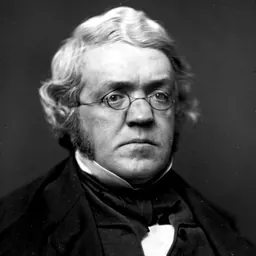
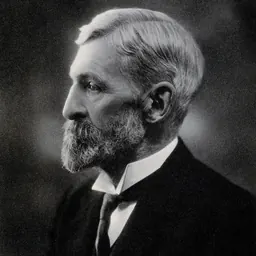

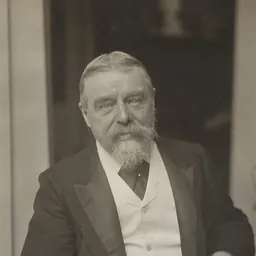


Related people
Same field, nearest in time


Contemporaries
People whose lives overlapped Christine M. Demain Hammond's


Frequently asked questions
Who was Christine M. Demain Hammond?
English painter and illustrator (1860–1900)
When was Christine M. Demain Hammond born?
Christine M. Demain Hammond was born in 1860 in Lambeth.
When did Christine M. Demain Hammond die?
Christine M. Demain Hammond died on 11 May 1900 in West Kensington.
What was Christine M. Demain Hammond's occupation?
Christine M. Demain Hammond was a painter and illustrator.
What nationality was Christine M. Demain Hammond?
Christine M. Demain Hammond was British.
Sources & further reading
· Wikipedia: Christine M. Demain Hammond
· DBpedia: Chris Hammond (illustrator)
Cite this page
APA: Biography.guide. (2026). Christine M. Demain Hammond. https://biography.guide/christine-m-demain-hammond/
MLA: "Christine M. Demain Hammond." Biography.guide, https://biography.guide/christine-m-demain-hammond/.
Chicago: "Christine M. Demain Hammond." Biography.guide. https://biography.guide/christine-m-demain-hammond/.
Data last updated: 2026-09-24 · Spot an error? Report a correction.
Portrait: Wikimedia Commons · author & licence
Page generated 2026-09-27 05:09 UTC