
About Christian Gottfried Schütz
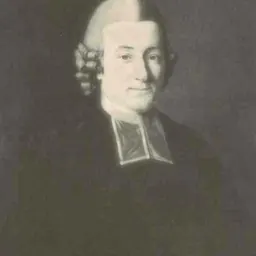
Lived 1747 – 1832 (aged 84). Christian Gottfried Schütz was a German philologist, university teacher, translator, writer and literary historian.
Christian Gottfried Schütz (19 May 1747 – 7 May 1832) was a German classical scholar and humanist, known for his contributions in philosophy and philology, and for his work as an academic and literary editor and publisher.
Life Christian Gottfried Schütz was the eldest of eight recorded children born to the Protestant minister Gottfried Schütz and his wife, in the village of Dederstädt, a couple of hours walk to the south of Eisleben, in an area administered, under a slightly convoluted arrangement by Saxony. Shortly after his birth his father was appointed to a senior preaching position in nearby Aschersleben, to where the family relocated, and it was here that the boy received his early schooling. Later he attended the Latin orphanage school in Halle before moving on in 1765 to the Martin Luther University of Halle-Wittenberg where he was taught Theology by Johann Jakob Semler, who talent spotted him and set him on his life's career as an academic. With Christoph Martin Wieland and Friedrich Justin Bertuch, in 1785 Schütz founded the Allgemeine Literatur-Zeitung (daily literary journal)
In 1804 Schütz transferred from Jena to Halle, accompanied by his son, Friedrich Karl Julius Schütz who was himself appointed a visiting professor of philosophy at Halle. They were also accompanied by Johann Samuel Ersch, and together they continued with the Allgemeine Literatur-Zeitung (daily literary journal), now in their new home base where a royal donation of 10,000 Gold Thalers had enabled them to acquire the so-called " Semler’schen House" in which the journal could be produced. Christian Gottfried Schütz himself was appointed Professor of the History of Literature and Eloquence.
Political developments in 1806 hit Schütz particularly hard. In October 1806, in the aftermath of the Battle of Jena nearby, Halle was over-run by a victorious French army. Schütz's house was plundered while he himself was arrested and briefly detained by the invading forces. Possibly of greater long term consequence was the French emperor's decision to close down the university and convert its main building into a quarantine hospital. Deprived of his university salary, Schütz was eventually obliged to sell a valuable volume from his library. He considered moving to Berlin, but in the end remained in Halle, redoubling the effort he put into his academic and literary publishing. Above all, the Allgemeine Literatur-Zeitung somehow lived on and flourished. In 1808 Schütz was elected an external member of the Bavarian Academy of Sciences and Humanities. At Halle the university remained closed till December 1814, but the war years ended in 1815 and the university was reinstated, impoverished and for a time diminished, but not terminated: Schütz appears still to have been based at Halle when he died there in 1832.
The publisher
Schütz published volumes on a wide range of themes in the areas of philosophy, philology, rhetoric, psychology, education and university matters. He published collections of the writings of Aeschylus, Cicero, und Aristophanes. In respect of philosophy he was particularly influential as one of the first defenders, and then a promoter, of Immanuel Kant, with whom he entered into what became a long running correspondence in 1784. As early as 1768, in a dissertation of his own on Aesthetics, Schütz referenced Kant's 1764 critical work Observations on the Feeling of the Beautiful and Sublime. In 1785 he organised a series of articles in his Allgemeine Literatur-Zeitung focused on Kant's critical philosophy, in which he included contributions of his own that robustly rebutted criticism of it from opponents such as Ernst Platner, Dietrich Tiedemann and Johann Christoph Schwab. He also won for Kant (whose home town of Königsberg was even then considered by some to be somewhat peripheral, intellectually as geographically, to the German cultural heartland) the right to make his own contributions in the Allgemeine Literatur-Zeitung, and entered into discussions with him on the influential "Kritik der reinen Vernunft" "(Critique of Pure Reason)" (1781).
Personal Christian Gottfried Schütz married in Halle in 1778. His bride was Anna Henriette Danovius from Danzig. She, like him, was the child of a Protestant minister: she was a daughter of Ludwig Danovius (1711–1771) by his marriage to Anna Eleonora Gerschner. Of the various children born to the Schütz's marriage it is the historian Friedrich Karl Julius Schütz (1779–1844) whose footprints feature most prominently in surviving sources.
Don’t just read it —
keep it.
Full-length biographies made to live with: read them, listen on the way to work, watch them tonight.
- E-book
- Audio
- Video
Instant download · yours to keep · every purchase keeps this site free
Important facts
Family & relationships
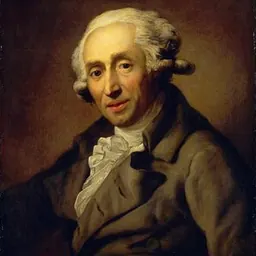
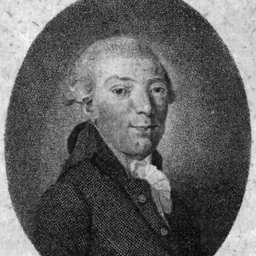
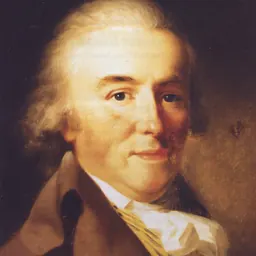
People in Christian Gottfried Schütz's life
Named in this biography and alive at the same time



Related people
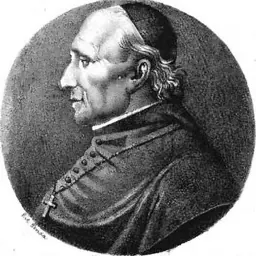
Same field, nearest in time



Contemporaries
People whose lives overlapped Christian Gottfried Schütz's





Frequently asked questions
Who was Christian Gottfried Schütz?
German humanist
When was Christian Gottfried Schütz born?
Christian Gottfried Schütz was born on 19 May 1747 in Dederstedt.
When did Christian Gottfried Schütz die?
Christian Gottfried Schütz died on 7 May 1832 in Halle (Saale).
What was Christian Gottfried Schütz's occupation?
Christian Gottfried Schütz was a philologist, university teacher, translator, writer and literary historian.
What nationality was Christian Gottfried Schütz?
Christian Gottfried Schütz was German.
Sources & further reading
· Wikipedia: Christian Gottfried Schütz
· DBpedia: Christian Gottfried Schütz
Cite this page
APA: Biography.guide. (2026). Christian Gottfried Schütz. https://biography.guide/christian-gottfried-schutz/
MLA: "Christian Gottfried Schütz." Biography.guide, https://biography.guide/christian-gottfried-schutz/.
Chicago: "Christian Gottfried Schütz." Biography.guide. https://biography.guide/christian-gottfried-schutz/.
Data last updated: 2026-09-22 · Spot an error? Report a correction.
Page generated 2026-09-27 05:03 UTC