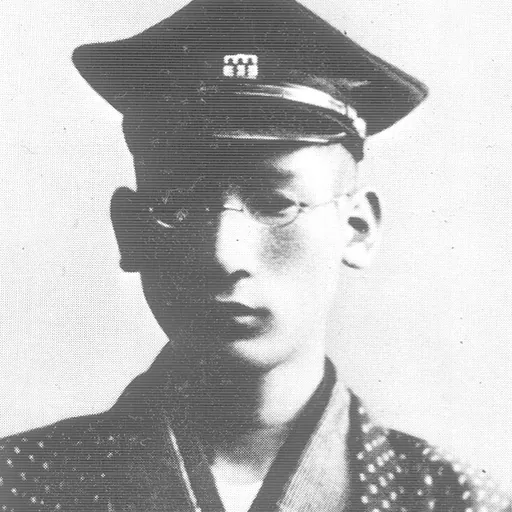
About Chōkō Ikuta
Lived 1881 – 1936 (aged 55). Chōkō Ikuta was a Japanese writer, literary critic, translator and playwright.
was the pen-name of a noted translator, author and literary critic in Taishō and Shōwa period Japan. His real name was .
Biography Ikuta was born in what is now part of the town of Hino, Tottori, and was educated at St Andrew’s School in Osaka, a school run by the Anglican Church in Japan. In 1898 he converted to Unitarianism. He moved to Tokyo the following year and was accepted into the First Higher School in 1900. He was accepted into the Department of Literature of Tokyo Imperial University in 1903. While in Tokyo, he became friends with Ueda Bin, who suggested his nickname. He graduated in 1906, and after returning briefly to Tottori to get married, moved into rooms provided by Yosano Tekkan and Yosano Akiko in Kōjimachi, Tokyo, where he taught as an English language instructor at a women’s college until 1909. This was also the start of his association with women’s literature, and his literary circle included Okamoto Kanoko, Yamakawa Kikue and Hiratsuka Raichō.
In 1909, Ikuta began his translation of Friedrich Nietzsche’s Thus Spoke Zarathustra into Japanese, which was completed in 1911. The same year, he also assisted Hiratsuka in the publication of her literary magazine Bluestocking. He continued to work on translation of Nietzsche from 1916 through 1929, eventually translating all of Nietzsche’s works into Japanese. He also translated Homer’s Odyssey in 1922.
Also around this time, Ikuta began a correspondence with the socialist Sakai Toshihiko and the anarchist Ōsugi Sakae. This led to an interest in the works of Karl Marx, and he translated Das Kapital into Japanese in 1919. However, his flirtation with Marxism was short-lived, and he had distanced himself from Marxist ideals by 1923. His interest in anarchism lasted longer, and he maintained a correspondence with Takamure Itsue for many years. He translated Dante’s Divine Comedy in 1924.
From 1925 to 1930 Ikuta moved to Yuigahama in Kamakura. At some point before this time, he contracted Hansen’s Disease. He left Kamakura before the physical effects of the disease became apparent, and he lived in Shibuya, Tokyo, until his death in 1936. His final work was a translation of Dumas’s Camellia.
Ikuta's grave is at Hase-dera in Kamakura.
Don’t just read it —
keep it.
Full-length biographies made to live with: read them, listen on the way to work, watch them tonight.
- E-book
- Audio
- Video
Instant download · yours to keep · every purchase keeps this site free
Important facts
People in Chōkō Ikuta's life
Named in this biography and alive at the same time



Related people
Same field, nearest in time




Contemporaries
People whose lives overlapped Chōkō Ikuta's



Frequently asked questions
Who was Chōkō Ikuta?
Japanese critic, playwright and novelist (1881–1936)
When was Chōkō Ikuta born?
Chōkō Ikuta was born on 21 April 1881 in Hino.
When did Chōkō Ikuta die?
Chōkō Ikuta died on 1 November 1936 in Shibuya.
What was Chōkō Ikuta's occupation?
Chōkō Ikuta was a writer, literary critic, translator and playwright.
What nationality was Chōkō Ikuta?
Chōkō Ikuta was Japanese.
Sources & further reading
Cite this page
APA: Biography.guide. (2026). Chōkō Ikuta. https://biography.guide/choko-ikuta/
MLA: "Chōkō Ikuta." Biography.guide, https://biography.guide/choko-ikuta/.
Chicago: "Chōkō Ikuta." Biography.guide. https://biography.guide/choko-ikuta/.
Data last updated: 2026-09-23 · Spot an error? Report a correction.
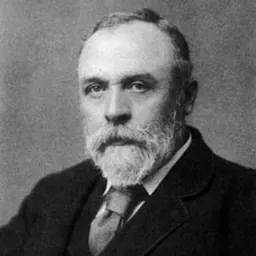
Portrait: Wikimedia Commons · author & licence
Page generated 2026-09-27 05:06 UTC