
About Yamakawa Kikue
Lived 1890 – 1980 (aged 89). Yamakawa Kikue was a Japanese writer, critic and economist.
was a Japanese essayist, activist, and socialist feminist who contributed to the development of feminism in modern Japan.
Born into a highly-educated family of the former samurai class, Yamakawa graduated from the private women's college Joshi Eigaku Juku (renamed Tsuda College in 1948) in 1912. In 1916, she married the communist activist and theoretician Yamakawa Hitoshi, who, in 1922, founded the short-lived pre-war Japanese Communist Party and was a leader of the Labor-Farmer faction.
In pre-war times, Yamakawa contributed to the development of feminism as a founding member of the Red Wave Society (Sekirankai), Japan's first socialist women's organization, and she was one of the most visible socialist women. She is famous for "her position in debates on prostitution and motherhood, in which she consistently challenged liberal feminists (who she termed 'bourgeois feminists') on the possibility of women achieving full rights within a capitalist system". Her father, Morita Ryūnosuke, came from a family of samurai of the lowest rank in the Matsue Domain (present Matsue City, Shimane Prefecture) and worked his way through language school in Yokohama City in Kanagawa Prefecture. Yamakawa Kikue's siblings were accomplished in languages: her older sister Matsue was a pioneer of female Esperantists, and her older brother Toshio was a scholar of German literature in Japan. In her first year of study, Kikue visited a spinning mill factory with her Christian acquaintances and was shocked to see female workers working in terrible working conditions. When she heard Christian lecturers praise the work there, she was outraged at the notion that people should appreciate their work in spite of the terrible conditions in which the work was done. This experience made her realize that religion could not solve the manifold problems faced by women factory workers. This experience fueled her future course of action and awakened her to socialism and social science. Itō Noe criticized the Christian women's organization's movement to abolish prostitution licensed by the government because the organization's movement was "hypocritical" in that the organization tried to abolish public prostitution from the viewpoints of valuing "virginity" and "chastity". However, on the one hand, Kikue agreed with Itō's argument about the movement of Christian women's organizations in that the movement divided women into two categories: "clean" and "unclean" women. Moreover, Kikue said that she would disagree with a system in which women suffer even if the system seemed necessary for men's "instinctive" desires. Kikue also mentioned private prostitution and contended that the system of prostitution was based on the disparity between rich and poor produced by the private ownership system and the domination of women by men. Furthermore, she pointed out the double standard of female sexuality in a male-dominant and patriarchal society. Rather, she thought it would be realized by abolishing capitalism and men's dominance over women. On the other side, Hiratsuka argued that it was impossible or difficult to do both work and parenting. Hiratsuka also viewed women's childbirth and parenting as a national and social project, and thus argued that women deserved the protection of motherhood by the government. Moreover, Yamakawa disagreed with Yosano that the protection of motherhood by the nation was a shame because it was the same as the government's care of the elderly and the disabled. In this respect, Yamakawa said that Yosano's view was biased on a class society because Yosano only criticized old and disabled people depending on the public assistance while she did not mention soldiers and public servants who also depended on assistance in the same way. Yamakawa argued that Hiratsuka's position was more advanced than that of Yosano in that it took a more critical attitude towards capitalism. However, Yamakawa criticized Hiratsuka for too much emphasis on motherhood. Yamakawa said that Hiratsuka viewed women's ultimate goal as childbirth and parenting, and that it led women to obey male-centered society's idea that women should sacrifice their work in compensation for completing the ultimate goal. Yamakawa summarized these arguments and argued that financial independence and protection of motherhood were compatible and natural demands of women. As a socialist feminist, Yamakawa argued that female workers should play an active role in winning both economic equality and the protection of motherhood, and that the liberation of women required the reform of capitalist society which exploited workers. Moreover, Yamakawa Kikue made an objection to present society which left household labor as unpaid work. Furthermore, Yamakawa was distinct from Yosano and Hiratsuka in that she saw welfare for the elderly as a right. In 1925, the Universal Manhood Suffrage Law (普通選挙法, Futsū Senkyo Hō) abolished the restriction of voting rights based on tax payment and granted the right to all men over age 25. However, women were not allowed to participate in politics. Later, the movement headed by members of the New Women's Association (新婦人協会, Shin Fujin Kyokai), persuaded the government to change Article 5 of the Public Police Law, which had banned women from joining political assemblies. As a result, women were given the right to participate in political assemblies, but they were still not allowed to vote.
In response to the passage of the Universal Manhood Suffrage Law, a political study group was organized for re-establishing the Japanese Communist Party. A few women, including Yamakawa Kikue, participated in the study group.
Abolish the patriarchal household system. Abolish all laws that view a woman as an incompetent person, regardless of marital status. Give equal rights between men and women regarding marriage and divorce. Equal rights of educational institutions and work for women and the residents in colonies to Japanese men. Guarantee an equal minimum wage, regardless of sex or ethnicity. Equal pay for equal work among men, women, and the residents in colonies. Provide female working mothers with a room and one thirty-minute recess every three hours for feeding. Ban the firing of women on account of marriage, pregnancy, or childbirth status. Abolish licensed prostitution.
In the first and two points, Yamakawa had much common with her women's suffrage colleagues. Yamakawa shared much with the leadership of the Women's Suffrage League in that both "argued throughout the prewar period that Japan's legally codified family system, which designated a usually male head-of-household and excluded other family members (including wives) from owning property, denied women legal decision-making capacity". Her final three demands came from the core of her concern for women's rights as workers' rights. On the other hand, Yamakawa argued that it was not a problem of their perception but a social problem, namely, whether society would accept a law that approved of gender inequality. Not only did Yamakawa criticize the military police and vigilantes for these actions, but she also denounced the Japanese who internalized anti-foreignism as a result of imperial and colonial education. She continued to criticize the government, but the onset of the Pacific War made it impossible for her to openly criticize the government.
The head of the Women's and Minors' Bureau (1947–1951) After the Second World War, Yamakawa and her husband Hitoshi Yamakawa both joined the Japan Socialist Party. When the cabinet of Katayama Tetsu newly organized the Ministry of Labor and established the Women's and Minors' Bureau under the Ministry, Yamakawa was asked to be the first head of the Bureau. She served from 1947 to 1951. After this service, she engaged in research on the liberation of women and women's issues with younger researchers, in addition to publishing and organizing committees for women's issues. She died of a stroke in 1980 at the age of 90. After she died, women cherishing her established the Yamakawa Kikue Memorial Organization, which still exists today.
List of works From the Standpoint of Women (女の立場から) 1919 The Modern Life of Women (現代の生活と婦人) 1919 Women's Rebellion (女性の反逆) 1922 May Day (メーデー) 1923 Women's Issues and Movements (婦人問題と婦人運動) 1925 Liebknechit and Luxembourg (リープクネヒトとルクセンブルク) 1925 Proletarian Feminist Movements (無産階級の婦人運動) 1928 Women's Fifty Lessons (女性五十講) 1933 Women and Social Conditions: Collection of Commentaries (婦人と世相 評論集) 1937 Women Are Working (女は働いてゐる) 1940 Autumn and Pigs in a Village (村の秋と豚 随筆集) 1943 The Village I Live In (わが住む村) 1943 Women of a Samurai Family(武家の女性)1943
For the Women of Tomorrow(明日の女性のために)1947 Japanese Democratization and Women(日本の民主化と女性)1947 Comments on the Liberation of Women (婦人解放論) 1947 New Principle of Wage, Beatrice Webb, Research of Gender Pay Equality Systems(新しい賃金原則 ピアトリス・ウエップ 男女平等賃銀制の研究)1948 For the New Women(新しき女性のために)1949 Mill and Babel: Theories of the Liberation of Women(ミル ベーベル 婦人解放論)1949 The Country of Peaceful Revolution: the U.K.(平和革命の国 イギリス)1954 A Record of Two Generations of Women(女二代の記 私の半自叙伝)1956 Memos of the Mito Domain in the Last Days of the Tokugawa Shogunate(覚書 幕末の水戸藩)1974 For the Liberation of Women: Theories of Socialist Feminist Movements(女性解放へ 社会主義婦人運動論)1977 Footprints of A Woman Walking in the 20th Century(二十世紀をあゆむ ある女の足あと)1978 A Short History of Japanese Feminist movements(日本婦人運動小史)1979
Collection of Commentaries by Yamakawa Kikue Yamakawa, Kikue (1981). Collection of Yamakawa Kikue's Works.(山川菊栄集)Tokyo, Iwanami Shoten. Yamakawa, Kikue (1984). Collection of Commentaries on Women's Liberation by Yamakawa Kikue.(山川菊栄女性解放論集)Tokyo, Iwanami Shoten. Yamakawa, Kikue (1990). Collection of Commentaries by Yamakawa Kikue.(山川菊栄評論集)Tokyo, Iwanami Shoten. Yamakawa, Kikue (2011). Yamakawa Kikue shu hyouronhen(山川菊栄集 評論篇, Tokyo: Iwanami Shoten.
Don’t just read it —
keep it.
Full-length biographies made to live with: read them, listen on the way to work, watch them tonight.
- E-book
- Audio
- Video
Instant download · yours to keep · every purchase keeps this site free
Important facts
Family & relationships
People in Yamakawa Kikue's life
Named in this biography and alive at the same time

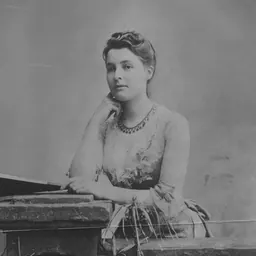
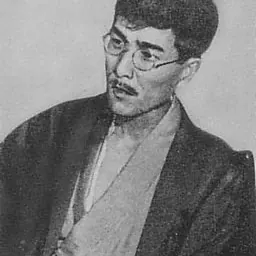
Related people
Same field, nearest in time
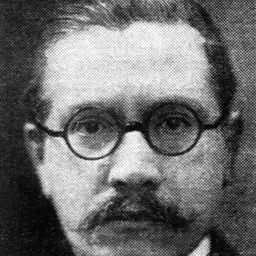
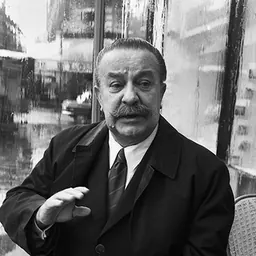


Contemporaries
People whose lives overlapped Yamakawa Kikue's



Frequently asked questions
Who was Yamakawa Kikue?
Japanese feminist
When was Yamakawa Kikue born?
Yamakawa Kikue was born on 3 November 1890 in Tokyo.
When did Yamakawa Kikue die?
Yamakawa Kikue died on 2 November 1980 in Tokyo.
What was Yamakawa Kikue's occupation?
Yamakawa Kikue was a writer, critic and economist.
What nationality was Yamakawa Kikue?
Yamakawa Kikue was Japanese.
Sources & further reading
Cite this page
APA: Biography.guide. (2026). Yamakawa Kikue. https://biography.guide/yamakawa-kikue/
MLA: "Yamakawa Kikue." Biography.guide, https://biography.guide/yamakawa-kikue/.
Chicago: "Yamakawa Kikue." Biography.guide. https://biography.guide/yamakawa-kikue/.
Data last updated: 2026-09-20 · Spot an error? Report a correction.
Page generated 2026-09-27 05:24 UTC