
About Chetpat Aiyar
Lived 1879 – 1966 (aged 86). Chetpat Aiyar was an Indian politician, administrator of the government, lawyer and jurist.
Dewan Bahadur Sir Chetput Pattabhiraman Ramaswami Iyer (12 November 1879 – 26 September 1966), popularly known as Sir C. P., was an Indian lawyer, administrator and politician who served as the Advocate-General of Madras Presidency from 1920 to 1923, Law member of the Executive council of the Governor of Madras from 1923 to 1928, Law member of the Executive Council of the Viceroy of India from 1931 to 1936 and the Diwan of Travancore from 1936 to 1947. Ramaswami Iyer was born in 1879 in Madras city and studied at Wesley College High School and Presidency College, Madras before qualifying as a lawyer from the Madras Law College. He practised as a lawyer in Madras and succeeded S. Srinivasa Iyengar as the Advocate-General of the Madras Presidency. He subsequently served as the Law member of the Governor of Madras and of the Viceroy of India before being appointed Diwan of Travancore in 1936.
Ramaswami Iyer served as Diwan from 1936 to 1947; during his tenure, many social and administrative reforms were made. However, at the same time, he is also remembered for the ruthless suppression of the communist-organized Punnapra-Vayalar revolt, and his controversial stand in favor of an independent Travancore. He resigned in 1947 following a failed assassination attempt. He served as a leader of the Indian National Congress in his early days. He was made a Knight Commander of the Indian Empire in 1926 and a Knight Commander of the Star of India in 1941. He returned these titles when India attained independence in 1947. He was also a member of the 1926 and 1927 delegations to the League of Nations. In his later life he served in numerous international organisations and on the board of several Indian universities. Ramaswami Iyer died in 1966 at the age of 86 while on a visit to the United Kingdom.
Ancestry and origins C. P. Ramaswami Iyer belonged to a Tamil Brahmin Iyer family whose ancestral place was the town of Chetput in the North Arcot of Tamil Nadu.
Ramaswami Iyer's family originated from the group which inherited the village of Chetput. Iyer's grandfather, Chetput Ramaswami Iyer served the British East India Company as Tehsildar of Kumbakonam. His family was deeply attached to the Sringeri mutt.
Early life and education Ramaswami Iyer was born in a Tamil-speaking Iyer Brahmin family on Deepavali day (13 November) 1879, to C. R. Pattabhirama Iyer(1857–1902), a prominent judge, and his wife, Seethalakshmi Ammal (also called Rangammal) in the town of Wandiwash, North Arcot. Ramaswami had his schooling at the Wesley College High School in Madras. He had an extremely strict upbringing as a result of a prediction that the child would not pass a single exam in his life.
In college, C. P. Ramaswami Iyer won prizes in English, Sanskrit and Mathematics and the Elphinstone Prize for his paper on the Nebular theory. Ramaswami passed his degree with a gold medal and graduated with distinction from the Madras Law College.
As a lawyer In 1903, Iyer joined V. Krishnaswamy Iyer as an apprentice. Just before the death of Pattabhirama Iyer the same year, he arranged for Iyer's admission as a junior to Sir V. Bhashyam Aiyangar but the latter was not able to accommodate him.
As a result, Iyer practised on his own and was known as a lawyer, inheriting the case-books of his father-in-law, C.V. Sundara Sastri, and his brothers-in-law, Sir C.V. Kumaraswami Sastri, and C.V. Viswanatha Sastri, who were recently elevated to justices of the High Court. He fought and won over 300 cases, Forty-two minutes, my Lord, he once announced to a judge who asked him how much time he would need to finish a case; the next several years saw him win in some of the highest-profile cases of the time, including the Ashe murder trial as well as representing the Nizam of Hyderabad and Berar and the Maharaja of Jammu and Kashmir, earning a private fortune, and rising to become the most powerful man in the Madras presidency for decades., having cultured close, even inappropriate friendships with Lord and Lady Willingdon.
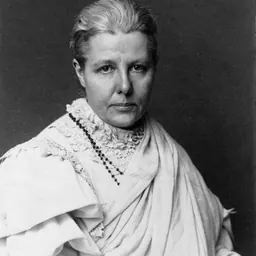
In 1920, then-Governor Lord Willingdon appointed him he the youngest-ever Advocate-General of Madras, during which tenure his income rose to an unprecedented 4,000 rupees, and in which capacity he would serve as premier state prosecutor for four years, until his subsequent promotion to the Governor's Executive Law Council, and, subsequently, the Viceregal Imperial War Council. Besant, however, later got the verdict annulled by appealing to the Privy Council in England. Iyer developed an admiration for Annie Besant In 1917, he became the Secretary of the Indian National Congress. He edited Besant's newspaper, New India, during her incarceration.
As a member of the Executive Council of the Governor of Madras In 1920, Iyer was nominated as the Advocate-General of Madras Presidency. He was responsible for the introduction of the City Municipalities Act and the Madras Local Boards Act. In 1923, he was nominated to the executive council of the Governor of Madras and was charged with the portfolios of law and order, police, Public Works Department, irrigation, ports and electricity.
As a member of the executive council, Iyer laid the foundation of the Pykara Dam which was constructed between 1929 and 1932 at a cost of Rs. 67.5 million. He also started the construction of Mettur Dam over the Cauvery river. the Mettur project was used to irrigate vast areas of Tanjore and Trichy districts. As the member in charge of ports, Iyer was also responsible for the improvement of Cochin, Visakhapatnam and Tuticorin ports. However, owing to strong protests from devadasis across Madras Presidency, Iyer suggested that the bill be introduced only as a private bill and not a government measure. By 1931, he was a Law Member of the Government of India and, in 1932, attended the Third Round Table Conference at London. The Viceroy agreed to crown Chithira Thirunal but only on the condition that Iyer should function as adviser to the young monarch. Iyer agreed and served as Legal and Constitutional adviser and Regent to the prince from 1931 to 1936, drawing comensation of 72,000 rupees a year for his direct services.
Travancore-Quilon Bank Collapse
Temple Entry Proclamation
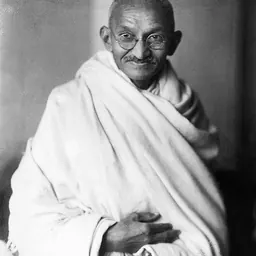
On 12 November 1936, Maharajah Chithira Thirunal issued the revolutionary Temple Entry Proclamation which gave Hindus of all castes and classes, including Dalits or untouchables, the right to enter Hindu temples in the state. This was bitterly opposed by conservative, yet influential upper-caste Hindus who posed a grave-threat to the life of the Diwan. This proclamation earned for the Maharajah and his Diwan the praise of Mahatma Gandhi and other reformers.
During Iyer's tenure as Diwan, Travancore made rapid strides in industrial development. The Indian Aluminium Company was invited to set up a factory in the town of Aluva. The first fertiliser plant in India, the Fertilizers and Chemicals of Travancore Ltd. (FACT) was established by Iyer to manufacture ammonium sulphate. This was established with American collaboration in open defiance to the hostility of the Viceroy of India. The Travancore Rayons Limited was established in 1946 with a plant at Perumbavoor. The first plant to manufacture aluminium cables was opened at Kundara. Supported by the Diwan, Iyer, Chithira Thirunal issued a declaration of independence on 18 June 1947. Family sources indicate that Iyer himself was not in favour of independence but only greater autonomy, and that a favourable agreement had been reached between Iyer and the Indian representatives by 23 July 1947 but accession to the Indian Union could not be carried out only because it was pending approval by the Raja.
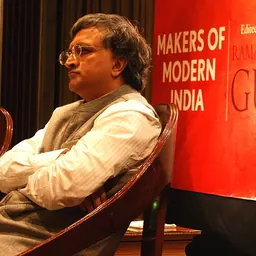
On the other hand, noted historian Ramachandra Guha has written about how Iyer, egged on by Mohammed Ali Jinnah, had established secret ties with senior Ministers of the British Government, who encouraged him in the hope that he would give them privileged access to monazite, a material Travancore was rich in and which could give the British a lead in the nuclear arms race.
Nevertheless, an assassination attempt was made on Iyer on 25 July 1947 during a concert commemorating the anniversary of Swati Thirunal. Iyer survived with multiple stab wounds and hastened the accession of Travancore state to the Indian Union soon after his recovery. He also visited the United States, where he gave talks at the University of California, Berkeley, and had discussions with important bank executives, journalists and US President Harry S. Truman.
From 1 July 1954 to 2 July 1956, he served as the Vice Chancellor of Banaras Hindu University. From 26 January 1955, Iyer also served as a Vice Chancellor of Annamalai University, thereby becoming the first Indian to function as Vice Chancellor of two universities at the same time.
In 1953, Iyer was appointed member of the Press Commission of India. Two years later, Iyer toured China as the leader of an Indian universities delegation. the Punjab Commission (1961), the National Integration Committee on Regionalism, At about 11:30 am, on 26 September 1966, he was in the National Liberal Club (where he had been a member for over 50 years), when he suddenly slumped on his armchair while speaking to a reporter and died instantly. The following day, The Times carried the news of his death:
Condolences were also offered by C. Rajagopalachari, Zakir Husain (then-President of India), and K. Kamaraj.
Legacy Iyer was acknowledged for his talent as a lawyer, administrator and visionary.
Under his leadership, Travancore became the first princely state to abolish capital punishment, first to introduce free and compulsory education and the first princely state to be connected to the rest of India by air. M. G. Ramachandran, former Chief Minister of Tamil Nadu recollected at Iyer's birth centenary celebrations in 1979 that Iyer was the first to introduce the midday meal scheme in the form of the Vanchi Poor Fund in Travancore. C. N. Annadurai remarked at a speech in 1967 that Iyer was the first person in India to suggest a plan for interlinking the nation's rivers.
However, his greatest achievement is believed to be the Temple Entry Proclamation which for the first time, permitted Dalits to enter Hindu temples which he introduced despite a severe threat to his life.
Iyer was known for his philanthropic activities and the institutions he helped establish.
While serving as a law member of the executive council of the Governor of Madras, Ramaswami Iyer's agenda for social reform and opening the doors of Hindu temples for Dalits and low-caste Hindus were praised by C. Natesa Mudaliar, one of the founders of the South Indian Liberation Federation. Iyer was a patron of arts and music and was member of experts committee consisting of some of the leading musicians and scholars to advise the Madras Music Academy.
Iyer was a friend of the English writer Somerset Maugham who had a prolonged discussion with while on a visit to Trivandrum. Later, Maugham supplied a eulogy for the book, Iyer by his Contemporaries: He had the geniality of the politician who for years has gone out of his way to be cordial with everyone he meets. He talked very good English, fluently, with a copious choice of words, and he put what he had to say plainly, and with logical sequence. He had a resonant voice and an easy manner. He did not agree with a good deal that I said and corrected me with decision, but with courtesy that took it for granted I was too intelligent to be affronted by contradiction While chairing the Indian Committee on National Integration, Iyer introduced the clause making it mandatory that newly elected member of Parliament and state assemblies should take an allegiance to the Indian Union. It is believed that the introduction of this clause compelled the Dravida Munnetra Kazhagam to give up its goal of secession from the Indian Union.
Criticism Sir Sir C. P. Ramaswami Iyer with Directors of Travancore National and quilon bank which includes Iyer Matthen (MD), K. C. Mammen Mappillai, M. O. Thomas Vakkel Modisseril(Director) and Barrister VT Thomas. While being hailed as a modernising reformer by many, Iyer is also criticised as a capitalist, authoritarian, imperialist, anti-Syrian Christian (a nazarene ethnic group in Travancore) and anti-Communist by some. In 1946, Communist dissent over Iyer's policies erupted in the form of the Punnapra-Vayalar revolt which was crushed with a brutal hand by Travancore army and navy. Communist hatred over Iyer's policies finally culminated in an assassination attempt upon the Diwan. Iyer was also labelled as a "secessionist" due to his initial reluctance in merging Travancore with the Indian Union. and sister to High Court justices Dewan Bahadur Sir C. V. Kumaraswami Sastri and Dewan Bahadur C.V. Viswanatha Sastri, as well as cousin to Shankaracharya Bharati Krishna Tirtha Maharaj, pontiff of the Dwaraka Math, and later supreme pontiff of Smarta Hinduism at the Govardhan Math, and to the Finance Secretary of the Madras Presidency and former Tehsildar Dewan Bahadur V.S. Viswanatha Rao. She died in March 1930 leaving behind three sons, C. R. Pattabhiraman, C. R. Venkata Subban and C. R. Sundaram. Pattabhiraman participated in the Indian Independence Movement and was active in the Indian National Congress even after Iyer's resignation from the party. Pattabhiraman was also one of the founders of the Madras Cricket Club along with P. Subbarayan.
Works
Don’t just read it —
keep it.
Full-length biographies made to live with: read them, listen on the way to work, watch them tonight.
- E-book
- Audio
- Video
Instant download · yours to keep · every purchase keeps this site free
Important facts
People in Chetpat Aiyar's life
Named in this biography and alive at the same time

Related people
Same field, nearest in time





Contemporaries
People whose lives overlapped Chetpat Aiyar's



Frequently asked questions
Who was Chetpat Aiyar?
Indian politician
When was Chetpat Aiyar born?
Chetpat Aiyar was born on 12 November 1879 in Vandavasi.
When did Chetpat Aiyar die?
Chetpat Aiyar died on 26 September 1966 in London.
What was Chetpat Aiyar's occupation?
Chetpat Aiyar was a politician, administrator of the government, lawyer and jurist.
What nationality was Chetpat Aiyar?
Chetpat Aiyar was Indian.
Sources & further reading
· DBpedia: C. P. Ramaswami Iyer
Cite this page
APA: Biography.guide. (2026). Chetpat Aiyar. https://biography.guide/chetpat-aiyar/
MLA: "Chetpat Aiyar." Biography.guide, https://biography.guide/chetpat-aiyar/.
Chicago: "Chetpat Aiyar." Biography.guide. https://biography.guide/chetpat-aiyar/.
Data last updated: 2026-09-20 · Spot an error? Report a correction.
Page generated 2026-09-27 05:20 UTC