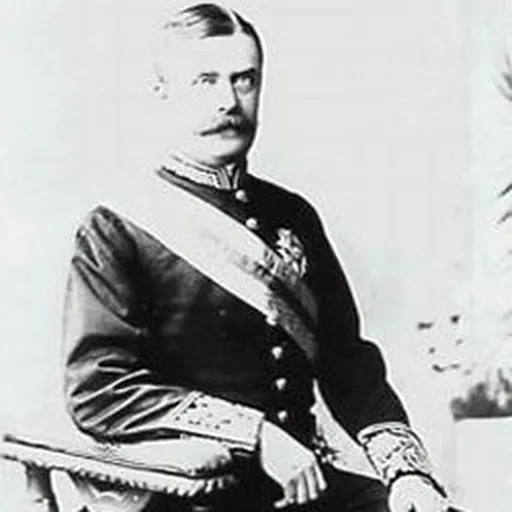
About Charles Wynn-Carington, 1st Marquess of Lincolnshire
Lived 1843 – 1928 (aged 85). Charles Wynn-Carington, 1st Marquess of Lincolnshire was a British politician.
Charles Robert Wynn-Carington, 1st Marquess of Lincolnshire (16 May 1843 – 13 June 1928), known as the Lord Carrington from 1868 to 1895, and as the Earl Carrington from 1895 to 1912, was a British Liberal politician and aristocrat. He was Governor of New South Wales from 1885 to 1890. The Hon. Sir William Carington and Rupert Carington, 4th Baron Carrington, were his younger brothers, while Peter Carington, 6th Baron Carrington, was his grand-nephew. He was educated at Eton and Trinity College, Cambridge. He was a lifelong friend of King Edward VII, having first met him in 1854, and became his aide-de-camp when he was the Prince of Wales.
On his mother's death in 1879 he became joint hereditary Lord Great Chamberlain of England.
Wynn-Carrington was in India 1875–1876, appointed to the Honourable Corps of Gentlemen at Arms during 1881–1885, and was appointed to be the Governor of New South Wales in 1885 until 1890 and was appointed to the Order of St Michael and St George as a Knight Grand Cross in June 1885. He again held office under Gladstone and later Lord Rosebery as Lord Chamberlain of the Household from 1892 to 1895. The latter year he was created Viscount Wendover, of Chepping Wycombe, in the County of Buckingham, and Earl Carrington. He also bore St Edward's Staff at the coronation of King Edward VII.
A noted land reformer, Carrington was a supporter of Lloyd George's redistributive "People's Budget", which he regarded as "bold, Liberal and humane".
Civic works and urban development in 1896, Carrington sold his ancestral home, Wycombe Abbey, which then became a famous private girls' boarding-school. He proceeded to convert the Daws Hill farmhouse, at the top of the hill above the Abbey, into Daws Hill Lodge (later called Daws Hill House), a splendid country mansion fit for the guests, including royalty, whom he entertained there; and his family moved into this new home in 1901.
Carrington was central to the development of a new civic centre for High Wycombe. He laid out a new road, Queen Victoria Road, along the line of his carriage drive from the High Street to his property at St Mary Street. This new road later became the site of a new town hall, police station, public library, and council offices.
The local historian John Mayes described the extent of Carrington's commecial activity in the early twentieth century development of High Wycombe as follows: ‘The great landowners were busy with housing schemes. Lord Carrington laid out Hamilton Road, Benjamin Road and Roberts Road in the lower Hughenden district, Shrubbery Road off the Amersham Hill, and Desborough Avenue and Kitchener Road in the west.’
The size of Carrington's High Wycombe Estate, as passed on to his heirs, was estimated at 3,271 acres in 1937, including developable land on both sides of the Wycombe to Marlow Road as far as Harpers Heath, which was three miles from Wycombe, and two miles from Marlow.
Freemasonry Carrington was initiated into Isaac Newton University Lodge No. 859, Cambridge, on 28 October 1861 at the age of 18, passed in Cairo some eight years later, and raised in Royal York Lodge of Perseverance No. 7 on 6 October 1875. On 3 January 1882 he became a member of Royal Alpha Lodge No. 16. Even though he was not a past Master of a Lodge, he was appointed Senior Grand Warden of the United Grand Lodge of England in 1882.
When he became Governor of New South Wales, he found a rivalry of lodges working under the United Grand Lodge of England and the Grand Lodge of Scotland as well as lodges working under the locally formed (1877) Grand Lodge of New South Wales. Trying to unite the lodges, he became firstly District Grand Master of New South Wales, and then the first Grand Master of the newly consecrated United Grand Lodge of New South Wales. However, as he had still not yet been installed as a Worshipful Master, he was first made Worshipful Master at sight of the Lodge Ionic No. 15. Nine senior Masons were present, including Samuel Way. In 1890 he was appointed Provincial Grand Master of Buckinghamshire and after serving five years, he was made Grand Representative in England of the United Grand Lodge of New South Wales.
Family
Carrington married the Hon. Cecilia Margaret Harbord (1856–1934), daughter of Charles Harbord, 5th Baron Suffield, and Cecilia Annetta Baring, in 1878.
In addition to family life, Lord Carrington was logged by the police for homosexual activity: his name appears in one of the notebooks of the high-profile Scotland Yard detective Donald Swanson.
Lord Lincolnshire died at his home, Daws Hill House, High Wycombe, on 13 June 1928. The baronies (but not his other titles) passed to his younger brother, Rupert. The marquessate, earldom and viscountcy became extinct. Cecilia, Marchioness of Lincolnshire, died in 1934, aged 78.
Issue !! Life span !! Marriage(s) !! Notes
Married Hon. Charles Wilson (later 2nd Baron Nunburnholme), son of Charles Wilson, 1st Baron Nunburnholme, and Florence Wellesley; had issue. Married Col. William Palmer, son of Brig. George Palmer; had issue. Married William Legge, Viscount Lewisham (later 7th Earl of Dartmouth), son of William Legge, 6th Earl of Dartmouth, and Lady Mary Coke; had issue. Married Walter Keppel, Viscount Bury (later 9th Earl of Albemarle), son of Arnold Keppel, 8th Earl of Albemarle, and Lady Gertrude Egerton; had issue. Married, firstly, Lt. Nigel Legge-Bourke, son of Sir Henry Legge and Amy Lambart; had issue. Lt. Legge-Bourke, who was a first cousin of his brother-in-law Viscount Lewisham above, was killed in action in World War I. Married, secondly, Major Hon. Edric Weld-Forester, son of Cecil Weld-Forester, 5th Baron Forester, and Emma Dixie; had issue. Viscount Wendover died from wounds received in action in World War I.
Ancestry
Don’t just read it —
keep it.
Full-length biographies made to live with: read them, listen on the way to work, watch them tonight.
- E-book
- Audio
- Video
Instant download · yours to keep · every purchase keeps this site free
Important facts
more
marquess of Lincolnshire, Lord Carrington of Wycombe Abbey, Wycombe AbbeyFamily & relationships
People in Charles Wynn-Carington, 1st Marquess of Lincolnshire's life
Named in this biography and alive at the same time



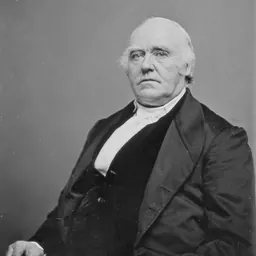
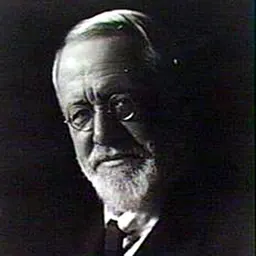
Related people
Same field, nearest in time
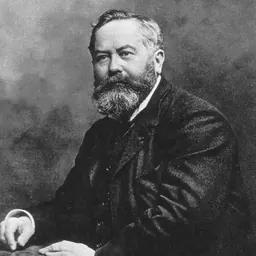
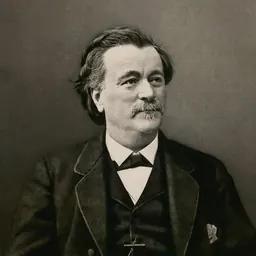


Contemporaries
People whose lives overlapped Charles Wynn-Carington, 1st Marquess of Lincolnshire's
Frequently asked questions
Who was Charles Wynn-Carington, 1st Marquess of Lincolnshire?
British politician (1843-1928)
When was Charles Wynn-Carington, 1st Marquess of Lincolnshire born?
Charles Wynn-Carington, 1st Marquess of Lincolnshire was born on 16 May 1843 in London.
When did Charles Wynn-Carington, 1st Marquess of Lincolnshire die?
Charles Wynn-Carington, 1st Marquess of Lincolnshire died on 13 June 1928 in Buckinghamshire.
What was Charles Wynn-Carington, 1st Marquess of Lincolnshire's occupation?
Charles Wynn-Carington, 1st Marquess of Lincolnshire was a politician.
What nationality was Charles Wynn-Carington, 1st Marquess of Lincolnshire?
Charles Wynn-Carington, 1st Marquess of Lincolnshire was British.
Sources & further reading
· Wikipedia: Charles Wynn-Carington, 1st Marquess of Lincolnshire
· DBpedia: Charles Wynn-Carington, 1st Marquess of Lincolnshire
Cite this page
APA: Biography.guide. (2026). Charles Wynn-Carington, 1st Marquess of Lincolnshire. https://biography.guide/charles-wynn-carington-1st-marquess-of-lincolnshire/
MLA: "Charles Wynn-Carington, 1st Marquess of Lincolnshire." Biography.guide, https://biography.guide/charles-wynn-carington-1st-marquess-of-lincolnshire/.
Chicago: "Charles Wynn-Carington, 1st Marquess of Lincolnshire." Biography.guide. https://biography.guide/charles-wynn-carington-1st-marquess-of-lincolnshire/.
Data last updated: 2026-09-29 · Spot an error? Report a correction.
Portrait: Wikimedia Commons · author & licence
Page generated 2026-10-04 13:11 UTC