
About Charles Woodruff Yost
Lived 1907 – 1981 (aged 73). Charles Woodruff Yost was an American diplomat and politician.
Charles Woodruff Yost (November 6, 1907 – May 21, 1981) was a career U.S. Ambassador. Following postings in Europe, Asia, Africa and the Middle East, he was assigned as his country's representative to the United Nations from 1969 to 1971.
Early life and education
Yost was born in Watertown, New York. He attended the Hotchkiss School, where he was a member of the class of 1924 that included Roswell Gilpatric, Paul Nitze and H. Chapman Rose, before graduating from Princeton University in 1928. He did postgraduate studies at the École des Hautes Études International (École pratique des hautes études) in Paris. Over the next year he traveled to Geneva, Berlin, the Soviet Union (with author Croswell Bowen), Poland, Rumania, Hungary, Yugoslavia, Spain, and Vienna.
Career
Yost joined the U.S. Foreign Service in 1930 on the advice of former Secretary of State Robert Lansing, and served in Alexandria, Egypt as Vice Consul, followed by an assignment in Poland. In 1933, he left the Foreign Service to pursue a career as a freelance foreign correspondent in Europe and a writer in New York City.
After his marriage to Irena Rawicz-Oldakowska, he returned to the U.S. State Department where he wrote articles for Common Sense, gave speeches on Nazism for Norma Thomas. In 1935, he went to work for the Works Progress Administration before becoming assistant chief of the Division of Arms and Munitions Control in 1936. In 1941, he represented the State Department on the Policy Committee of the Board of Economic Warfare. Yost was appointed assistant chief of special research in 1942 and was made assistant chief of the Division of Foreign Activity Correlation in 1943. In February of the next year, he became executive secretary of the Department of State Policy Committee. He attended the Dumbarton Oaks Conference from August to October 1944, when he worked on Chapters VI and VII of the United Nations Charter. He then served at the United Nations Conference on International Organization in San Francisco in April 1945 as aide to Secretary of State Edward Stettinius. In July of that year, he was secretary-general of the US delegatiob to the Potsdam Conference.
In 1945, Yost was reinstated in the Foreign Service, and later that year he served as political adviser to U.S. Lieutenant General Raymond Albert Wheeler on the staff of Lord Louis Mountbatten in Kandy, Ceylon. He then became chargé d'affaires in Thailand during the short reign of Ananda Mahidol. Throughout the late 1940s and the 1950s, his assignments took him to Czechoslovakia, Austria (twice), and Greece. In 1954, he was named minister to Laos, and he became the first United States ambassador there a year later. In 1957, he was minister counselor in Paris. At the end of the same year he was named ambassador to Syria. Shortly after his appointment, Syria and Egypt formed the United Arab Republic, and the U.S. was asked to close its embassy in Syria. Yost was then sent as ambassador to Morocco in 1958.
In 1961, he began his first assignment at the United Nations as the deputy to Ambassador Adlai Stevenson. After Stevenson's death in 1965, Yost stayed on as deputy to Ambassador Arthur Goldberg. In 1964, Yost was promoted to the rank of Career Ambassador, the highest professional Foreign Service level, in recognition of especially distinguished service over a sustained period.
In 1966 he resigned from the Foreign Service to begin his career as a writer, at the Council on Foreign Relations, and as a teacher, at Columbia University.
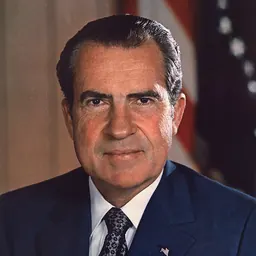
In 1969, President Richard Nixon called Yost out of retirement to become the permanent United States representative to the United Nations. He resigned in 1971 and returned to writing, at the Brookings Institution, and teaching at Georgetown University's School of Foreign Service.
Yost set forth his views in a syndicated newspaper column, for The Christian Science Monitor, and in four books — The Age of Triumph and Frustration: Modern Dialogues, The Insecurity of Nations, The Conduct and Misconduct of Foreign Relations, and History and Memory. He also wrote regular articles for The New York Times and the Washington Post.
In 1974, Yost was awarded the Foreign Service Cup by his fellow Foreign Service officers.
In 1979, Yost was co-chairman of Americans for SALT II, a group that lobbied the Senate for passage of the second Strategic Arms Limitation Treaty. He was a trustee of the American University in Cairo, Egypt, and director of the Aspen Institute for cultural exchanges with Iran. He took part in the unofficial Dartmouth Conferences of United States and Soviet scholars. In 1973, he was named head of the National Committee on United States-China Relations; he visited the People's Republic of China in 1973 and 1977.
Death Yost died of cancer on May 21, 1981, at Georgetown University Hospital in Washington, D.C., at age 73.
Legacy Yost's papers are held at Princeton University Library's Special Collections Department.
Family
Yost's ancestors, who were driven out of the German Palatinate by Louis XIV's armies in the late 17th century, settled in the valley of the Mohawk River in New York State. Others were of Scotch-Irish origin and came to America with the immigration that took place around the mid-18th century.
Yost's ancestor Edward Howell founded Watermill on Long Island, New York, and his ancestor Abraham Cooper founded Oxbow, New York. His ancestor Brigadier General Nicholas Herkimer was a hero of the American Revolutionary War.
Yost's father, Nicholas, an attorney, judge, and bank president was married to Yost's mother, Gertrude, by Pastor Dulles, the father of Secretary of State John Foster Dulles.
In 1934, Yost married Irena Rawicz-Oldakowska in Poland. Her father was , the pre-war director of Fabryka Broni. They had two sons, Nicholas and Casimir, and a daughter, Felicity.
Career timeline 1931: Vice Consul Alexandria, Egypt 1932: Vice Consul Warsaw, Poland 1933: Resigned from the Foreign Service and became a journalist 1935: 1) Progress Report Specialist at the Resettlement Administration 2) Divisional Assistant, U.S. Department of State, Division of Western European Affairs 3) Assistant Chief, U.S. Department of State, Office of Arms and Munitions Control 1936: Division of Arms and Munitions Control 1939: Assistant Chief, U.S. Department of State, Division of Controls 1941: 1) Assistant Chief, U.S. Department of State, Division of Exports and Defense Aid 2) Assistant to the U.S. High Commissioner to the Commonwealth of the Philippines 1941-42: Designated to act in Liaison between Division of European Affairs of State Department and British Empire Division of the Board of Economic Warfare 1942: 1) Assistant Chief, U.S. Department of State, Division of European Affairs, Office of Foreign Territories, Security Committee 2) Member of the Inter-Divisional Country and Area Committees of the Advisory Committee on Problems of Foreign Relations 3) Assistant Chief, U.S. Department of State, Division of Special Research 1943: 1) Division of European Affairs 2) Office of Foreign Economic Coordination, U.S. Department of State 1943-44: Assistant Chief, U.S. Department of State, Division of Foreign Activity Correlation 1944: 1) Executive Secretary, Department of State Policy Committee 2) Division of International Security and Organization 3) Executive Secretary, U.S. Department of State, Joint Secretariat of the Executive Staff Committee 4) Assistant to the chairman for the Dumbarton Oaks Conference 1945: 1) Special Assistant to the chairman, Secretary of State Stettinius, U.S. Delegation to the United Nations Conference on International Organizations, San Francisco 2) Secretary-General, U.S. Delegation, Berlin Conference, Potsdam Agreement 3) Assigned as U.S. Political Adviser to General Wheeler, Deputy Supreme Allied Commander to the Southeast Asia Command (SEAC), India & Ceylon 4) Assigned as U.S. Political Adviser to General Thomas Terry, Commander of the American India-Burma Theater 1946: 1) Chargé d'affaires, Bangkok, Thailand 2) U.S. Delegation to UNESCO, United Nations, Lake Success, New York 3) Political Adviser to U.S. Delegation, General Assembly of the United Nations 1947: First Secretary & Counselor, Prague, Czechoslovakia 1947-49: Deputy High Commissioner, and First Secretary & Counselor of Legation, Vienna, Austria 1949: 1) Member of U.S. Delegation; Special Assistant to Ambassador at Large for Sixth Session of the Council of Foreign Ministers Meeting, Paris, France 2) Member of Delegation to Fourth Regular Session of the General Assembly of the United Nations as Special Assistant to Ambassador at Large 3) Director of the Office of Eastern European Affairs, Department of State 1950: 1) Director of the Office of Eastern European Affairs, Department of State 2) Special Assistant to Ambassador at Large, Deputy Policy Adviser to the U.S. Delegation to the United Nations, New York 3) European Affairs Rep., U.S. Department of State, on Policy Comm. on Immigration and Naturalization 4) U.S. Department of State, Policy Planning Staff 1950-53: Counselor with Personal rank of Minister, Athens, Greece 1953: Deputy High Commissioner & Deputy Chief of Mission, Vienna, Austria 1954: Minister, Vientiane, Laos 1955-1956: Ambassador, Laos 1956-57: Minister, Paris, France 1957-58: Ambassador, Damascus, Syria 1958: Foreign Affairs Specialist, U.S. Department of State, Policy Planning Staff 1958-61: Ambassador, Rabat, Morocco 1961-66: U.S. Deputy Representative to the United Nations 1966: 1) Resigned from the Foreign Service 2) Chairman, United Nations Economic Commission for Asia and the Far East (ECAFE), New Delhi 3) Bureau of Near East & South Asian Affairs, State Department 1966-69: Senior Fellow at the Council on Foreign Relations 1967: 1) Consultant to the State Department, member of the Panel of Advisers on Near East, South Asian and International Organizations 2) American Society of International Law Proceedings, Board of Review and Development: Conflict Control by Non-Violent Means (April) 3) President Johnson's Special Envoy to the Middle East (May–June) 4) Carnegie Endowment for International Peace Bermuda conference on the Vietnam War (December) 1968: 1) Head of the State Department Cyprus Study Group 2) President Johnson's Special Envoy to the Middle East (July) 1969-71: U.S. Representative to the United Nations, New York. President of the Security Council 1970-80: Member of the Dartmouth Conference Delegation 1971: Resigned from the Foreign Service 1971-73: 1) Counselor to UN Association 2) Professor at Columbia University's School of International Affairs 1972: U.S. presidential envoy to Egypt 1973-75: President, National Committee on US-China Relations 1974: Professor at Rockefeller Foundation's Villa Serbelloni Study and Conference Center in Bellagio 1975: Presidential envoy to Egypt 1975-81: 1) Senior Fellow, Brookings Institution 2) Professor at the Institute for the Study of Diplomacy, Georgetown University 3) Chairman, National Committee on US-China Relations 1976-81: Coordinator, Aspen Institute East-West, Iran and China Activities 1977: President Carter's Woodcock MIA delegation to Vietnam and Laos 1978: 1969 Security Council speech on Jerusalem codified in Camp David Accord Annex 1979: 1) Co-chairman Americans for SALT Strategic Arms Limitation Talks 2) Honorary Co-chairman United Nations Association of the United States
Writings The Age of Triumph and Frustration: Modern Dialogues (Speller, 1964) The Insecurity of Nations: International Relations in the Twentieth Century (Praeger, 1968) The Pursuit of World Order (Villanova University Press, 1969) The Conduct and Misconduct of Foreign Affairs (Random House, 1972) History & Memory (Norton, 1980) - nominated for National Book Critics Circle General Non-fiction Award
Don’t just read it —
keep it.
Full-length biographies made to live with: read them, listen on the way to work, watch them tonight.
- E-book
- Audio
- Video
Instant download · yours to keep · every purchase keeps this site free
Important facts
People in Charles Woodruff Yost's life
Named in this biography and alive at the same time





Related people
Same field, nearest in time
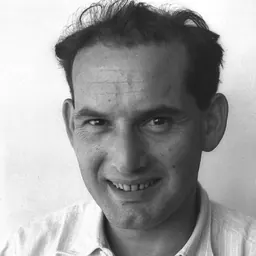
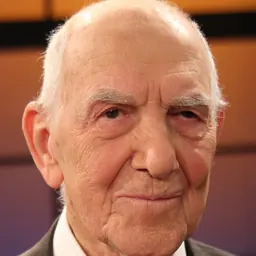
Contemporaries
People whose lives overlapped Charles Woodruff Yost's
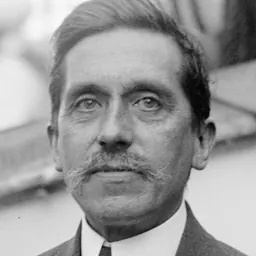


Frequently asked questions
Who was Charles Woodruff Yost?
American diplomat (1907–1981)
When was Charles Woodruff Yost born?
Charles Woodruff Yost was born on 6 November 1907 in Watertown.
When did Charles Woodruff Yost die?
Charles Woodruff Yost died on 21 May 1981 in Washington, D.C..
What was Charles Woodruff Yost's occupation?
Charles Woodruff Yost was a diplomat and politician.
What nationality was Charles Woodruff Yost?
Charles Woodruff Yost was American.
Sources & further reading
· Wikipedia: Charles Woodruff Yost
Cite this page
APA: Biography.guide. (2026). Charles Woodruff Yost. https://biography.guide/charles-woodruff-yost/
MLA: "Charles Woodruff Yost." Biography.guide, https://biography.guide/charles-woodruff-yost/.
Chicago: "Charles Woodruff Yost." Biography.guide. https://biography.guide/charles-woodruff-yost/.
Data last updated: 2026-09-20 · Spot an error? Report a correction.
Page generated 2026-09-27 05:18 UTC