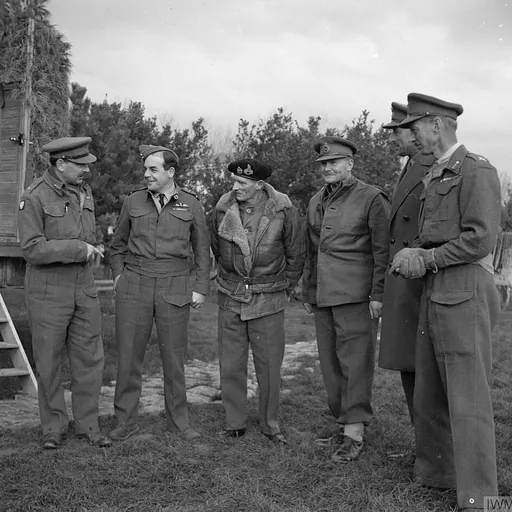
About Charles Walter Allfrey
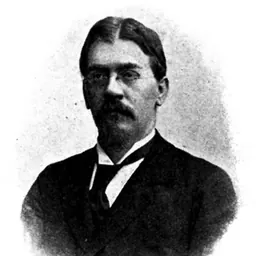
Lived 1895 – 1964 (aged 69). Charles Walter Allfrey was a British military personnel.
Lieutenant-General Sir Charles Walter Allfrey, (24 October 1895 – 2 November 1964) was a senior British Army officer who served in both the world wars, most notably during the Second World War as General Officer Commanding of V Corps in North Africa and Italy from 1942 to 1944.
Early life and military career Charles Walter Allfrey was born on 24 October 1895 in Southam, Northamptonshire, the youngest son of Captain Henry Allfrey, a British Army officer of the King's Royal Rifle Corps, and Kathleen Hankey. He entered the Royal Naval College, Dartmouth. However, upon the outbreak of the First World War in August 1914, he instead was commissioned as a second lieutenant in the Royal Field Artillery (RFA) on 11 August. He served on the Western Front with the 94th Brigade of the RFA, part of the 21st Division, a Kitchener's Army unit. He was promoted to the acting rank of captain on 5 January 1917, which was made substantive later that year on 3 November. Allfrey was awarded the Military Cross (MC) in 1918 for keeping his battery in action for an extended period of time, despite being under direct machine gun and artillery fire from the enemy.
Between the wars After the war, Allfrey served on regimental duties before becoming adjutant at the Army School of Equitation, from 1925 to 1928,
In Iraq, he was appointed a Companion of the Distinguished Service Order (DSO) and, from October 1932 to November 1933, was employed with the British Military Mission to Iraq where he was Inspector Artillery to the Iraqi Army. He was brevetted lieutenant colonel on 1 January 1935 and, in the same year, he married Geraldine Clare Lucas-Scudamore. They had two children, a son and a daughter. The following year Allfrey was appointed as a General Staff Officer Grade 1 (GSO1) at the Staff College, Camberley from 1936 to 1939, despite never having attended the college as a student, as many others who later reached high command had, and was promoted to the substantive rank of colonel on 6 August 1939, shortly before the outbreak of the Second World War.
Second World War France and Britain At the start of the Second World War, in September, Allfrey held a senior staff position, as a GSO1, in the United Kingdom, continuing in this role in France with the British Expeditionary Force (BEF). In February 1940, however, he returned to the United Kingdom to take up the post of Corps Commander Royal Artillery (CCRA) at II Corps, then commanded by Lieutenant General Sir Alan Brooke. On 19 July 1940, after having participated in the Battle of France and the Dunkirk evacuation, and after a brief spell as CCRA at IV Corps, under Lieutenant General Claude Auchinleck, he was promoted to the acting rank of major general to soon took over from Major-General William Green in command of South-Western Area, part of Southern Command, He was promoted to temporary major general on 19 July 1941. The division was serving as part of XII Corps, commanded by Lieutenant General Andrew Thorne (replaced in April by Lieutenant General Bernard Montgomery who in turn was replaced by Lieutenant General James Gammell in November), under South-Eastern Command and, like Allfrey's former command, was on anti-invasion duties and training to repel an invasion. Aged just 46, this was a considerable tribute towards Allfrey and made him one of the youngest corps commanders in the British Army at the time. V Corps, with the 38th (Welsh) and 47th (London) Infantry Divisions, commanded respectively by Major Generals Donald Butterworth and Gerald Templer (who had briefly been Allfrey's BGS), and the 214th Independent Infantry Brigade (Home) under command, was serving under Southern Command in a static beach defence role. However, it relinquished this role upon being sent to Scotland in July, where it took under command the 6th Armoured Division, under Major General Charles Keightley (who had been a fellow instructor at the Staff College some years before), and the 4th and 78th Infantry Divisions, commanded by Major Generals John Hawkesworth (another of Allfrey's fellow Staff College instructors) and Vyvyan Evelegh, respectively. Allfrey's V Corps was to form a major component of the First Army, under Lieutenant General Edmond Schreiber (replaced in August by Lieutenant General Kenneth Anderson), then being formed for participation in Operation Torch, the Allied invasion of French North Africa, scheduled for November. Training in Scotland continued until October, and the 4th and 78th Divisions were posted elsewhere in preparation for the invasion. V Corps, now reinforced with Major General Harold Freeman-Attwood's 46th Infantry Division, was involved in Operation Ochsenkopf, with the 46th, stationed on V Corps' northern sector, absorbing the brunt of the German offensive, and falling back before bringing the German offensive to a halt, and eventually recovering Djebel Abiod and Sedjanane. The main role was played by IX Corps, under Lieutenant General Brian Horrocks (succeeding Lieutenant General John Crocker, who had been injured). Horrocks, as previously mentioned, had been another one of Allfrey's fellow instructors at the Staff College before the war and thought highly of him, later writing in his autobiography that he "was one of the most popular officers in the British Army", and that "nobody could have been more helpful. The capture of Tunis was the result of the closest cooperation between our two corps, 5 and 9". Despite Allfrey's corps playing a relatively small role in the final stages of the campaign, which ended in mid-May with the surrender of almost 250,000 Axis troops, Allfrey, along with Major General Francis Tuker, GOC of the 4th Indian Division, was able to accept the surrender of German Colonel General Hans-Jürgen von Arnim, commanding the Panzer Army Africa. His rank of major general was made substantive on 6 November.
Italy and Egypt On 3 September 1943, exactly four years since Britain had declared war on Germany, the Eighth Army landed in Italy at Reggio Calabria, with the US Fifth Army under Lieutenant General Mark W. Clark landing at Salerno six days later. The 1st Airborne Division under Major General George Hopkinson landed at Taranto on the same day, encountering little in the way of serious resistance, although just a few days later the division's GOC was killed in action (and replaced by Major General Ernest Down).
Postwar Lieutenant General Sir Charles Allfrey hands the key of the Citadel to the Egyptian Chief of Staff, Ferick Ibrahim Attallah Pasha, marking the formal handover of the fortress to local control. This ceremony was the first step towards the ending of British rule in Egypt.
Egypt was Allfrey's last posting and, after handing over his command to Lieutenant General Richard Gale, he retired from the army, after a 33-year military career, as a lieutenant general in June 1948.
After retirement he held numerous honorary appointments, including Colonel Commandant of the Royal Artillery, a position he held from 1947 to 1957, followed by Colonel Commandant of the Royal Horse Artillery from 1949 to 1957. He was Justice of the peace and Deputy Lieutenant for the county of Gloucestershire from 1953 until his death, which occurred on 2 November 1964 in Bristol, shortly after his 69th birthday.
Don’t just read it —
keep it.
Full-length biographies made to live with: read them, listen on the way to work, watch them tonight.
- E-book
- Audio
- Video
Instant download · yours to keep · every purchase keeps this site free
Important facts
People in Charles Walter Allfrey's life
Named in this biography and alive at the same time



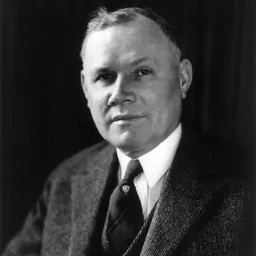

Related people
Same field, nearest in time
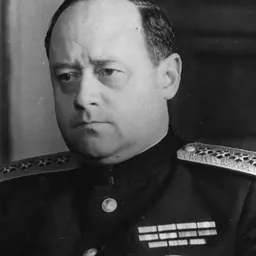



Contemporaries
People whose lives overlapped Charles Walter Allfrey's
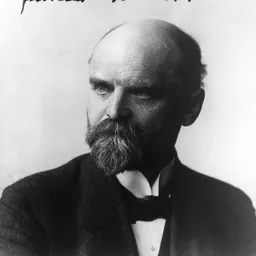
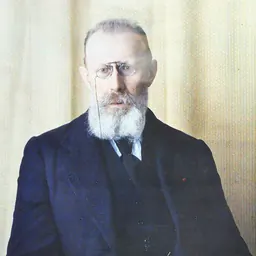

Frequently asked questions
Who was Charles Walter Allfrey?
British Army officer
When was Charles Walter Allfrey born?
Charles Walter Allfrey was born on 24 October 1895 in Northamptonshire.
When did Charles Walter Allfrey die?
Charles Walter Allfrey died on 2 November 1964 in Bristol.
What was Charles Walter Allfrey's occupation?
Charles Walter Allfrey was a military personnel.
What nationality was Charles Walter Allfrey?
Charles Walter Allfrey was British.
Sources & further reading
· Wikipedia: Charles Walter Allfrey
Cite this page
APA: Biography.guide. (2026). Charles Walter Allfrey. https://biography.guide/charles-walter-allfrey/
MLA: "Charles Walter Allfrey." Biography.guide, https://biography.guide/charles-walter-allfrey/.
Chicago: "Charles Walter Allfrey." Biography.guide. https://biography.guide/charles-walter-allfrey/.
Data last updated: 2026-09-20 · Spot an error? Report a correction.
Page generated 2026-09-27 05:09 UTC