
About Charles VII, Holy Roman Emperor
Lived 1697 – 1745 (aged 47). Charles VII, Holy Roman Emperor was a German sovereign.
Charles VII (6 August 1697 – 20 January 1745) was elector of Bavaria from 26 February 1726 and Holy Roman Emperor from 24 January 1742 to his death on 20 January 1745. He was also King of Bohemia (as Charles Albert) from 1741 to 1743. Charles was a member of the House of Wittelsbach, and his reign as Holy Roman Emperor thus marked the end of three centuries of uninterrupted Habsburg imperial rule, although he was related to the Habsburgs by both blood and marriage.
Charles was the eldest son of Elector Maximilian II Emanuel of Bavaria and the Polish princess Theresa Kunegunda Sobieska. He became elector following the death of his father in 1726. In 1722, Charles married Archduchess Maria Amalia of Austria, daughter of Joseph I, Holy Roman Emperor and niece of Charles VI, Holy Roman Emperor. The couple had seven children together. After Charles VI died in 1740, Elector Charles claimed the Archduchy of Austria and briefly gained hold of the Bohemian throne. In 1742, he was elected emperor of the Holy Roman Empire. He ruled until his death three years later.
Early life and career
Charles (Albert) was born in Brussels and was the son of Maximilian II Emanuel, Elector of Bavaria, and Theresa Kunegunda Sobieska, daughter of King John III Sobieski of Poland.
His family was politically divided during the War of the Spanish Succession, and he spent many years under house arrest in Austria. The royal family had left Brussels and returned to Munich in 1701. His father fled to the Spanish Netherlands after he had been defeated at the Battle of Blenheim in August 1704, and Charles and his siblings stayed with their mother, the acting Regent, in Munich. In May 1705, after a stay in Venice, the Austrian authorities refused to allow the Electress to return to Electorate of Bavaria and forced her into exile, which lasted ten years. Maximilian Emanuel also went into exile to Compiègne after 29 April 1706, and an Imperial ban was imposed on him, as he again had been defeated at the Battle of Ramillies a few days earlier. Only in 1715 was the family reconciled. After reaching his majority in August 1715, Charles undertook an educational tour to Italy from 3 December 1715 to 24 August 1716. In 1717, he served among Bavarian auxiliaries in the Austro-Turkish War.
In 1726, after his father had died, Charles became Duke of Bavaria and Elector Palatine and thus one of the prince-electors of the Holy Roman Empire, and he also inherited a debt of 26 million guilders. He maintained good relations with both his Habsburg relatives and France, continuing his father's policies.
In 1729, he instituted the knightly Order of St George and ordered the beginning of the construction of the Rothenberg Fortress.
During the War of the Austrian Succession, Charles invaded Upper Austria in 1741 and planned to conquer Vienna, but his allied French troops under Charles Louis Auguste Fouquet, duc de Belle-Isle were instead redirected to Bohemia, capturing Prague in November 1741. That meant that Charles was crowned king of Bohemia in Prague on 19 December 1741, when the Habsburgs had not yet been defeated. He was elected king of Germany on 24 January 1742 and became Holy Roman emperor upon his coronation on 12 February 1742. His brother Clemens August of Bavaria, the archbishop-elector of Cologne, generally sided with the Habsburg-Lorraine faction in the disputes over the Habsburg succession but cast his vote for him and personally crowned him emperor at Frankfurt. King George II of Great Britain, as the elector of Hanover, also voted to install Charles as emperor even though both Britain and Hanover were allied with Austria in the ongoing war. Charles VII was the second Wittelsbach emperor after Louis IV, Holy Roman Emperor and the first Wittelsbach king of Germany since the reign of Rupert, King of the Romans.
Shortly after his coronation, most of Charles's territories were overrun by the Austrians, and Bavaria was occupied by the troops of Maria Theresa. The Emperor fled to Munich and resided for almost three years in the Palais Barckhaus in Frankfurt. Most of Bohemia was lost in December 1742, when the Austrians allowed the French under the Duc de Belle-Isle and François Marie de Broglie, 1st Duke of Broglie an honourable capitulation. Charles was mocked as an emperor who neither controlled his own realm nor was in effective control of the empire itself, but the institution of the Holy Roman emperor had largely become symbolic in nature and powerless by then. A popular Latin saying about him was "et Caesar et nihil", meaning "both emperor and nothing", a word play on aut Caesar aut nihil, meaning "either emperor or nothing". Bavarian General Ignaz Felix, Count of Törring-Jettenbach, was compared to a drum, as people "heard about him only when he was beaten".
Charles VII tried to boost his prestige from Frankfurt with numerous legal acts, such as granting imperial privilege to the University of Erlangen in 1743 and creating several new imperial nobles. Charles Eugene, Duke of Württemberg was declared to be of full age in 1744, ahead of time. Alexander Ferdinand, 3rd Prince of Thurn and Taxis served as Principal Commissioner for Charles VII at the Perpetual Diet of Regensburg and in 1744 the Thurn und Taxis dynasty were appointed the hereditary Postmasters General of the Imperial Reichspost.
Charles' brother Clemens August of Bavaria was more pro-Austrian, and Charles' son and successor Maximilian III Joseph made peace with Austria. With the Treaty of Füssen, Austria recognised the legitimacy of Charles's election as Holy Roman Emperor.
Children Charles and his wife, Archduchess Maria Amalia of Austria, were parents of seven children:
NamePortraitBirthDeathNotesMaximiliane MariaPrincess of Bavaria 100px 12 April 1723 Died at birth.Maria Antonia WalpurgisElectress of Saxony 100px 18 July 1724 23 April 1780 Married in 1747 Frederick Christian, Elector of Saxony, had issue.Theresa Benedicta of BavariaPrincess of Bavaria 100px 6 December 1725 29 March 1743 Died young and unmarried.Maximilian III Joseph, Elector of BavariaElector of Bavaria 100px 28 March 1727 30 December 1777 Married in 1747 Maria Anna Sophia of Saxony, no issue.Joseph Ludwig LeoPrince of Bavaria 100px 25 August 1728 2 December 1733 Died in early childhood.Duchess Maria Anna Josepha of BavariaMargravine of Baden-Baden 100px 7 August 1734 7 May 1776 Married in 1755 Louis George, Margrave of Baden-Baden, no issue.Maria Josepha of BavariaHoly Roman Empress 100px 30 March 1739 28 May 1767 Married in 1765 Joseph II, Holy Roman Emperor, no issue.
Illegitimate children Charles Albert and his mistress Maria Caroline Charlotte von Ingenheim had a daughter and a son: Maria Josepha von Hohenfels (1720–1797) ∞ Emmanuel François Joseph, Count of Bavaria (1695–1747), his half-brother, an illegitimate son of Maximilian II Emanuel and his French mistress Agnes Le Louchier. She had an issue: Marie Amélie Caroline Josèphe Françoise Xavière of Bavaria, Countess of Hohenfels, Marchioness of Villacerf (1744–1820) ∞ Armand Charles Emmanuel de Hautefort, Marquess of Sarcelles.
Franz Ludwig, Count of Holnstein (4 October 1723 – 22 May 1780) ∞ Anna Marie zu Löwenfeld (1735–1783), daughter of Clemens August of Bavaria. He had an issue: Maximilian Joseph, Count of Holnstein ∞ Princess Maria Josepha of Hohenlohe-Waldenburg-Schillingsfürst (1774–1824), daughter of Charles Albert II, Prince of Hohenlohe-Waldenburg-Schillingsfürst.
Titles and Arms Charles VII, by the grace of God elected Holy Roman Emperor, forever August, King in Germany and of Bohemia, Duke in the Upper and Lower Bavaria as well as the Upper Palatinate, Count-Palatine of the Rhine, Archduke of Austria, Prince-Elector of the Holy Roman Empire, Landgrave of Leuchtenberg, etc.
Ancestry
Don’t just read it —
keep it.
Full-length biographies made to live with: read them, listen on the way to work, watch them tonight.
- E-book
- Audio
- Video
Instant download · yours to keep · every purchase keeps this site free
Important facts
more
Carolus Albertus, Kaiser Karl VII. Heiliges Römisches Reich, imperatore del Sacro romano impero Karl VII, Holy Roman Emperor Charles VII, Elector of Bavaria Charles Albert, empereur germanique Charles VII, Elector of Bavaria Karl Albrecht, Holy Roman Emperor Karl VII, Charles VII, Karl VII. (HRR)Family & relationships
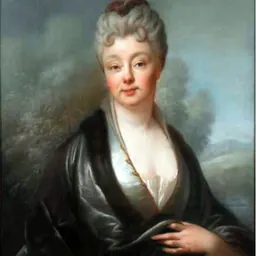
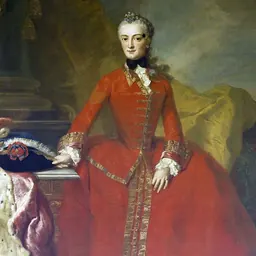
People in Charles VII, Holy Roman Emperor's life
Named in this biography and alive at the same time


Related people
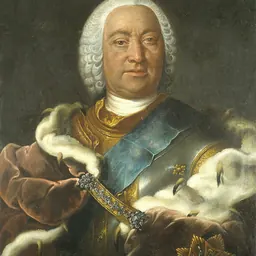
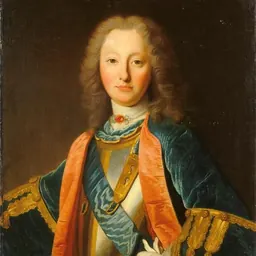
Same field, nearest in time



Contemporaries
People whose lives overlapped Charles VII, Holy Roman Emperor's




Frequently asked questions
Who was Charles VII, Holy Roman Emperor?
Holy Roman Emperor
When was Charles VII, Holy Roman Emperor born?
Charles VII, Holy Roman Emperor was born on 6 August 1697 in Brussels.
When did Charles VII, Holy Roman Emperor die?
Charles VII, Holy Roman Emperor died on 20 January 1745 in Munich.
What was Charles VII, Holy Roman Emperor's occupation?
Charles VII, Holy Roman Emperor was a sovereign.
What nationality was Charles VII, Holy Roman Emperor?
Charles VII, Holy Roman Emperor was German.
Sources & further reading
· Wikipedia: Charles VII, Holy Roman Emperor
· DBpedia: Charles VII, Holy Roman Emperor
Cite this page
APA: Biography.guide. (2026). Charles VII, Holy Roman Emperor. https://biography.guide/charles-vii-holy-roman-emperor/
MLA: "Charles VII, Holy Roman Emperor." Biography.guide, https://biography.guide/charles-vii-holy-roman-emperor/.
Chicago: "Charles VII, Holy Roman Emperor." Biography.guide. https://biography.guide/charles-vii-holy-roman-emperor/.
Data last updated: 2026-09-20 · Spot an error? Report a correction.
Page generated 2026-09-27 05:28 UTC