
About Charles Sweeney
Lived 1919 – 2004 (aged 84). Charles Sweeney was an American air force officer, aircraft pilot and soldier.
Charles William Sweeney (27 December 1919 – 16 July 2004) was an officer in the United States Army Air Forces during World War II and the pilot who flew Bockscar carrying the Fat Man atomic bomb to the Japanese city of Nagasaki on 9 August 1945. Separating from active duty at the end of World War II, he later became an officer in the Massachusetts Air National Guard as the Army Air Forces transitioned to an independent United States Air Force, eventually rising to the rank of major general.
Early life and education
Charles Sweeney was an Irish-American born in 1919, the son of a plumber,
Military career
In April 1941, Sweeney joined the Army Air Corps and became a pilot by December 1941. He was moved to Jefferson Proving Grounds in Indiana. From 1943-1944, he served as a test pilot on the newly built Eglin Field, in Florida.
Before takeoff, Tibbets warned Sweeney that he had lost at least 45 minutes of flying time because of the fuel pump problem, and to take no more than fifteen minutes at the rendezvous before proceeding directly to the primary target.
After takeoff from Tinian, Bockscar reached its rendezvous point and after circling for an extended period, found The Great Artiste, but not The Big Stink. Climbing to 30,000 feet, the assigned rendezvous altitude, both aircraft slowly circled Yakushima Island. Though Sweeney had been ordered not to wait at the rendezvous for the other aircraft longer than fifteen minutes before proceeding to the primary target, Sweeney continued to wait for The Big Stink, perhaps at the urging of Commander Frederick Ashworth, the plane's weaponeer. After exceeding the original rendezvous time limit by a half-hour, Bockscar, accompanied by The Great Artiste, proceeded to the primary target, Kokura. No fewer than three bomb runs were made, but the delay at the rendezvous had resulted in 7/10ths cloud cover over the primary target, and the bombardier was unable to drop. By the time of the third bomb run, Japanese antiaircraft fire was getting close, and Japanese fighter planes could be seen climbing to intercept Bockscar.
Poor bombing visibility and an increasingly critical fuel shortage eventually forced Bockscar to divert from Kokura and attack the secondary target, Nagasaki. As they approached Nagasaki, the heart of the city's downtown was covered by dense cloud, and Sweeney and Ashworth, initially decided to bomb Nagasaki using radar. However, a small opening in the clouds allowed Bockscar's bombardier to verify the target as Nagasaki. The crew had been ordered to drop the bomb visually if possible; Sweeney decided to proceed with a visual bomb run. Bockscar then dropped Fat Man, with a blast yield equivalent to 21 kilotons of TNT. It exploded 43 seconds later at above the ground, at least northwest of the planned aim point. The failure to drop Fat Man at the precise bomb aim point caused the atomic blast to be confined to the Urakami Valley. As a consequence, a major portion of the city was protected by the intervening hills, and around 30% of Nagasaki was destroyed. The bombing also severed the Mitsubishi arms production extensively and killed an estimated 35,000–40,000 people outright, including 23,200–28,200 Japanese industrial workers, 2,000 Korean slave laborers, and 150 Japanese soldiers.
Low on fuel, Bockscar barely made it to the runway on Okinawa. With only enough fuel for one landing attempt, Sweeney brought Bockscar in fast and hard, ordering every available distress flare on board to be fired as he did so. The number two engine died from fuel starvation as Bockscar began its final approach. Touching the runway hard, the heavy B-29 slewed left and towards a row of parked B-24 bombers before the pilots managed to regain control. 2nd Lt. Jacob Beser recalled that at this point, two engines had died from the fuel starvation, while "the centrifugal force resulting from the turn was almost enough to put us through the side of the airplane."
After Bockscar returned to Tinian, Tibbets recorded that he was faced with the dilemma of considering “if any action should be taken against the airplane commander, Charles Sweeney, for failure to command.” After meeting on Guam with Tibbets and Sweeney, General Curtis LeMay, chief of staff for the Strategic Air Forces, confronted Sweeney, stating, "You fucked up, didn't you, Chuck?", to which Sweeney made no reply. LeMay then turned to Tibbets and told him that an investigation into Sweeney's conduct of the mission would serve no useful purpose. serving as the Boston Director of Civil Defense.
He retired in 1976 as a major general in the Air National Guard. In War's End, Sweeney defended the decision to drop the atomic bomb in light of subsequent historical questioning. However, it was Sweeney's other assertions regarding the Nagasaki atomic mission, along with various anecdotes regarding the 509th and its crews that drew the most criticism. Tibbets, Major "Dutch" Van Kirk, Colonel Thomas Ferebee and others vigorously disputed Sweeney's account of events. Partly in response to War's End, Tibbets issued a revised version of his own autobiography in 1998, adding a new section on the Nagasaki attack in which he harshly criticized Sweeney's actions during the mission.
Awards
U.S. Air Force Command Pilot Badge Silver Star Air Medal Air Force Outstanding Unit Awardwith Combat "V"American Defense Service MedalAmerican Campaign MedalAsiatic-Pacific Campaign Medalwith 2 bronze campaign starsWorld War II Victory MedalArmy of Occupation MedalNational Defense Service Medalwith service starArmed Forces Expeditionary MedalAir Force Longevity Service AwardArmed Forces Reserve Medalwith gold hourglass device Small Arms Expert Marksmanship RibbonMassachusetts Air National Guard Service Medal
Don’t just read it —
keep it.
Full-length biographies made to live with: read them, listen on the way to work, watch them tonight.
- E-book
- Audio
- Video
Instant download · yours to keep · every purchase keeps this site free
Important facts
People in Charles Sweeney's life
Named in this biography and alive at the same time


Related people
Same field, nearest in time
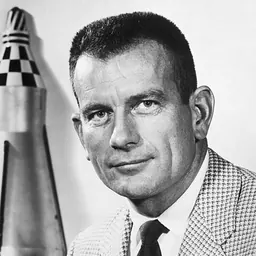
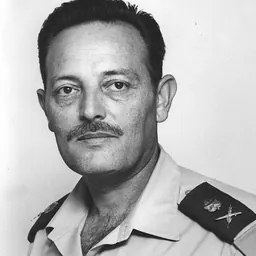

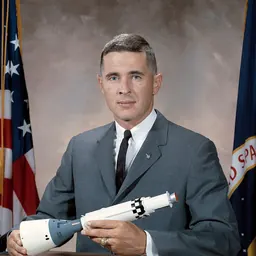

Contemporaries
People whose lives overlapped Charles Sweeney's
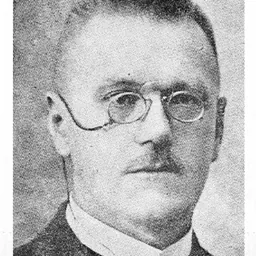





Frequently asked questions
Who was Charles Sweeney?
United States general
When was Charles Sweeney born?
Charles Sweeney was born on 27 December 1919 in Lowell.
When did Charles Sweeney die?
Charles Sweeney died on 16 July 2004 in Boston.
What was Charles Sweeney's occupation?
Charles Sweeney was an air force officer, aircraft pilot and soldier.
What nationality was Charles Sweeney?
Charles Sweeney was American.
Sources & further reading
Cite this page
APA: Biography.guide. (2026). Charles Sweeney. https://biography.guide/charles-sweeney/
MLA: "Charles Sweeney." Biography.guide, https://biography.guide/charles-sweeney/.
Chicago: "Charles Sweeney." Biography.guide. https://biography.guide/charles-sweeney/.
Data last updated: 2026-09-26 · Spot an error? Report a correction.
Page generated 2026-09-27 05:14 UTC