
About Charles Stuart
Lived 1758 – 1828 (aged 69–70). Charles Stuart was a soldier.
Charles Stuart ( – 31 March 1828), known by the nickname Hindoo Stuart, was an Irish officer in the East India Company Army, known for being one of a few officers to embrace Hindu culture. He also wrote books and several newspaper articles extolling Hindu culture and tradition and urging its adoption by Europeans settled in India, and deploring the attitudes and activities of the Utilitarians and missionaries who deprecated Indian culture. He is mentioned in William Dalrymple's book White Mughals.
Background and family Stuart was born in either 1757 or 1758 in Dublin or Galway. Stuart was potentially one of four illegitimate children of the Irish politician Thomas Smyth.
His nephews included the diplomat Robert Stuart and the naturalist and surgeon James Stuart. The clergyman and footballer Robert King was his great-nephew.
Little is known of his early life, but his later writings demonstrate that he may have had a classical education, learning Latin and poetry. V. C. P. Hodson's biography of Stuart mentions that he "had studied the language, manners, and customs of the natives of this country with so much enthusiasm, his intimacy with them ... obtained for him the name of Hindoo Stuart".
Stuart took to Hinduism both in its religious aspects and as a way of daily life. He adopted many Hindu customs and routines of daily life, including bathing in the Ganges at Calcutta every morning. He had been addressed as "Pandit Stuart" by William Linnaeus Gardner, who mentioned that Stuart performed pooja regularly, "avoided the sight of beef" and had even attended the Kumbh Mela.
He amassed a collection of Hindu deities and icons of worship. Archie Baron says, in his book An India Affair: "It was far easier to break into Muslim society than the exclusive and mysterious world of brahminical Hinduism which makes 'Hindoo Stuart' a rarity even among White Moghuls... His Hinduism was on open display to the whole of Calcutta. As far as one can tell, this does not seem to have set back his career".
He quickly took to wearing Indian clothes, and this became his normal garb when off the parade ground. He encouraged his Indian sepoys to wear full moustaches in the Indian style on parade. His commander-in-chief "ticked him off" due to his partiality towards sepoys sporting "Rajput moustaches or brightly coloured caste marks on their foreheads". Declaring Indian garments best suited to the weather of India, he actively promoted their adoption by Europeans settled in India. He wrote newspaper articles on this subject frequently ("frequent and vigorous" contributions to the daily Calcutta Telegraph in the year 1800) and strongly encouraged European ladies in India to adopt the sari.
Stuart published his letters extolling the virtues of "elegant, simple, sensible, and sensual" Indian saris vis-a-vis "the prodigious structural engineering Europeon (sic) women strapped themselves into, in order to hold their bellies in, project their breasts out and allow their dresses to balloon grandly up and over towards the floor" along with some replies by "outraged" white women in a "deliciously silly volume" entitled The Ladies Monitor, Being A Series of Letters First published in Bengal on the Subject of Female Apparel Tending to Favour a regulated adoption of Indian Costume And a rejection of Superfluous Vesture By the Ladies of this country With Incidental remarks on Hindoo Beauty, Whale-Bone Stays, Iron Busks, Indian Corsets, Man-Milliners, Idle Bachelors, Hair-Powder, Waiting Maids, And Footmen. Some of the reasons he cites for European women to give up iron busks are: Firstly wearing iron busks makes women highly susceptible to lightning strikes (exhorting them with sentences such as "This is no laughing matter ladies for I am absolutely serious"). Secondly, by discarding iron busks from their wardrobes, European women would immensely enhance the supply of iron in Bengal for farmers who desperately need new wagon wheels. in a tomb which took the form of a Hindu temple. In 2018, Indian news site Rediff.com contacted the British Museum to ask about the return of one piece of the collection, a sandstone sculpture of the Hindu deity Harihara. They responded that "We feel there is a huge public benefit to visitors in displaying the whole world under one roof. The strength of the museum's collection is its breadth and depth, which allows visitors to compare and contrast cultures and understand our interconnectivity. [...] This is because we share, in a wider geographical and temporal context, the history and culture of South Asia not only with our international visitors, but also the UK's South Asian Diaspora."
Published works
Don’t just read it —
keep it.
Full-length biographies made to live with: read them, listen on the way to work, watch them tonight.
- E-book
- Audio
- Video
Instant download · yours to keep · every purchase keeps this site free
Important facts
People in Charles Stuart's life
Named in this biography and alive at the same time
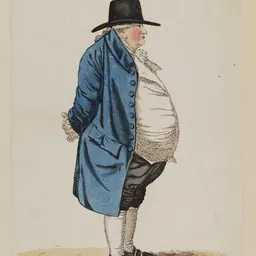



Related people
Same field, nearest in time
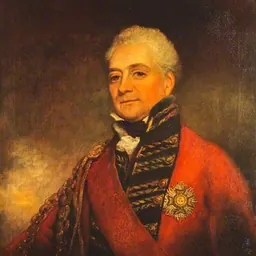

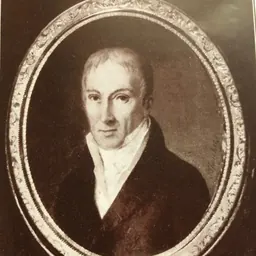


Contemporaries
People whose lives overlapped Charles Stuart's




Frequently asked questions
Who was Charles Stuart?
British East India Company general
When was Charles Stuart born?
Charles Stuart was born in 1758 in Kingdom of Ireland.
When did Charles Stuart die?
Charles Stuart died on 1 April 1828 in Kolkata.
What was Charles Stuart's occupation?
Charles Stuart was a soldier.
Sources & further reading
· DBpedia: Charles Stuart (East India Company officer)
Cite this page
APA: Biography.guide. (2026). Charles Stuart. https://biography.guide/charles-stuart-soldier/
MLA: "Charles Stuart." Biography.guide, https://biography.guide/charles-stuart-soldier/.
Chicago: "Charles Stuart." Biography.guide. https://biography.guide/charles-stuart-soldier/.
Data last updated: 2026-09-20 · Spot an error? Report a correction.
Page generated 2026-09-27 05:17 UTC