
About Charles Smith
Lived 1786 – 1858 (aged 72). Charles Smith was a British military officer and colonial governor.
Lieutenant-General Sir Charles Felix Smith (1786 – 1858), was an officer of the British Royal Engineers, of which he was colonel-commandant from 1856. He was acting Governor of Trinidad in 1828, 1830, and 1831; acting Governor of Demerara and of Berbice in 1833; acting Governor of St. Lucia in 1834; and acting Governor of Gibraltar in 1838. He received the Orders of Carlos III and of San Fernando of Spain in 1814, and the Ottoman Order of Glory in 1841.
Early years Charles Felix Smith, who born on 9 July 1786 at Piercefield, Monmouthshire, was the second son of George Smith of Burn Hall, County Durham, by Juliet, who was the daughter and the sole heiress of Richard Mott of Carlton, Suffolk. The orientalist Elizabeth Smith (1776 – 1806) was his sister, and the St John's College, Cambridge, theologian George Smith (1693 – 1756) was his great-grandfather. Charles Felix joined the Royal Military Academy, Woolwich on 15 June 1801, and was commissioned as second lieutenant in the Royal Engineers on 1 October 1802, and was promoted to first lieutenant on 9 October 1802, as which he was sent to the south-eastern military district defences of the south coast of Kent.
West Indies, 1804–1810 On 16 December 1804, Felix embarked for the West Indies, where he served under Sir Charles Shipley, the commanding Royal Engineer. He was promoted to be second captain on 18 November 1807. In December 1807 he accompanied the expedition under General Bowyer from Barbados against the Danish West India Islands, and took part under Shipley in the operations which resulted in the capture of St. Thomas, St. John, and Santa Cruz. In January 1809 he accompanied the expedition under Sir George Beckwith to attack Martinique, and took part under Shipley in the attack on, and capture of, Pigeon Island on 4 February, and in the siege and capture of Fort Bourbon, which led to the capitulation of the whole island on 23 February. He was severely wounded on this occasion, and on his return to England on 31 March 1810 he received an annual pension of 100l. for his wounds.
Spain, 1810–1813
On 25 October 1810 Smith embarked for the Iberian Peninsula, and joined the force of Sir Thomas Graham at Cadiz, then blockaded by the French. In the spring of 1811 an attempt to raise the siege of Cadiz was made by sending a force by water to Tarifa to march on the flank of the enemy, while at the same time a sortie was made by the garrison of Cadiz and La Isla across the river San Pedro. Smith was left in Cadiz as senior engineer officer in charge of it, as well as of La Isla and the adjacent country, during the operations which comprised the Battle of Barrosa, on 5 March 1811. In spite of this victory the siege was not raised, and the British retired within the lines of La Isla.
Smith was promoted for his services at Tarifa to be brevet major, to date from 31 December 1811. He was promoted to be first captain in the Royal Engineers on 12 April 1812, and returned to Cadiz, where he was commanding Royal Engineer until the siege was raised in July 1812. In 1813 he took part in the Battle of Osma (18 June 1813), the Battle of Vitoria (21 June), and the engagements at Villa Franca and Tolosa (24 and 25 June), when he had a horse shot under him. He accompanied Sir Thomas Graham on 1 July to take part in the siege of San Sebastian. On the visit of the Duke of wellington on 12 July, he attended him round the positions as senior officer (for the time being) of Royal Engineers, and his proposed plans of operation met with Wellington's approval. The city fell on 9 September, and, having been mentioned in Graham's despatch, Smith was promoted to be brevet lieutenant-colonel on 21 September 1813 "for conduct before the enemy at San Sebastian".
Belgium and France, 1815–1818 On 19 June 1815 Smith joined the British army in Belgium as Commanding Royal Engineer of the Second Corps, marched with it to Paris, and took part in the entry into that city on 7 July. He was one of the officers selected by the Duke of Wellington to take over the French fortresses to be occupied by the British. He remained with the army of occupation and commanded the Engineers at Vincennes. He was one of the officers who introduced stage-coaches-and-four into Paris. The coaches used to meet opposite Demidoff's house, afterwards the Café de Paris. He was also a boxer and an equestrian who imported English thoroughbred horses for racing. His trainer was Tom Hurst, afterwards of Chantilly. He organised successful races at Vincennes that were superior to those of royal patronage in the Champ de Mars. Smith was a reputed duellist with either rapier, or sabre, or pistol. He killed three Frenchmen in duels during his stay in Paris. He returned to England on 8 November 1818.
West Indies, 1823–1837 Smith was employed in the south of England as Commanding Royal Engineer until 1 January 1823, when he was appointed Commanding Royal Engineer in the West Indies, with headquarters at Barbados. With eleven different island colonies occupied by troops, he had only five officers of Royal Engineers under him, and was obliged to supplement his staff by making eleven officers of the line assistant engineers. A commission sent from England in 1823 to report on requirements in the West Indies recommended the addition of fourteen engineers to the establishment to enable the work to be efficacious. Smith was promoted to be lieutenant-colonel on 29 July 1825, and to be colonel in the army on 22 July 1830. He was acting Governor of Trinidad in 1828, and in 1830, and in 1831; and he was acting Governor of Demerara and of Berbice in 1833; and he was acting Governor of St. Lucia in 1834; and he was acting Governor of Gibraltar in 1838. He commanded the British forces in the West Indies from June 1836 to February 1837, for which he received the commendation of Lord Hill, the general commanding-in-chief. On 3 November Smith was involved in the assault and capture of St. Jean d'Acre, where he was severely wounded, despite which he was required to repair the fortifications, organise the defence, and administer the Pashalic of Acre.
Honours
British
Foreign
50x50px Order of Glory (Ottoman Empire), and diamond medal and sword.
Don’t just read it —
keep it.
Full-length biographies made to live with: read them, listen on the way to work, watch them tonight.
- E-book
- Audio
- Video
Instant download · yours to keep · every purchase keeps this site free
Important facts
People in Charles Smith's life
Named in this biography and alive at the same time



Related people
Same field, nearest in time
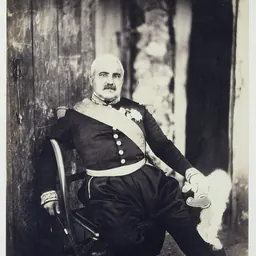
Contemporaries
People whose lives overlapped Charles Smith's



Frequently asked questions
Who was Charles Smith?
British army officer
When was Charles Smith born?
Charles Smith was born on 17 January 1786 in Burn Hall.
When did Charles Smith die?
Charles Smith died on 17 January 1858 in Worthing.
What was Charles Smith's occupation?
Charles Smith was a military officer and colonial governor.
What nationality was Charles Smith?
Charles Smith was British.
Sources & further reading
· DBpedia: Charles Felix Smith
Cite this page
APA: Biography.guide. (2026). Charles Smith. https://biography.guide/charles-smith-military-officer/
MLA: "Charles Smith." Biography.guide, https://biography.guide/charles-smith-military-officer/.
Chicago: "Charles Smith." Biography.guide. https://biography.guide/charles-smith-military-officer/.
Data last updated: 2026-09-20 · Spot an error? Report a correction.
Page generated 2026-09-27 05:05 UTC