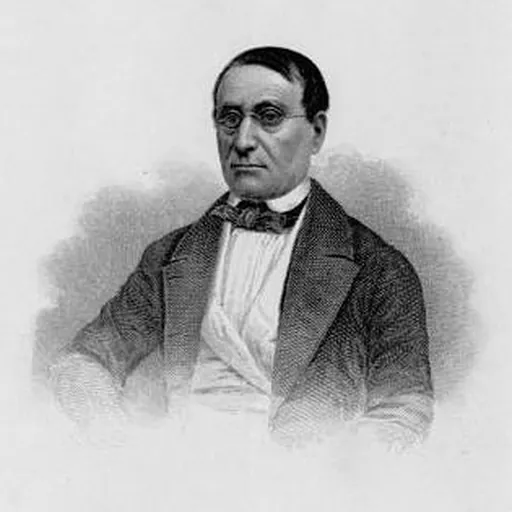
About Charles Meyer
Lived 1799 – 1862 (aged 63). Charles Meyer was a Russian composer and pianist.
Charles Mayer (21 March 1799 – 2 July 1862), also known as Carl Mayer or Charles Meyer, was a Prussian pianist and composer active in the early 19th century.
Life Mayer was born in Königsberg. His father was a clarinetist who, soon after Charles's birth, moved to Saint Petersburg and four years later to Moscow. He received his early musical education from his mother, followed by extended studies with John Field (1782–1837), with whom he continued to study after the family returned to Saint Petersburg after the Moscow fire of 1812. His first successful tour as a concert pianist in 1814 led him to Poland, Germany, Holland, and France, before he settled in Saint Petersburg in 1819. During another celebrated concert tour of 1845 he travelled through Scandinavia (where he became an honorary member of the Royal College of Music in Stockholm), Germany (Hamburg, Leipzig) and Austria (Vienna). Following the rise of Adolf von Henselt in Saint Petersburg, Mayer withdrew to Dresden in 1846, and died there.
Mayer was a busy and successful teacher who is supposed to have taught some 800 pupils in Saint Petersburg. He was reputed to have taken over the calm and musical (rather than virtuoso) technique established by Field. His most prominent pupils included the Russian pianist and composer Mikhail Glinka and Polish composer Filipina Brzezinska-Szymanowska.
Music Mayer wrote almost exclusively for the piano, producing more than 350 works for the instrument. His main body of work includes a number of studies, sets of variations on popular melodies, character pieces and dances.
He is sometimes confused with another composer by the same name who died in 1904. Mayer's Valse Mélancolique, subtitled Le Regret, Op. 332, was for more than a century misattributed to Frédéric Chopin, until its true authorship was confirmed by Italian music scholar Luca Chierici in 2012.
Selected works Valse de concert op. 6 Premium concert polka op. 9 6 Exercises op. 31 Variations sur un air russe No. 1 op. 40 Variations sur un air russe No. 2 op. 41 Rondino op. 42 6 Études op. 55 3 Études op. 61 Scherzo op. 63 Impromptu No. 2 op. 65 Valse-étude No. 4 op. 69 Nocturne op. 81 Valse-étude op. 83 Caprice-Valse No. 1 op. 85 Capriccio No. 3 op. 87 Études op. 93 Divertissement No. 1 op. 95 Valse-étude No. 6 op. 116 Galop militaire op. 117 Jugendblüthen op. 121 3 Études caractéristiques op. 127 Souvenir de Naples op. 128 Immortelles op. 140 40 Études op. 168 La Dernière rose. Fantaisie varié op. 169 6 Novelletten op. 179 6 Novelletten op. 183 Romaneske op. 184 Elisa polka op. 187 Triolino-étude op. 190 Mazurka graçieuse op. 224 Chant bohémien op. 292 Jugendträume op. 300 Grande Étude d'octave op. 331 Le Régret op. 332
Don’t just read it —
keep it.
Full-length biographies made to live with: read them, listen on the way to work, watch them tonight.
- E-book
- Audio
- Video
Instant download · yours to keep · every purchase keeps this site free
Important facts
People in Charles Meyer's life
Named in this biography and alive at the same time
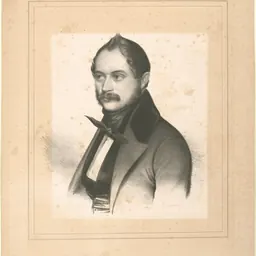

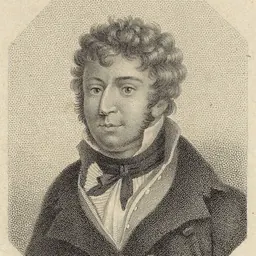
Related people
Same field, nearest in time
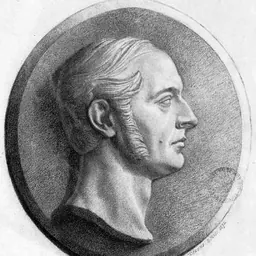


Contemporaries
People whose lives overlapped Charles Meyer's





Frequently asked questions
Who was Charles Meyer?
composer (1799-1862)
When was Charles Meyer born?
Charles Meyer was born on 21 March 1799 in Königsberg.
When did Charles Meyer die?
Charles Meyer died on 2 July 1862 in Dresden.
What was Charles Meyer's occupation?
Charles Meyer was a composer and pianist.
What nationality was Charles Meyer?
Charles Meyer was Russian.
Sources & further reading
· DBpedia: Charles Mayer (composer)
Cite this page
APA: Biography.guide. (2026). Charles Meyer. https://biography.guide/charles-meyer-composer/
MLA: "Charles Meyer." Biography.guide, https://biography.guide/charles-meyer-composer/.
Chicago: "Charles Meyer." Biography.guide. https://biography.guide/charles-meyer-composer/.
Data last updated: 2026-09-24 · Spot an error? Report a correction.
Portrait: Wikimedia Commons · author & licence
Page generated 2026-09-27 05:08 UTC