
Charles Lucas
British cellist, composer and Principal of the Royal Academy of Music
About Charles Lucas
Lived 1808 – 1869 (aged 60). Charles Lucas was a British music educator, conductor, cellist, composer, musician and organist.
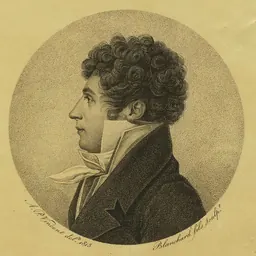
Charles Lucas (28 July 1808 – 23 March 1869) was an English composer, cellist, conductor, publisher and from 1859 to 1866 third principal of the Royal Academy of Music.
Life and career Lucas was born in Salisbury, the son of a music-seller. After receiving a musical education as a chorister at Salisbury Cathedral between 1815 and 1823 he attended the newly formed Royal Academy of Music (RAM) in London, where he studied the cello under Robert Lindley and composition under the principal, William Crotch. While a student he won several prizes, became head boy and was made a sub-professor of composition in 1824. In later years Lucas taught two other musicians who eventually headed the RAM: George Macfarren and Alexander Mackenzie. The latter recalled that Lucas had been an outstanding teacher of counterpoint.
After leaving the academy in 1830 Lucas was appointed to Queen Adelaide's private band, and became music tutor to Prince George (later Duke) of Cambridge and the princes of Saxe-Weimar. Lucas later conducted for the society and other concert promoters. He served as a director of the society from 1856 to 1869, during Bennett's term as conductor of its orchestra.
In his history of the RAM (1922) Frederick Corder wrote: "In July Cipriani Potter resigned, on the plea of old age and infirmity. He was a good and conscientious man rather than an able one, loved by his subordinates, the best of whom, Charles Lucas – who had served him faithfully and earnestly begged him not to retire – was elected Principal in his place." Corder commented that Lucas ....may be said to have been Potter's favourite pupil, and was certainly devoted to his master", and that Lucas's career "was one of unobtrusive usefulness, never of distinction. ... is appointment to the principalship of the Royal Academy was, to put it bluntly, a mere job. The position ... was not one to attract any outsider of independent mind; the pay was small and the opportunity for self-advertisement almost nil; but Lucas knew Potter's work and carried it on. On the musical side, Corder describes Lucas's tenure as the least interesting period in the RAM's history, but Lucas was well regarded to the extent that a fund was set up in his honour to endow an annual "Charles Lucas Medal", given to the RAM student judged to have written the best musical composition. Among its recipients have been Arnold Bax, Richard Rodney Bennett, Dora Bright, Guirne Creith, Edward German, Arthur Thomas, Joseph Holbrooke, Emma Lomax and Stewart Macpherson.
With Robert Addison and John Hollier, Lucas was a partner in the music publishing firm Addison, Hollier and Lucas, which flourished between 1856 and 1863 with its premises at 210 Regent Street, and later at 11 Little Marlborough Street. The firm published most of the operas by Macfarren, Michael Balfe, William Vincent Wallace, and Julius Benedict, business gained through its close association with the Pyne and Harrison Opera Company.
Ill health led Lucas to retire from the RAM in 1866. He died three years later at his home, 9 Louvaine Road, Wandsworth, London, at the age of 60, and is buried in Woking. overtures, string quartets (including the String Quartet in G major, 1827), anthems and songs.
He also wrote an opera, The Regicide, to a libretto by Metastasio translated by Thomas Oliphant, the overture to which The Times described as "a spirited composition, very noisy and without any great originality". Not long before the composer's death an overture, Rosenwald, was performed by the Philharmonic Society at the Hanover Square Rooms in London on 8 June 1868. The Philharmonic Society performed several other of his works during his lifetime, including the second and third symphonies and the Regicide overture. As editor Lucas prepared a performing version of Esther for the Handel Society.
Selected compositions 1826 – Sinfonia No 1 in C (revised 1834) 1827 – String Quartet in G major 1829 – Sinfonia No 2 in A 1830 – Sinfonia No 3 in Bb major 1836 – Magnificat, canonic setting for four voices (Gresham Prize, 1836) 1840 – The Regicide, opera 1868 – Overture Rosenwald
Charles Lucas Medal The Charles Lucas Prize for composition, founded in his memory, was awarded by the Royal Academy of Music in the form of a silver medal. Recipients included:
Don’t just read it —
keep it.
Full-length biographies made to live with: read them, listen on the way to work, watch them tonight.
- E-book
- Audio
- Video
Instant download · yours to keep · every purchase keeps this site free
Important facts
People in Charles Lucas's life
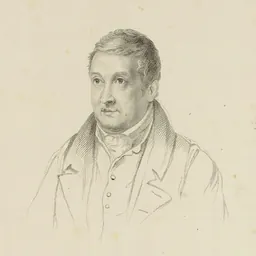
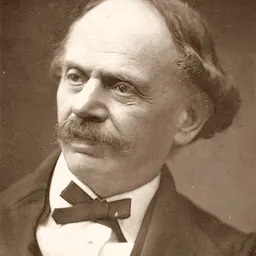
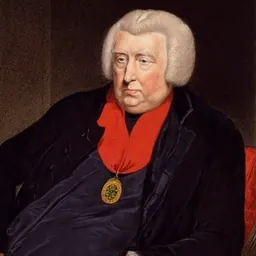
Named in this biography and alive at the same time





Related people
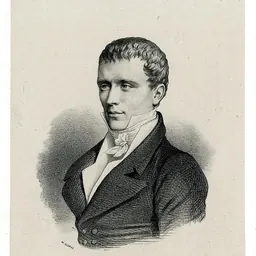
Same field, nearest in time


Contemporaries
People whose lives overlapped Charles Lucas's





Frequently asked questions
Who was Charles Lucas?
British cellist, composer and Principal of the Royal Academy of Music (1808-1869)
When was Charles Lucas born?
Charles Lucas was born on 28 July 1808 in Salisbury.
When did Charles Lucas die?
Charles Lucas died on 23 March 1869 in Battersea.
What was Charles Lucas's occupation?
Charles Lucas was a music educator, conductor, cellist, composer, musician and organist.
What nationality was Charles Lucas?
Charles Lucas was British.
Sources & further reading
· DBpedia: Charles Lucas (musician)
Cite this page
APA: Biography.guide. (2026). Charles Lucas. https://biography.guide/charles-lucas-music-educator/
MLA: "Charles Lucas." Biography.guide, https://biography.guide/charles-lucas-music-educator/.
Chicago: "Charles Lucas." Biography.guide. https://biography.guide/charles-lucas-music-educator/.
Data last updated: 2026-09-20 · Spot an error? Report a correction.
Page generated 2026-09-27 05:27 UTC