
About Charles Lenepveu
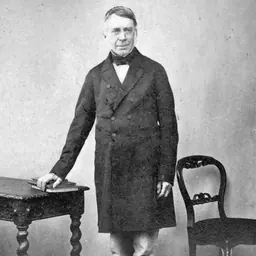
Lived 1840 – 1910 (aged 69). Charles Lenepveu was a French composer, university teacher and theorist.
Charles-Ferdinand Lenepveu (4 October 1840 – 16 August 1910), was a French composer and teacher. Destined for a career as a lawyer, he defied his family and followed a musical career. He studied at the Paris Conservatoire, and won France's top musical award, the Prix de Rome in 1867.
Much of Lenepveu's career was as a professor at the Conservatoire from 1880. He was known as a strict conservative, hostile to musical innovation, as was much of the French musical Establishment of the time. He was expected to succeed Théodore Dubois as director of the Conservatoire in 1905, but his chances evaporated when he was implicated in an attempt to rig the results of that year's Prix de Rome in favour of his own pupils.
Life and career
Early years Lenepveu was born in Rouen (Seine-Maritime), the son of Charles-François Lenepveu, a prominent lawyer, and his wife Marie-Françoise-Armande, née Petit. The young Lenepveu received a traditional education in his home town, while at the same time teaching himself musical theory and learning to play the violin.
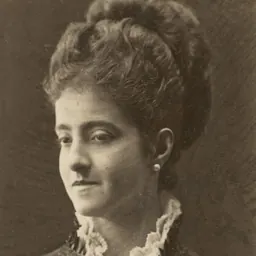
Lenepveu senior was strongly opposed to his son's seeking a musical career and enrolled him at the Sorbonne Law School in Paris. Lenepveu was an outstanding student, and qualified to practise law in December 1862. Before the delayed presentation of Le florentin Lenepveu's Requiem Mass was performed at Notre-Dame de Bordeaux in 1871, won critical approval, and was given in Paris the following year. At the same time as lecturing at the Conservatoire, Lenepveu remained active as a composer. Two one-act operas were completed but not staged. At the behest of its dedicatee, Adelina Patti, his four-act opera Velléda was presented at the Royal Opera House in London in 1883.
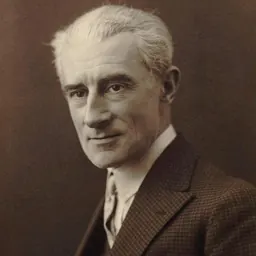
In 1905, Lenepveu was at the centre of what became known as "l'affaire Ravel". Maurice Ravel, who was widely recognised as a composer of outstanding talent and promise, was eliminated from that year's Prix de Rome. When it emerged that Lenepveu, who was on the jury, had contrived to exclude all but his own pupils from the finals, there was a public outcry. He was denounced by the leading critic Pierre Lalo as "a poor musician, author of a few worthless compositions; without ideas or art; but he is a member of the Institut".
Lenepveu died at his home in Paris, at the age of 69. He was buried in his native Rouen.
Don’t just read it —
keep it.
Full-length biographies made to live with: read them, listen on the way to work, watch them tonight.
- E-book
- Audio
- Video
Instant download · yours to keep · every purchase keeps this site free
Important facts
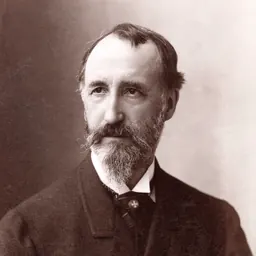
People in Charles Lenepveu's life
Named in this biography and alive at the same time

Related people
Same field, nearest in time

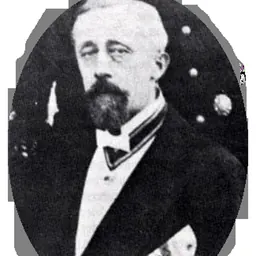

Contemporaries
People whose lives overlapped Charles Lenepveu's


Frequently asked questions
Who was Charles Lenepveu?
French composer (1840–1910)
When was Charles Lenepveu born?
Charles Lenepveu was born on 4 October 1840 in Rouen.
When did Charles Lenepveu die?
Charles Lenepveu died on 16 August 1910 in Paris.
What was Charles Lenepveu's occupation?
Charles Lenepveu was a composer, university teacher and theorist.
What nationality was Charles Lenepveu?
Charles Lenepveu was French.
Sources & further reading
Cite this page
APA: Biography.guide. (2026). Charles Lenepveu. https://biography.guide/charles-lenepveu/
MLA: "Charles Lenepveu." Biography.guide, https://biography.guide/charles-lenepveu/.
Chicago: "Charles Lenepveu." Biography.guide. https://biography.guide/charles-lenepveu/.
Data last updated: 2026-09-20 · Spot an error? Report a correction.
Page generated 2026-09-27 05:26 UTC