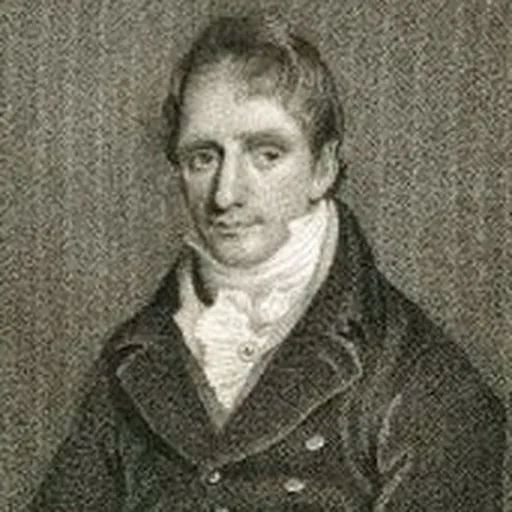
Charles Isaac Mungo Dibdin
English dramatist, composer, writer and theatre proprietor
About Charles Isaac Mungo Dibdin
Lived 1768 – 1833 (aged 64). Charles Isaac Mungo Dibdin was a British playwright, composer, stage actor and writer.
Charles Isaac Mungo Dibdin (17 October 1768 – 15 January 1833), or Charles Pitt or Charles Dibdin the younger, as he was professionally known, was an English dramatist, composer, writer and theatre proprietor. He was perhaps best known for his proprietorship of the Sadler's Wells Theatre and for the pantomimes and satirical farces that he wrote, and which were staged at many theatres across London. He employed Joseph Grimaldi at Sadler's Wells where Grimaldi appeared in many of his most successful pantomimes. He was the son of Charles Dibdin, brother of Thomas John Dibdin and godson of David Garrick.
Biography
Early life and career Born in Russell Court, Covent Garden, London as the illegitimate son of composer Charles Dibdin and the actress Harriett Pitt, Dibdin was named after his father's friend and librettist Isaac Bickerstaffe and their character Mungo in an afterpiece entitled The Padlock. Dibdin made his theatrical debut opposite his younger brother Thomas John Dibdin (b. 1771) in his godfather David Garrick's The Jubilee in 1775. Soon after this performance, his parents separated, and Dibdin changed his surname to his mother's maiden name, Pitt.
Dibdin's mother was initially against her son following a theatrical career and so arranged for him to start an apprenticeship for his uncle Cecil Pitt, a furniture-maker, who worked in central London. Dibdin commenced his schooling in Hackney, then moved to County Durham where, at the age of nine, he enrolled at a boarding-school at Barnard Castle, remaining there until the age of 14, without a holiday. When he was 14, Dibdin returned to London and began an apprenticeship for a pawnbroker, which he continued for several years. Keen to realize a literary ambition, Dibdin published a collection of verse, Poetical Attempts: by a Young Man in 1792
In 1797 he recommenced his performing career at the Royalty Theatre in London in a one-man show called Sans six sous and became known professionally as Charles Dibdin the younger. to Philip Astley who further contracted Dibdin for a three-year engagement as a writer at Astley's Amphitheatre. Astley was known for his strict, fearsome reputation and insisted on starving his actors until after their act, using food as a reward for good performances. Astley ordered Dibdin to produce twelve burlettas, twelve pantomimes and twelve harlequinades a year. including Harlequin Benedick; or, The Ghost of Mother Shipton and The Great Devil, both starring Joseph Grimaldi.
Peak years Dibdin and his wife conducted a tour with the Astley company, travelling to Dublin and Liverpool as well as performing in London. It was during this period that Dibdin became a fluent and prolific composer, writing many songs, prologues, epilogues, and one-act musical plays. In 1799, Dibdin left Astley and sought alternative employment following his wife's dismissal for sewing during rehearsals. That autumn, the Dibdins joined a touring equestrian company, managed by William Davis and toured to such cities as Liverpool, Bristol, and Manchester. He hired a band of notable performers, including Edmund Kean and Joseph Grimaldi as well as many singers, tightrope-walkers, and pugilists. Throughout the seasons, he introduced many of his self-composed works that met the varied public taste. These spectacles improved the fortunes of Sadler's Wells, and by 1802 he, his brother Thomas and a syndicate of wealthy businessmen, including the scene painter Robert Andrews and composer William Reeve, became shareholders in the theatre. In 1803–4, Dibdin installed a large water tank and advertised the venue as an aquatic theatre that performed aqua dramas. | group= n
On 15 October 1807, eighteen people were killed in a stampede to escape when a mistaken fire alarm was given at the theatre. Although his proprietorship survived the disaster, the Napoleonic Wars of 1803-1815 had ruined public demand for Dibdin's type of entertainment, and his fortunes fell until, in 1819, he was declared bankrupt and was incarcerated in a debtors' prison. He was released two years later upon the sale of his shares in Sadler's Wells which bought him out of debt. He continued with his compositions, writing many songs and pantomimes for various London theatres and took up the role of stage director at the Royal Amphitheatre from 1822–23 and manager of the Surrey Theatre from 1825–26. In 2010 a musical artwork dedicated to Dibdin was installed during the park's refurbishment. The author Andrew McConnell Stott noted "[Dibdin] was a cheerful, tireless and frequently prosperous man with a love of patriotic ballads and convivial dinners."
Legacy In 2025, the Joey Clowns released a collection of Dibdin’s 1808-1820 works that were performed by Joseph Grimaldi in his role as Clown on the album “Tippitywitchet” which included favorites such as the title track, “Hot Codlins”, “All the World’s In Paris”, “London Cheats (There Never Were Such Times)” and “Bull in a China Shop”.
Notes and references
Don’t just read it —
keep it.
Full-length biographies made to live with: read them, listen on the way to work, watch them tonight.
- E-book
- Audio
- Video
Instant download · yours to keep · every purchase keeps this site free
Important facts
People in Charles Isaac Mungo Dibdin's life
Named in this biography and alive at the same time




Related people
Same field, nearest in time


Contemporaries
People whose lives overlapped Charles Isaac Mungo Dibdin's



Frequently asked questions
Who was Charles Isaac Mungo Dibdin?
English dramatist, composer, writer and theatre proprietor (1768-1833)
When was Charles Isaac Mungo Dibdin born?
Charles Isaac Mungo Dibdin was born on 27 October 1768.
When did Charles Isaac Mungo Dibdin die?
Charles Isaac Mungo Dibdin died on 15 January 1833.
What was Charles Isaac Mungo Dibdin's occupation?
Charles Isaac Mungo Dibdin was a playwright, composer, stage actor and writer.
What nationality was Charles Isaac Mungo Dibdin?
Charles Isaac Mungo Dibdin was British.
Sources & further reading
· Wikipedia: Charles Isaac Mungo Dibdin
· DBpedia: Charles Dibdin the younger
Cite this page
APA: Biography.guide. (2026). Charles Isaac Mungo Dibdin. https://biography.guide/charles-isaac-mungo-dibdin/
MLA: "Charles Isaac Mungo Dibdin." Biography.guide, https://biography.guide/charles-isaac-mungo-dibdin/.
Chicago: "Charles Isaac Mungo Dibdin." Biography.guide. https://biography.guide/charles-isaac-mungo-dibdin/.
Data last updated: 2026-09-21 · Spot an error? Report a correction.
Portrait: Wikimedia Commons · author & licence
Page generated 2026-09-27 04:59 UTC