
About Robert Andrews
Lived 1748 – 1804 (aged 55–56). Robert Andrews was an American politician and professor.
Robert Andrews ( 1748 – February 4, 1804) was an American clergyman who was a military chaplain in the American Revolutionary War, then professor at the College of William and Mary as well as author and politician who represented James City County in the Virginia Ratification Convention, then represented Williamsburg in the Virginia House of Delegates (1790–1799).
Early and family life Born in the near Elkton, Maryland and that colony's border with Pennsylvania, to the former Letitia Cooke and her husband Moses Andrews. His exact birth year is disputed, and may be 1743 or 1748.
Education and ordination Robert Andrews imitated his elder brother and traveled to Philadelphia to study at the College of Philadelphia (now the University of Pennsylvania) under provost William Smith and professor Francis Allison. He graduated with an A.B. degree either in 1766
Career
Professor and revolutionary patriot In late 1774, Andrews became one of the thirteen men (only a few clergymen), to sign a document drafted by eighty-nine former members of the House of Burgesses, which recommended a general congress as well as a non-importation association. The following year he joined the York County Committee of Safety in part to enforce that agreement.
In 1777, Rev. Andrews enlisted as a chaplain to the 2nd regiment of the Virginia militia under Col. George Gibson, and served until 1780.
In December 1777 Andrews accepted an appointment as Professor of Moral Philosophy at the College of William & Mary, but the college was often closed during the conflict. In October 1778, Andrews chaired the meeting to elect the Grand Master of the Grand Lodge of Virginia and became the deputy to John Blair Jr., who was a prominent local lawyer and who would become an Associate Justice of the U.S. Supreme Court in his final years. When the college was reorganized in 1779 under the guidance of Thomas Jefferson and George Wythe (who became the country's first law professor), the grammar school was closed, the professorship of oriental languages was abolished and Rev. Madison resumed teaching Moral Philosophy. However, Andrews retained his position, with the Law of Nature and Nations and the Fine Arts added to his teaching portfolio. Andrews became the first college professor in the new nation to have fine arts included in his professorship. Andrews published an almanac in at least 1781, 1783, 1794 and 1795. In 1784 he accepted the important mathematical professorship (the college certifying all surveyors in the new Commonwealth), and retained his position as professor until his death.
Williamsburg voters elected Andrews to their Committee of Safety in 1779, and soon afterward, he became one of the town's alderman. He served alongside Nathaniel Burwell and voted for ratification, but did not speak during the debates. He would later ally himself with the Federalist Party. In the 1787 Virginia tax census, Andrews paid taxes on seven enslaved people, as well as two horses and a four-wheeled post chaise.
Death and legacy Andrews died in Williamsburg on February 4, 1804. He was probably buried near Williamsburg's historic Bruton Parish Church. A gravestone was never erected. The Swem Library of the College of William and Mary holds his papers, including a receipt for the sale of one slave.
Don’t just read it —
keep it.
Full-length biographies made to live with: read them, listen on the way to work, watch them tonight.
- E-book
- Audio
- Video
Instant download · yours to keep · every purchase keeps this site free
Important facts
People in Robert Andrews's life
Named in this biography and alive at the same time

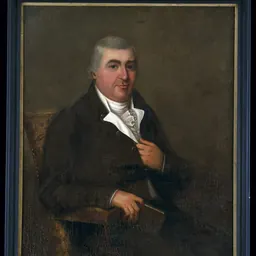
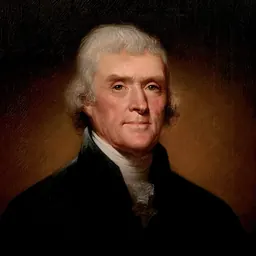


Related people
Same field, nearest in time
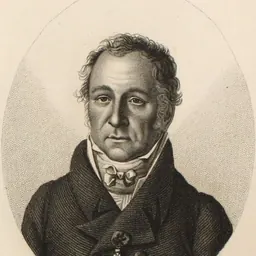



Contemporaries
People whose lives overlapped Robert Andrews's




Frequently asked questions
Who was Robert Andrews?
American politician
When was Robert Andrews born?
Robert Andrews was born in 1748 in Pennsylvania.
When did Robert Andrews die?
Robert Andrews died on 4 February 1804 in Virginia, Williamsburg, Virginia.
What was Robert Andrews's occupation?
Robert Andrews was a politician and professor.
What nationality was Robert Andrews?
Robert Andrews was American.
Sources & further reading
· DBpedia: Robert Andrews (clergyman)
Cite this page
APA: Biography.guide. (2026). Robert Andrews. https://biography.guide/robert-andrews-politician/
MLA: "Robert Andrews." Biography.guide, https://biography.guide/robert-andrews-politician/.
Chicago: "Robert Andrews." Biography.guide. https://biography.guide/robert-andrews-politician/.
Data last updated: 2026-09-20 · Spot an error? Report a correction.
Page generated 2026-09-27 05:26 UTC