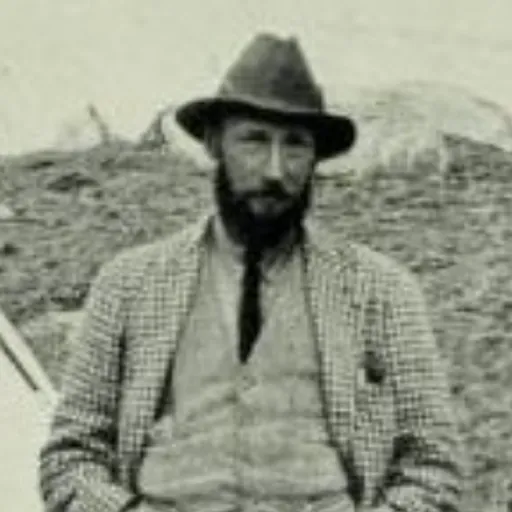
Charles Howard-Bury
British soldier, explorer, botanist and Conservative politician
About Charles Howard-Bury
Lived 1881 – 1963 (aged 82). Charles Howard-Bury was a British explorer, politician, botanist, mountaineer and soldier.
Lieutenant-Colonel Charles Kenneth Howard-Bury DSO, DL, JP (15 August 188120 September 1963) was a British soldier, explorer, botanist and Conservative politician.
Background and education
A member of the Howard family, he was born at Charleville Castle, King's County, Ireland, the only son of Captain Kenneth Howard-Bury (1846–1885), son of the Honourable James Howard. His mother was Lady Emily Alfreda Julia, daughter of Charles Bury, 3rd Earl of Charleville. His father had assumed the additional surname of Bury in 1881 after his wife succeeded to the Charleville estates. In his own right he succeeded to the estates of Charles Brinsley Marlay including Belvedere House and Bloomfield House. He was educated at Eton and the Royal Military College, Sandhurst.
Career until 1921
Howard-Bury was always interested in climbing as a youth, which led him to take up the larger routes in Austrian Alps. He joined the King's Royal Rifle Corps in 1904 and was posted to India, where he went travelling and big game-hunting. In 1905, he secretly entered Tibet without permission and was rebuked by Lord Curzon. His early travel diaries date from 1906 and show his powers of observation, encyclopaedic knowledge of natural history, and linguistic ability. At the beginning of World War I, Howard-Bury rejoined his regiment and served with distinction as a frontline officer on the Somme and throughout the conflict. He was captured during the German spring offensive of 1918, and then made an escape from his prisoner-of-war camp, before being recaptured ten days later.
1921 Mount Everest reconnaissance expedition
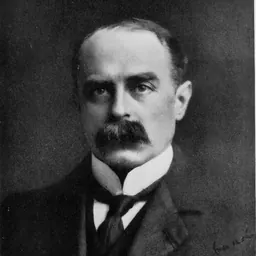
At the behest or Sir Francis Younghusband in 1920, Howard-Bury paved the way for the Everest Expedition. In 1921 he was the leader of the Mount Everest reconnaissance expedition, organised and financed by the Mount Everest Committee, a joint body of the Alpine Club and the Royal Geographical Society. In 1922, he wrote an account of the expedition, published as "Mount Everest The Reconnaissance, 1921". however his sherpas were quick to offer that they were the tracks of a "metch kangmi" (meaning "filthy snowman"). It was at this time that Henry Newman of The Statesman in Calcutta (now Kolkata) obtained descriptions from the expedition's porters on their return to Darjeeling. Bill Tilman has claimed that Newman mistranslated "metch kangmi" as "abominable snowman", hence the phrase "Abominable Snowman" came into existence in 1921.
Later Newman wrote in a letter to The Times "The whole story seemed such a joyous creation I sent it to one or two newspapers".
He was awarded the 1922 Founder's Medal of the Royal Geographical Society for his leadership of the expedition.
Political career
The Everest expedition of 1921 made Howard-Bury a public figure, and in 1922 he was elected to parliament for Bilston as Conservative. He lost his seat in 1924 but returned to the House of Commons in 1926, when he was elected for Chelmsford. He resigned in 1931. He was also a deputy lieutenant and justice of the peace for County Westmeath.
Personal life
Howard-Bury died on 20 September 1963, aged 82. A bachelor homosexual, he left his Irish home Belvedere to his lover and companion of thirty years, Rex Beaumont, an actor, poet, soldier, fashion designer, and fellow philanthropist.
Legacy
In 2013, British adventurers Matthew Traver and Jamie Bunchuk completed a 750-mile horse ride down the post roads of Eastern Kazakhstan in honour of the centenary of Howard-Bury's travels through the region, en route to the Tian Shan mountains in 1913.
Arms
Don’t just read it —
keep it.
Full-length biographies made to live with: read them, listen on the way to work, watch them tonight.
- E-book
- Audio
- Video
Instant download · yours to keep · every purchase keeps this site free
Important facts
People in Charles Howard-Bury's life
Named in this biography and alive at the same time




Related people
Same field, nearest in time




Contemporaries
People whose lives overlapped Charles Howard-Bury's



Frequently asked questions
Who was Charles Howard-Bury?
British soldier, explorer, botanist and Conservative politician (1883-1963)
When was Charles Howard-Bury born?
Charles Howard-Bury was born on 15 August 1881 in Charleville Castle.
When did Charles Howard-Bury die?
Charles Howard-Bury died on 20 September 1963 in Mullingar.
What was Charles Howard-Bury's occupation?
Charles Howard-Bury was an explorer, politician, botanist, mountaineer and soldier.
What nationality was Charles Howard-Bury?
Charles Howard-Bury was British.
Sources & further reading
· Wikipedia: Charles Howard-Bury
· DBpedia: Charles Howard-Bury
Cite this page
APA: Biography.guide. (2026). Charles Howard-Bury. https://biography.guide/charles-howard-bury/
MLA: "Charles Howard-Bury." Biography.guide, https://biography.guide/charles-howard-bury/.
Chicago: "Charles Howard-Bury." Biography.guide. https://biography.guide/charles-howard-bury/.
Data last updated: 2026-09-21 · Spot an error? Report a correction.
Portrait: Wikimedia Commons · author & licence
Page generated 2026-09-27 05:00 UTC