
About Charles Hermans
Lived 1839 – 1924 (aged 85). Charles Hermans was a Belgian painter and visual artist.
Charles Hermans (7 August 1839 – 7 December 1924) was a Belgian painter of genre scenes, portraits, landscapes and some still lifes. Through a number of his monumental genre paintings he played an important role in the recognition of Realism in Belgian art.
Life Hermans was born in Brussels in a well-off bourgeois family. He showed an interest in art from an early age. In his native city Hermans received some artistic guidance from the painter Louis Gallait. He then studied at the Saint Luc workshop in Brussels, a liberal workshop which offered an alternative to traditional academic education. Between 1858 and 1861 he stayed in Paris where he studied at the workshop of the Swiss painter Charles Gleyre at the École nationale supérieure des Beaux-Arts. Gleyre was a prominent painter who had taken over the studio of Paul Delaroche in 1843 and taught a number of younger artists who became prominent, including Claude Monet, Pierre-Auguste Renoir, Alfred Sisley, and James Abbott McNeill Whistler.
From 1862 to 1867, Hermans stayed in Italy. In Rome he became fascinated with the life of the monks, which became a favorite subject of many paintings between 1866 and 1869. He had an early success with his paintings of clerics. He later made several trips especially in the Mediterranean region and, in particular, Spain.
Hermans joined the Société Libre des Beaux-Arts, founded in Brussels on 1 March 1868, which brought together several famous Belgian naturalist artists such as Charles de Groux, Alfred Verwee, Constantin Meunier, Louis Dubois, Félicien Rops, Constantin Meunier, Louis Artan de Saint-Martin and Théodore Baron. The members admired the work of the French Realist painter Gustave Courbet and wished to confront the prevailing Academism in contemporary Belgian art. The Realist movement in Belgium gradually gained ground as evidenced by the fact that the Realist artists Constantin Meunier and Louis Artan de Saint-Martin received prizes at the Brussels Salon of 1869. The battle with the Belgian art establishment appeared to have been won when in 1875 Hermans' At dawn was accepted at the Brussels Salon without opposition.
Hermans died in Menton on 7 December 1924.
Work Hermans was a prolific artist who practised many genres throughout his career: history painting, genre art, portraits and landscape painting. He initially painted genre scenes of monks. He subsequently tried to elevate genre painting by treating biblical subjects as genre art. He painted a Job visited by his friends in which he depicted Job as an ordinary poor man in a Realist style. He then turned to genre scenes such as the Honeymoon showing a fashionable young couple clearly in love. He later turned to subjects with a social connotation such as the Sunday visit to the children's clinic at St. Peter's Hospital. In this composition he addressed human tragedy and suffering humanity in a moving and honest manner. The sentimentality of the subject assured the success of this composition.
The crowning achievement of his genre art was the work of 1875 At dawn. It is a realistic and moralizing painting representing an encounter of a group of inebriated revellers leaving a restaurant with prostitutes on their arms in the early hours and a group of poor labourers on their way to work.
Hermans followed up this masterwork with other smaller genre pieces until he attempted another genre scene on a large scale, The masked ball. This work depicts one of the all-night society masked balls of the late 19th century, which were also attended by young women of the demi-monde. The composition shows a large room filled with groups of partygoers some of whom are in the shadows looking from a balcony in the background while others are active on the crowded dance floor in the front. Elegantly dressed men are joined by many women on the dance floor some in close embrace or animated conversation. Many of the men depicted were prominent personalities of the time. Hermans was able to convey with a remarkable skill the jostling and carnival madness of a night at the theater.
Not achieving the expected success with this work, Hermans turned to smaller scale works often depicting charming women, which were based on the studies he had made for the Masked ball. These works are in the same vein as the society portraits of Alfred Stevens. He also painted at the sea from which he returned with fantasies of nude women bathing and Bacchantes. A new high point of this period is the composition Circe as temptress, which shows a seductive woman in a modern interior with a man passed out at a table with an overturned wine glass. This was a return to the veiled social criticism of his earlier work. In his later years he painted large decorative works and landscapes with many figures. During World War I he treated some wartime subjects such as The martyrs and the Execution of Edith Cavell by the Germans.
Hermans' large-format Realist works were influential on the next generation of Belgian artists such as Eugène Laermans and Léon Frédéric.
Gallery
Don’t just read it —
keep it.
Full-length biographies made to live with: read them, listen on the way to work, watch them tonight.
- E-book
- Audio
- Video
Instant download · yours to keep · every purchase keeps this site free
Important facts
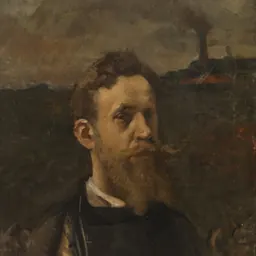
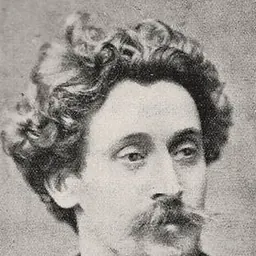
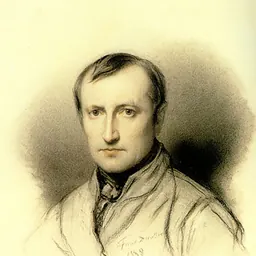
People in Charles Hermans's life
Named in this biography and alive at the same time





Related people
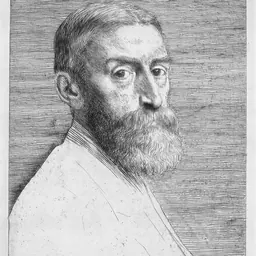
Same field, nearest in time
Contemporaries
People whose lives overlapped Charles Hermans's

Frequently asked questions
Who was Charles Hermans?
Belgian painter (1839-1924)
When was Charles Hermans born?
Charles Hermans was born on 17 August 1839 in Brussels.
When did Charles Hermans die?
Charles Hermans died on 8 December 1924 in Menton.
What was Charles Hermans's occupation?
Charles Hermans was a painter and visual artist.
What nationality was Charles Hermans?
Charles Hermans was Belgian.
Sources & further reading
Cite this page
APA: Biography.guide. (2026). Charles Hermans. https://biography.guide/charles-hermans/
MLA: "Charles Hermans." Biography.guide, https://biography.guide/charles-hermans/.
Chicago: "Charles Hermans." Biography.guide. https://biography.guide/charles-hermans/.
Data last updated: 2026-09-25 · Spot an error? Report a correction.
Page generated 2026-09-27 05:12 UTC