
About Charles Grant
Lived 1746 – 1823 (aged 77). Charles Grant was a British politician and missionary.
Charles GrantCharles Grant (Teàrlach Grannd in Scottish Gaelic; 16 April 1746 – 31 October 1823) was a British politician influential in Indian and domestic affairs who, motivated by his evangelical Christianity, championed the causes of "social reform" and Christian mission, particularly in India. He served as Chairman of the British East India Company, and as a member of parliament (MP), and was an energetic member of the Clapham Sect. The "Clapham Sect" were a group of social activists who spoke out about the moral imperative to end slavery.
Henry Thornton, the founder of the Clapham sect, regarded Grant as his closest friend, after Wilberforce, and Grant planned and paid for a house called 'Glenelg' on Henry's estate in Battersea. It was a twin to, and lay near to the house built on the same estate for Wilberforce after his marriage, the location of which is marked by a plaque at No.111 Broomwood Road, west of that section of Battersea Rise now called Clapham Common West Side. Grant later moved to live in Russell Square.
Life Grant was born at the farmhouse of Aldourie, Inverness-shire, Scotland in March 1746, when his father, Alexander Grant, known as 'Alister-an-claigh' ('Alexander the Sword(sman)')– a reflection of his martial talents, was fighting for the Jacobites, against the British Crown, and the following month fought at the Battle of Culloden. His father was severely wounded but survived, joined a Highland regiment which the government raised for service in America and died at Havana in 1762, of fever he contracted during the siege of Havana. Charles Grant's mother was Margaret MacBean, daughter of Donald Macbean Esq., Tacksman (tenant) of Aldourie in the parish of Dores, descended from the Macbeans of Kinchyle. However, Charles Grant himself was one of the growing number of Scots who prospered in the service of the British Empire. In 1767, Grant travelled to India to take up a military position. Over subsequent years, he rose in the ranks of the British East India Company. Initially, he became superintendent over its trade in Bengal. Then, in 1787, having first acquired a personal fortune through silk manufacturing in Malda, Lord Cornwallis the Governor-General appointed Grant as a member of the East India Company's board of trade. Grant lived a profligate lifestyle as he climbed through the ranks, but after losing two children to smallpox he underwent a religious conversion. Viewing his life, including his efforts in India, from his new evangelical Christian perspective, moulded his career for the rest of his life.
Grant returned to Britain in 1790 and was elected to Parliament in 1802 for Inverness-shire. He served as an MP until failing health forced him to retire in 1818. However, his relationship with the East India Company did not end. In 1804, he joined the company's Court of Directors, and in 1805, he became its chairman. He died on 31 October 1823, at his home, No.40 Russell Square, London, at the age of 77.
His eldest son, Charles, was born in India and later followed his father into politics, eventually becoming a British peer as Baron Glenelg. His other son, Robert, followed his father into the Indian service and became Governor of Bombay, as well as being a Christian hymn writer.
Indian affairs
Grant turned to evangelicalism around 1776, eight years after first visiting India. As the Commercial Resident at Malda, he came into contact with local people who were suffered from famine and flood, and showed compassion to them. However, he believed that the locals lacked "integrity, truth, and faithfulness", and that converting them to Christianity would solve this problem.
In 1786, he and Calcutta's new chaplain David Brown wrote the Proposal for Establishing a Protestant Mission in Bengal. The Company administration did not take the proposal seriously, but with Brown's encouragement, Grant sent a copy to the Cambridge cleric Charles Simeon, who recruited Evangelical chaplains for India. British politician William Wilberforce also supported the proposal.
Grant and Wilberforce pressed for the inclusion of a "Pious Clause" in the 1793 charter of the company: this would empower the company's Court of Directors to appoint schoolmasters, missionaries, and other people to propagate Christian teachings among Indians.
As chairman of the company, Grant used his position to sponsor many chaplains to India, among them Claudius Buchanan and Henry Martyn.
Grant was largely responsible for the foundation of East India Company College (1806-1858), which was later erected at Haileybury.
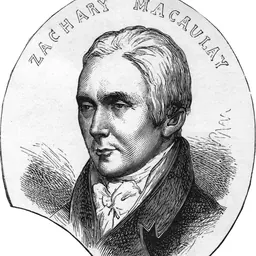
Christian humanitarianism Grant was part of an evangelical Anglican movement of close friends whose notable members included the abolitionist Wilberforce, Zachary Macaulay, John Venn, Henry Thornton, and John Shore, who lived in close proximity around Clapham Common southwest of London. For some years from 1796, Grant himself lived in a large villa called Glenelg in proximity to Wilberforce and Thornton. This 'Clapham sect' welded evangelical theology with the cause of social reform. Both in India and in Britain's Parliament, Grant campaigned for the furtherance of causes of education, social reform, and Christian mission. In 1791, he helped establishing the Sierra Leone Company, which gave refuge to freed slaves. Also in 1791, as an influential supporter of the abolition of slavery in all its forms, he was elected to the London Abolition Committee. He served as a vice-president of the British and Foreign Bible Society from its establishment in 1804, and also supported the Church Missionary Society and the Society for the Propagation of the Gospel.
Don’t just read it —
keep it.
Full-length biographies made to live with: read them, listen on the way to work, watch them tonight.
- E-book
- Audio
- Video
Instant download · yours to keep · every purchase keeps this site free
Important facts
People in Charles Grant's life
Named in this biography and alive at the same time

Related people
Same field, nearest in time



Contemporaries
People whose lives overlapped Charles Grant's





Frequently asked questions
Who was Charles Grant?
British politician; (1746-1823)
When was Charles Grant born?
Charles Grant was born on 16 April 1746 in Aldourie.
When did Charles Grant die?
Charles Grant died on 31 October 1823 in London.
What was Charles Grant's occupation?
Charles Grant was a politician and missionary.
What nationality was Charles Grant?
Charles Grant was British.
Sources & further reading
· DBpedia: Charles Grant (British East India Company)
Cite this page
APA: Biography.guide. (2026). Charles Grant. https://biography.guide/charles-grant-politician-1746/
MLA: "Charles Grant." Biography.guide, https://biography.guide/charles-grant-politician-1746/.
Chicago: "Charles Grant." Biography.guide. https://biography.guide/charles-grant-politician-1746/.
Data last updated: 2026-09-20 · Spot an error? Report a correction.
Page generated 2026-09-27 05:27 UTC