
About Charles G. D. Roberts
Lived 1860 – 1943 (aged 83). Charles G. D. Roberts was a Canadian novelist, poet and writer.
Sir Charles George Douglas Roberts (January 10, 1860 – November 26, 1943) was a Canadian poet and prose writer. He was one of the first Canadian authors to be internationally known. He published various works on Canadian exploration and natural history, verse, travel books, and fiction." He continued to be a well-known "man of letters" until his death.
Besides his own body of work, Roberts has also been called the "Father of Canadian Poetry" because he served as an inspiration and a source of assistance for other Canadian poets of his time.
Roberts, his cousin Bliss Carman, Archibald Lampman and Duncan Campbell Scott are known as the Confederation Poets. He also inspired a whole nationalist school of late 19th-century poets.
Early life and education Roberts was born in Douglas, New Brunswick, in 1860, the eldest child of Emma Wetmore Bliss and Rev. George Goodridge Roberts (an Anglican priest). Rev. Roberts was rector of Fredericton and canon of Christ Church Cathedral, New Brunswick. Charles's brother Theodore Goodridge Roberts and sister, Elizabeth Roberts MacDonald, also became authors.
Between the ages of 8 months and 14 years, Roberts was raised in the parish of Westcock, New Brunswick, near Sackville, by the Tantramar Marshes. He was homeschooled, mostly by his father, who was educated in Greek, Latin and French. He published his first writing, three articles in The Colonial Farmer, at 12 years of age.
After the family moved to Fredericton in 1873, At the Collegiate School he came under the influence of headmaster George Robert Parkin, who gave him a love of classical literature
In 1880, Roberts published his first book of poetry, Orion and Other Poems.
The biography by Roberts's friend Edmund Collins, The Life and Times of Sir John A. Macdonald, was published in 1883. The book was a success, going through eight printings. It contained a chapter on "Thought and Literature in Canada," which devoted 15 pages to Roberts, quoting from Orion. Collins' characterization of Roberts as "our greatest Canadian poet" helped develop Roberts' reputation as a prominent Canadian writer.
From 1883 to 1884, Roberts was in Toronto, Ontario, working as the editor of Goldwin Smith's short-lived literary magazine, The Week. After five months of long hours and disagreements with Smith, Roberts resigned. to Volume 1, Issue 12 (February 6, 1884)
In 1885, Roberts became a professor at the University of King's College in Windsor, Nova Scotia.
Roberts resigned from King's College in 1895, when his request for a leave of absence was turned down.
Roberts became involved in a literary debate known as the nature fakers controversy after John Burroughs denounced his popular animal stories, and those of other writers, in a 1903 article for Atlantic Monthly. The controversy lasted for nearly six years and included American environmental and political figures of the day, including President Theodore Roosevelt.
Europe and return to Canada In 1907, Roberts moved to Europe. In Britain he became a member of Legion of Frontiersmen. During World War I he enlisted with the British Army as a trooper, eventually becoming a captain and a cadet trainer in England. Editor Ross Kilpatrick called the poems "imitative, naively romantic, defective in diction", but also "facile, clever, and occasionally distinctly beautiful".
Roberts' second book, In Divers Tones is filled with selections which vary in quality, style and subject. Those written after 1883 demonstrated developing skill, and three in particular, 'The Tantramar Revisited,' 'The Sower,' and 'The Potato Harvest, were considered superior.
Roberts's 1898 book New York Nocturnes and Other Poems was filled mainly with poetry written before his move to New York. Written during a difficult time in his life, much of the work is unremarkable. The poem 'The Solitary Woodsman,' was later included in a number of anthologies. His poems about New York focus less on descriptions of visual interest and more on urban problems such as noise, fumes and crowding.
Critics began to take interest in Roberts's animal stories in the 1960s and 70s. Some critics saw the animal stories as an allegory for Canadian nationhood, seeing in Seton's and Roberts' depictions of the brutal lives of animals a reflection of Canada's fate in dealing with the United States. as did the University of Ottawa in 1983. There were several new studies of his poetry.
His alma mater, the University of New Brunswick, offers a "Charles G.D. Roberts Memorial Prize" for best short story by an undergraduate.
Roberts' poem "The Maple" was set to music by composer Garrett Krause, and performed in 2018 as part of the Luminous Voices concert in Calgary.
Publications
Poetry also: ; also: ; AVE! An Ode for the Shelley Centenary. Toronto: Williamson, 1892. Poems. New York: Silver, Burdett, 1901. ; Fiction ; ;
(Illustrated by Julek Heller in 1976)
(digital copy at HathiTrust) – 1912 magazine stories, extended; with eight illustrations by seven artists
Non-fiction reed. (English translation of Les Anciens Canadiens (1863) by Philippe-Joseph Aubert de Gaspé)
Canada in Flanders (1918) – non-fiction
Edited Poems of Wild Life. London: W. Scott, 1888. Canada Speaks of Britain and Other Poems of the War. Toronto: Ryerson, 1941.
Papers Sir Charles G. D. Roberts papers. Charles George Douglas Roberts; Linda Dumbleton; Rose Mary Gibson. Kingston : Queen's University Archives, {c.1983}. The Collected Letters of Sir Charles G.D. Roberts. Fredericton, NB: Goose Lane, 1989.
Don’t just read it —
keep it.
Full-length biographies made to live with: read them, listen on the way to work, watch them tonight.
- E-book
- Audio
- Video
Instant download · yours to keep · every purchase keeps this site free
Important facts
People in Charles G. D. Roberts's life
Named in this biography and alive at the same time


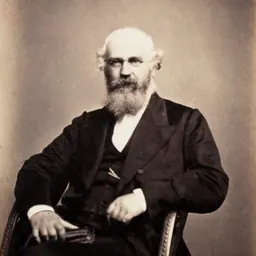


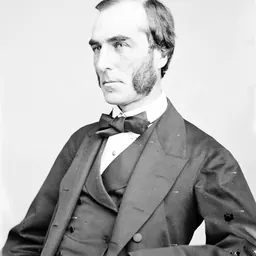
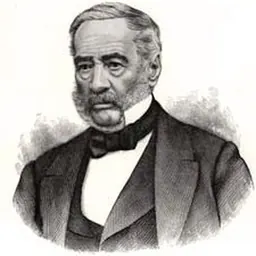
Related people
Same field, nearest in time



Contemporaries
People whose lives overlapped Charles G. D. Roberts's


Frequently asked questions
Who was Charles G. D. Roberts?
Canadian poet (1860–1943)
When was Charles G. D. Roberts born?
Charles G. D. Roberts was born on 10 January 1860 in Douglas.
When did Charles G. D. Roberts die?
Charles G. D. Roberts died on 26 November 1943 in Toronto.
What was Charles G. D. Roberts's occupation?
Charles G. D. Roberts was a novelist, poet and writer.
What nationality was Charles G. D. Roberts?
Charles G. D. Roberts was Canadian.
Sources & further reading
· Wikipedia: Charles G. D. Roberts
· DBpedia: Charles G. D. Roberts
Cite this page
APA: Biography.guide. (2026). Charles G. D. Roberts. https://biography.guide/charles-g-d-roberts/
MLA: "Charles G. D. Roberts." Biography.guide, https://biography.guide/charles-g-d-roberts/.
Chicago: "Charles G. D. Roberts." Biography.guide. https://biography.guide/charles-g-d-roberts/.
Data last updated: 2026-09-20 · Spot an error? Report a correction.
Page generated 2026-09-27 05:28 UTC