
About Charles Emil Stangeland
Lived 1881 – 1942 (aged 60–61). Charles Emil Stangeland was an economist.
Charles Emil Stangeland (1881–1942) was an American professor, diplomat, author, and economist. He served on the faculty at Washington State College in Pullman (1905–1909) and worked for the federal government as an accountant and diplomat (1909–1915), serving as an undersecretary for the U.S. Embassy in Bolivia and the Embassy in London. In 1919, he was recruited to North Dakota by the Nonpartisan League (NPL), working as an advisor for the newly formed State Board of Administration. He reviewed the state library, and his report and book recommendations helped create a political scandal for the NPL. He was the son of Norwegian immigrants Adolph (or Adolf) and Thera (or Thora) Stangeland.
Education After attending schools in Iowa, Stangeland graduated from Augsburg Seminary in Minneapolis in 1898 and then attended the University of Wisconsin. He then studied at the University of Berlin in Germany from 1902 to 1903. Stangeland was then accepted into a doctoral program at Columbia University and received a PhD in 1904.
During his time at Washington State College, Stangeland became a renowned scholar and intellectual. Between 1906 and 1919, he was repeatedly featured in Who's Who in America. In 1907, he received a leave of absence to study abroad. He traveled across Europe, including to France, Italy, and Russia. The next few years were spent in the employ of the federal government, particularly in the diplomatic service. In 1912, he was named secretary of the legation in Bolivia and served in that role to 1913.
He then worked as a secretary at the U.S. embassy to the United Kingdom in London under ambassador Walter Hines Page. It was later rumored that Stangeland's career as a diplomat came to an abrupt end, between 1915 and 1918, because of his wife's alleged pro-German activities. He was bailed out of jail by his friend, Dr. Charles A. Beard, author, historian, and former professor at Columbia.
North Dakota Nonpartisan League By March 1919, Stangeland had been recruited by the Nonpartisan League (NPL), which was an organization that had risen to power politically in North Dakota. Initially, it was rumored that Stangeland would be involved with the newly formed Bank of North Dakota in Bismarck, or he would be named a professor at the University of North Dakota in Grand Forks.
Instead, Stangeland was installed as a consultant for the newly created Board of Administration. The Board of Administration also had authority over the state library.
The creation of the Board of Administration was controversial; even some state officials who were loyal to the NPL opposed it. Pro-NPL sources said its goal was efficiency and cost-saving. Totten, a controversial minister and newspaper publisher, was a strong supporter of the NPL. He served as the first chair of the Board of Administration and essentially ran it as he saw fit. alt=Portrait of an older man in a suit and tie, with short combed hair. George A. Totten, Chair of the N.D. Board of Administration, circa 1919 In his report, Stangeland provided several criticisms of the state library. He said its collections were "poorly balanced."
To remedy these inadequacies, Stangeland recommended increased funding, and he said the state library needed to expand and diversify its collections. He provided a list of recommended items for the library to obtain and add to its collections, many of which were hardly controversial, such as The Atlantic, Literary Digest, National Geographic, Political Science Quarterly, and The Wall Street Journal. However, Stangeland also recommended items from "various nonconformist groups," such as single taxers, the I.W.W. (Industrial Workers of the World), anarchists, and socialists. It was this recommendation that would catch the eye of the NPL's opposition, particularly the Independent Voters Association (IVA). She resigned for health reasons and moved to California to live closer to her daughter. Her resignation was accepted by the State Board of Regents, in one of its last acts before being replaced with the Board of Administration. Later, he would testify that he had never been a state library employee and was not in charge of it. But, he also admitted that there was a "time of uncertainty of the previous incumbent in the position in the library" and the arrival of the new librarian, and he had "supervision temporarily for the board of the library." As legislators arrived at the State Capitol in Bismarck, they found copies of an invoice on their desks. The invoice had previously crossed the desk of Carl R. Kositzky, State Auditor. and so the implication from Burtness and the IVA was clear: the NPL and the Board of Administration was attempting to indoctrinate schools and children with ideas of socialism, radicalism, free love, etc. Within hours after Burtness's speech, Governor Lynn J. Frazier requested that the Board of Administration remove Stangeland, but its members were split and no action was taken. Against the objections of the minority, the majority members of the committee obtained an attorney to handle the questioning of witnesses. Rep. J.F.T. O'Connor, a member of the committee and a lawyer himself, assumed the responsibility of questioning for the IVA minority. In his resignation letter, Stangeland wrote: "I believe the time will come when a clearer vision will make the controversy which has centered around me and my efforts in a different light, and that light will reveal the truth which the passions and fears of the day are making obscure."
alt=A cartoon man holds up a Webster's dictionary, exclaiming about a book with "anarchy" in it. Pro-NPL cartoon from Billican (Wilfred Canan) depicting Rep. Burtness as a jack-in-the-box proclaiming he found a book with anarchy in it (a dictionary).
On December 10, 1919, the book investigation committee submitted its full report to the House. The committee concluded:
Additionally, after the report was submitted to the House, Burtness gained the floor and gave another lengthy speech. He defended his actions and further condemned the Board of Administration. He again read several excerpts from books. He then made another baseless claim that Stangeland and Neil C. Macdonald (former Superintendent of Public Instruction and current Educational Advisor and General School Inspector) had put controversial books into the library at the state penitentiary in an attempt to "instill poison into the minds of prisoners."
For Stangeland, his time in North Dakota had been short. Within a couple of months, he was reportedly living in Indiana. Pro-NPL sources had called him a scholar and diplomat. He served as a professor at the University of Copenhagen in Denmark
Personal life Stangeland was of Norwegian ancestry, being the son of Norwegian immigrants. In the 1910s, he was involved with the Norwegian Society in Washington, D.C. In January 1911, he was elected the chapter's secretary, and he gave a lecture about Bolivia to members in December 1915.
Stangeland was progressive and liberal in his political beliefs. The two became estranged within a couple of years of their marriage, and they were reportedly separated by 1917 and divorced in 1930. In April 1940, Stangeland married Emma Marie Gertrud Zeihfuss in Berlin, Germany.
Arthur Stangeland, brother of Charles E. Stangeland, was a well-known attorney in Butte, Montana. Arthur died suddenly in 1922.
Works and writings 1904 – Stangeland, Charles Emil, Pre-Malthusian Doctrines of Population: A Study in the History of Economic Theory. 1908 – Stangeland, Charles Emil, The Preliminaries to the Labor War in Colorado. 1919 – Stangeland, Charles E., A Brief Survey of the Public Library Commission of the State of North Dakota. 1927 – Stangeland, Chas. E. (Translator). International price movements and the condition of agriculture in non-tropical countries.
Don’t just read it —
keep it.
Full-length biographies made to live with: read them, listen on the way to work, watch them tonight.
- E-book
- Audio
- Video
Instant download · yours to keep · every purchase keeps this site free
Important facts
People in Charles Emil Stangeland's life
Named in this biography and alive at the same time
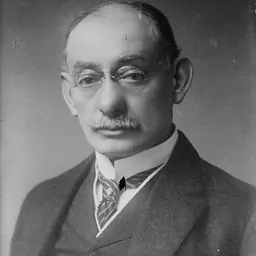
Related people
Same field, nearest in time
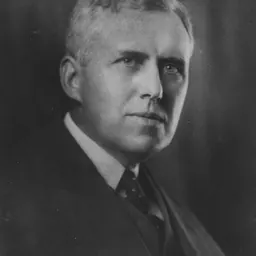


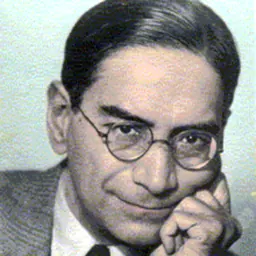
Contemporaries
People whose lives overlapped Charles Emil Stangeland's

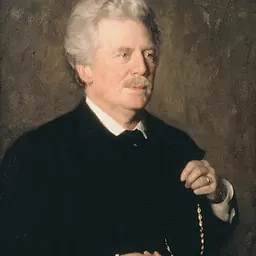


Frequently asked questions
Who was Charles Emil Stangeland?
American professor and economist
When was Charles Emil Stangeland born?
Charles Emil Stangeland was born in 1881.
When did Charles Emil Stangeland die?
Charles Emil Stangeland died in 1942.
What was Charles Emil Stangeland's occupation?
Charles Emil Stangeland was an economist.
Sources & further reading
· Wikipedia: Charles Emil Stangeland
· DBpedia: Charles Emil Stangeland
Cite this page
APA: Biography.guide. (2026). Charles Emil Stangeland. https://biography.guide/charles-emil-stangeland/
MLA: "Charles Emil Stangeland." Biography.guide, https://biography.guide/charles-emil-stangeland/.
Chicago: "Charles Emil Stangeland." Biography.guide. https://biography.guide/charles-emil-stangeland/.
Data last updated: 2026-09-20 · Spot an error? Report a correction.
Page generated 2026-09-27 05:22 UTC