
About Charles Dieupart
Lived 1676 – 1751 (aged 74–75). Charles Dieupart was a French composer, harpsichordist, violinist and musician.
Charles Dieupart (16761751) was a French harpsichordist, violinist, and composer. Although he was known as Charles to his contemporaries according to some biographers, his real name was actually François. He was born in Paris, rue aux Ours, August 10th, 1676. His father was Nicolas Dieupart (? - 1700) an ordinary musician to Louis XIV's Grande Ecurie. At some point, he befriended Elizabeth Wilmot of Rochester, countess of Sandwich, and Jacques Paisible who were visiting James II of England in his exile at Saint-germain-en-Laye near Paris. This is the main reason for his coming to London around 1700. A prominent member of the Drury Lane musical establishment, Dieupart was active both as composer and performer and actively participated in the musical life of the city. However, after about 1712 he earned his income mostly by teaching, and in his later years lived in poverty. He is best remembered today for a collection of six harpsichord suites which influenced Johann Sebastian Bach's English Suites.
Life Details of Dieupart's early life and training are sketchy. The earliest document to refer to the composer is a parisian tax roll dated 1695 where he is said to have mastered the harpsichord and other instruments. In 1701, he published his , published in Amsterdam. He is next heard of on 11 February 1703 in London, when he performed Corelli's music at Drury Lane with Gasparo Visconti. Dieupart settled in London and eventually became an important member of the Drury Lane musical establishment. He collaborated with playwright Peter Anthony Motteux, composer Thomas Clayton, and others; he also participated in performances of music by Italian composers such as Giovanni Bononcini and Domenico Scarlatti.
In late 1707 Dieupart became involved in establishing an operatic project at the Queen's Theatre in the Haymarket, London. Although he evidently played a significant part in the project, he was dropped by the management after about a year, in late 1708. Dieupart tried organizing a series of concerts at York Buildings in 1711 and 1712, but ended up giving only a few. After 1712 he was mostly active as a teacher, although his music was still performed in concerts until at least 1726, and he was apparently a regular member of the Drury Lane orchestra. Dieupart's last known public appearance was in 1724. According to music historian John Hawkins, whose work is the most important source on Dieupart's biography, the composer died at a very advanced age and in poverty. and was influenced by Dieupart's music, particularly in the famous English Suites. Dieupart's suites may have also inspired Nicolas Siret, whose first book adopts the suite's initial opening as an example.
List of works (A, D, b, e, F, f) (Amsterdam, 1701) Instrumental arrangements published as (Amsterdam, 1702) Thirteen individual movements published as Select Lessons for the Harpsichord or Spinnett (London, 1705) Songs in the New Opera, Call'd Love's Triumph, The Symphonys or Instrumental Parts in the Opera Call'd Love's Triumph (London, 1708) The Overture and Chaconne belonging to [...] the Opera of Thomyris (London, 1708; published 2024, CMBV CAHIERS-344) Six Sonatas or Solos (G, a, e, B, g, F), for recorder and basso continuo (London, 1717) Sonata in D minor for oboe, strings and basso continuo Sonata (Ouverture) in E minor for strings Concerto in A minor for soprano recorder/flute/oboe, 2 oboes, bassoon, strings, and basso continuo Concerto in A major for violin, 2 oboes, bassoon, strings, and basso continuo Concerto in B major for 2 violins, 2 oboes, bassoon, strings, and basso continuo Concerto in E minor for 2 flutes, 2 horns, strings, and basso continuo Concerto in B minor for trumpet, 2 oboes, strings, and basso continuo Miscellaneous keyboard pieces and 33 airs published in various collections
Don’t just read it —
keep it.
Full-length biographies made to live with: read them, listen on the way to work, watch them tonight.
- E-book
- Audio
- Video
Instant download · yours to keep · every purchase keeps this site free
Important facts
People in Charles Dieupart's life
Named in this biography and alive at the same time




Related people
Same field, nearest in time
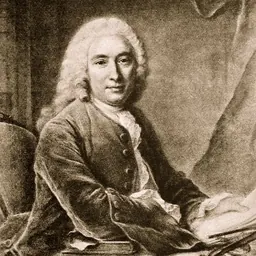
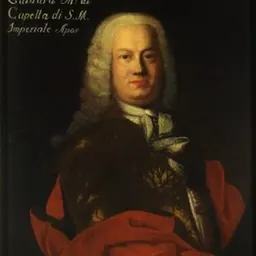
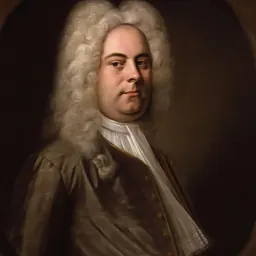
Contemporaries
People whose lives overlapped Charles Dieupart's

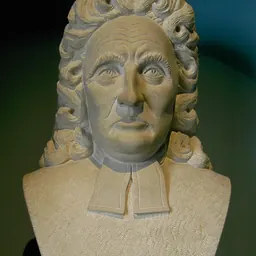


Frequently asked questions
Who was Charles Dieupart?
French composer active in England
When was Charles Dieupart born?
Charles Dieupart was born in 1676 in Paris.
When did Charles Dieupart die?
Charles Dieupart died in 1751 in Saint-Germain-sur-École.
What was Charles Dieupart's occupation?
Charles Dieupart was a composer, harpsichordist, violinist and musician.
What nationality was Charles Dieupart?
Charles Dieupart was French.
Sources & further reading
Cite this page
APA: Biography.guide. (2026). Charles Dieupart. https://biography.guide/charles-dieupart/
MLA: "Charles Dieupart." Biography.guide, https://biography.guide/charles-dieupart/.
Chicago: "Charles Dieupart." Biography.guide. https://biography.guide/charles-dieupart/.
Data last updated: 2026-09-20 · Spot an error? Report a correction.
Page generated 2026-09-27 05:23 UTC