
About Giovanni Bononcini
Lived 1670 – 1747 (aged 76). Giovanni Bononcini was a composer and cellist.
Giovanni Bononcini (or Buononcini)
In 1685, at the age of 15, he published three collections of instrumental works (in two of which he gave his age as 13).
Final years After leaving London in 1733, Bononcini travelled to France in the company of an adventurer, Count Ughi, who swindled him out of most of his property. In Paris, Bononcini gave concerts of his religious music at the Concert Spirituel and then moved on to Lisbon to become the cello teacher to the Portuguese king. In 1736 he returned to Vienna, where his opera Alessandro in Sidone and his oratorio Ezechia were performed in 1737. In dire financial straits by 1742, he petitioned Maria Theresa of Austria for help. In October of that year, she granted him a pension of 50 florins a month in recognition of his past service to the court. Bononcini died on 9 July 1747, allegedly in Vienna, impoverished and largely forgotten. After his death, his last major composition, a Te Deum which he had composed in 1741 for Francis I, was performed in celebration of the Treaty of Aix-la-Chapelle.
Compositions
His earliest works for the cello are two Sinfonie included in a manuscript in the abbey of Montecassino. His other works include a number of operas, masses, and a funeral anthem for the Duke of Marlborough. One of his operas, Xerse, parodied material in an earlier setting of that opera by Francesco Cavalli, including the aria "Ombra mai fu". Bononcini's Xerse was in turn adapted by Handel in his Serse with a third (and best known) version of "Ombra mai fu". Bononcini's song "Vado ben spesso cangiando loco" was used by Franz Liszt in his suite for piano Années de pèlerinage: Deuxième année: Italie under the erroneous title "Canzonetta del Salvator Rosa".
Operas
Eraclea pasticcio (1692) Xerse (1694) Tullo Ostillio (1694) Muzio Scevola (1695) Il trionfo di Camilla (1696) L'amore eroica fra pastori (1696) La clemenza di Augusto (1697) La fede pubblica (1699) Gli affetti più grandi, vinti dal più giusto (1701) Cefalo (1702) Polifemo (1702) Proteo sul Reno, poemetto dramattico (1703) Etearco (1707) Turno Aricino (1707) Mario fuggitivo (1708) Abdolomino (1709) Caio Gracco (1710) Astarto (1720) L'odio e l'amore (1721) Crispo (1721) Griselda (1722) Erminia (1723) Calphurnia (1724) Astianatte (1727) Alessandro in Sidone (1737) Zenobia (1737)
Serenatas
La nemica d'Amore (1692) La nemica d'amore fatta amante (August 10, 1693) La costanza non gradita nel doppio amore d'Aminta (1694) La notte festiva (1695) Amore non vuol diffidenza (1695) Amor per amore (1696) L'Euleo festeggiante (1699) La gara delle quatri stagioni festa in musica (1699) Il fiore delle Eroine Trattenimento in musica (1704) Il ritorno di Guilio Cesare festa in musica (1704) La nuova gara di Giunione e Pallade festa in musica (1705) Endimione favola per musica (1706)
Other works
XII Trattenimenti da camera, Op. 1 (1685) XII Concerti da camera, Op. 2 (1685) Sinfonias, Opp. 3–6 4 Messe brevi (1688) XII Duetti da camera, Op. 8 (1691) Oratorio San Nicola di Bari (Rome 1693) Oratorio La Conversione di Maddalena (Vienna 1701) Il natale di Giunone festeggiato in Samo (1708) Li sagrifici di Romolo per la salute di Roma (1708) L'arrivo della gran madre degli dei in Roma (1713) Divertimenti da camera (1722) XII (Trio) Sonatas for the Chamber (1732) Oratorio Ezechia (Vienna 1737) Te Deum in C minor (1741) Over 300 cantatas
Don’t just read it —
keep it.
Full-length biographies made to live with: read them, listen on the way to work, watch them tonight.
- E-book
- Audio
- Video
Instant download · yours to keep · every purchase keeps this site free
Important facts
People in Giovanni Bononcini's life
Named in this biography and alive at the same time


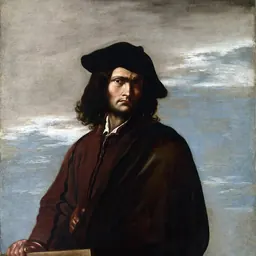
Related people
Same field, nearest in time
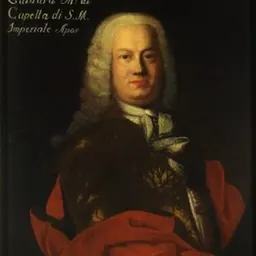
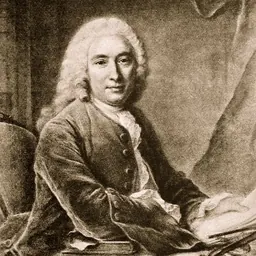


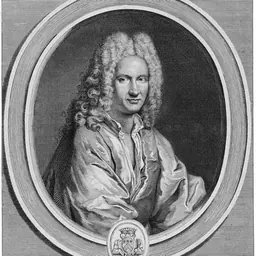
Contemporaries
People whose lives overlapped Giovanni Bononcini's





Frequently asked questions
Who was Giovanni Bononcini?
Italian composer (1670–1747)
When was Giovanni Bononcini born?
Giovanni Bononcini was born on 18 July 1670 in Modena.
When did Giovanni Bononcini die?
Giovanni Bononcini died on 9 July 1747 in Vienna.
What was Giovanni Bononcini's occupation?
Giovanni Bononcini was a composer and cellist.
Sources & further reading
· Wikipedia: Giovanni Bononcini
Cite this page
APA: Biography.guide. (2026). Giovanni Bononcini. https://biography.guide/giovanni-bononcini/
MLA: "Giovanni Bononcini." Biography.guide, https://biography.guide/giovanni-bononcini/.
Chicago: "Giovanni Bononcini." Biography.guide. https://biography.guide/giovanni-bononcini/.
Data last updated: 2026-09-20 · Spot an error? Report a correction.
Page generated 2026-09-27 05:24 UTC