
About Charles Carnan Ridgely
Lived 1760 – 1829 (aged 68). Charles Carnan Ridgely was an American politician.
Charles Carnan Ridgely (December 6, 1760 – July 17, 1829), born Charles Ridgely Carnan and also known as Charles Ridgely of Hampton, Ridgely devoted his tenure to internal improvements. He devoted his attention to the state during the unpopular war with Great Britain. It appropriated ground for the erection of a Battle Monument in Baltimore, aided education, and chartered manufacturing and insurance companies, so that 'during his administration, the State enjoyed its greatest period of prosperity.' Ridgely passed an act which provided education for the poor in five separate counties; which was seen as important to the early development of public education in Maryland. A second act created the Commissioners of the School Fund. The act appropriated a fund to establish free schools within the state of Maryland.
Hampton
Carnan's uncle, Captain Charles Ridgely, willed his estate, Hampton, to him on the condition that he assume the name Charles Ridgely; he did so legally in 1790. He had 10,590 feet (3,228 m) of irrigation pipes laid in 1799 from a nearby spring to provide water to the Mansion and the surrounding gardens, which he was extensively developing. Prominent artisans of the time were hired to design geometric formal gardens, which were planted on the Mansion's grounds between 1799 and 1801.
Under Charles Carnan Ridgely, Hampton reached its peak of 25,000 acres (10,117 ha) in the 1820s. Six parterres were designed on three terraced levels facing the mansion, planted with roses, peonies, and seasonal flowers. In 1820, an orangery was built on the grounds.
Charles Carnan Ridgely frequently entertained prominent guests in the Mansion's Great Hall, such as Charles Carroll of Carrollton (1737-1832), who was the last surviving signer of the Declaration of Independence, and American Revolutionary War general and Frenchman, Marquis de Lafayette. The site of today's Eisenhower Executive Office Building, this first course's history was short lived as it stood in the path of L'Enfant's city plan.
In 1802 the Club sought a new sight for the tract, as the current one that lay the rear of what is now the site of Decatur House at H Street and Jackson Place, crossing Seventeenth Street and Pennsylvania Avenue to Twentieth Street-today the Eisenhower Executive Office Building-was being overtaken be the growth of the Federal City. With the leadership of John Tayloe III and Charles Carnan Ridgely and support of Gen. John Peter Van Ness, Dr. William Thornton, G.W. P. Custis, John D. Threlkeld of Georgetown and George Calvert of Riversdale, Bladensburg, Maryland, the contests were moved to Meridian Hill, south of Columbia Road between Fourteenth and Sixteenth Streets, and were conducted at the Holmstead Farm's one mile oval track.
Family
Charles Ridgely Carnan married Priscilla Dorsey, daughter of Caleb Dorsey, Jr., of 'Belmont' and Priscilla Hill on October 17, 1782, at Old Saint Paul's Church (Episcopal/Anglican) in Baltimore, Maryland. Priscilla was the youngest sister of his uncle's wife, Rebecca Dorsey. The sisters were great-granddaughters of Hon. John Dorsey and his wife, Pleasance Ely. While her husband attended politics, Priscilla was the sole mistress of 'Hampton' and attended to their thirteen children.
Of the thirteen children, two are separately noticed. John Carnan Ridgely married Eliza Ridgely; he would inherit the mansion and 4,500 acres (18 km2). All slaves that had not reached the age of 45 were freed. It was also commented that 'from an early age, possessed of a princely estate, few individuals, perhaps ever more enjoyed what are called the good things of this life and abused them so little."
He was buried with his wife, Priscilla, in the Ridgely family vault at Hampton.
Don’t just read it —
keep it.
Full-length biographies made to live with: read them, listen on the way to work, watch them tonight.
- E-book
- Audio
- Video
Instant download · yours to keep · every purchase keeps this site free
Important facts
People in Charles Carnan Ridgely's life
Named in this biography and alive at the same time
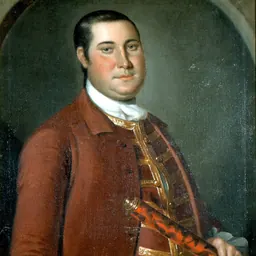

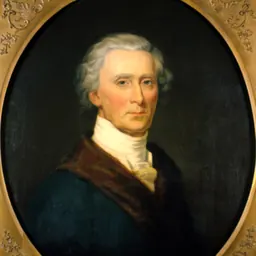



Related people
Same field, nearest in time

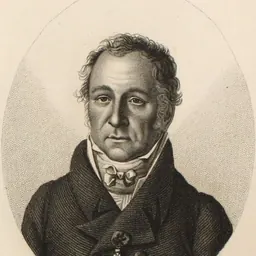

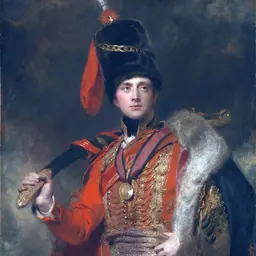

Contemporaries
People whose lives overlapped Charles Carnan Ridgely's




Frequently asked questions
Who was Charles Carnan Ridgely?
American politician (1760-1829)
When was Charles Carnan Ridgely born?
Charles Carnan Ridgely was born on 6 December 1760 in Baltimore County.
When did Charles Carnan Ridgely die?
Charles Carnan Ridgely died on 17 July 1829 in Baltimore County, Hampton National Historic Site.
What was Charles Carnan Ridgely's occupation?
Charles Carnan Ridgely was a politician.
What nationality was Charles Carnan Ridgely?
Charles Carnan Ridgely was American.
Sources & further reading
· Wikipedia: Charles Carnan Ridgely
· DBpedia: Charles Carnan Ridgely
Cite this page
APA: Biography.guide. (2026). Charles Carnan Ridgely. https://biography.guide/charles-carnan-ridgely/
MLA: "Charles Carnan Ridgely." Biography.guide, https://biography.guide/charles-carnan-ridgely/.
Chicago: "Charles Carnan Ridgely." Biography.guide. https://biography.guide/charles-carnan-ridgely/.
Data last updated: 2026-09-26 · Spot an error? Report a correction.
Page generated 2026-09-27 05:15 UTC