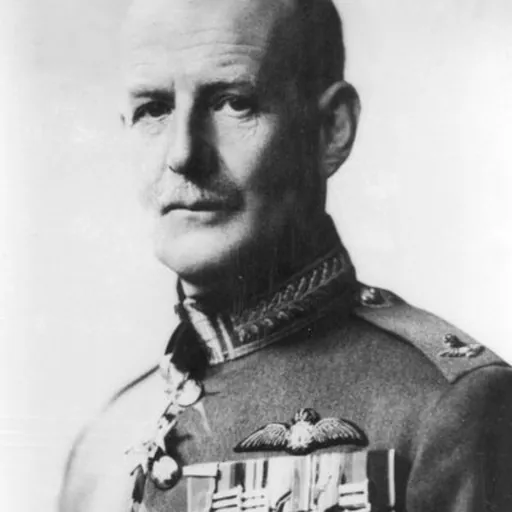
About Charles Burnett
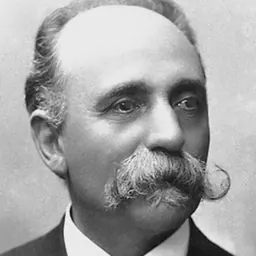
Lived 1882 – 1945 (aged 63). Charles Burnett was an American and British military officer.
Air Chief Marshal Sir Charles Stuart Burnett, (3 April 18829 April 1945) was a senior commander in the Royal Air Force during the first half of the 20th century. He was Air Officer Commanding Iraq Command during the early 1930s. During the Second World War, he served as Chief of the Air Staff of the Royal Australian Air Force.
Early life Charles Burnett was born in Browns Valley, Minnesota, United States on 3 April 1882. He was the second son of John Alexander Burnett and Charlotte Susan Burnett. John Burnett was originally from the Scottish village of Kemnay in Aberdeenshire.
Burnett was educated at Bedford School in England. His younger brother was Robert Burnett who was later knighted and rose to the rank of admiral. Burnett was then attached to the Imperial Yeomanry, where he temporarily held the rank of lieutenant in the 38th battalion from 26 April 1902 to 7 February 1903. He left South Africa for home on the SS Avondale Castle with other members of the battalion in late December 1902, and returned to his regiment in February 1903.
On 20 August 1904, Burnett was seconded to the West African Frontier Force. During the next five years Burnett saw action in Northern Nigeria, contracted blackwater fever, was promoted to lieutenant and was twice mentioned in despatches.
Burnett resigned his commission in September 1909 and then entered business as a part-owner of a shop in Portuguese Guinea. He did not meet with particular success as a businessman and by 1911 was employed by the British diplomatic service as the assistant resident in Ilorin, Nigeria. he was commissioned as a lieutenant on 4 December 1914. Burnett married Sybil Pack-Beresford just six days before his first posting as a Royal Flying Corps wing adjutant, which brought a temporary promotion to captain. In May 1915, Burnett was posted as a flight commander on No. 17 Squadron where he flew BE2c from Fort Grange, Gosport and then Egypt.
On 2 April 1916, Burnett was promoted to temporary major and appointed Officer Commanding of No. 36 Squadron, which was stationed in Cramlington. In October the same year Burnett was sent to the Western Front as Officer Commanding No. 12 Squadron. During his tour as Officer Commanding No. 12 Squadron, Burnett was once again mentioned in despatches. Burnett was granted command of the Flying Corps' Fifth Wing He was also awarded the Egyptian Order of the Nile, Third Class, and in the 1919 King's Birthday Honours he was made a Commander of the Order of the British Empire (CBE) in recognition of his wartime service in Egypt.
Inter-war period By the close of the war, Burnett had transferred to the newly formed Royal Air Force (RAF) and the next few years of his military career were to involve many changes of post. In 1919, Burnett was promoted to the temporary rank of brigadier general and appointed (again temporarily) as General Officer Commanding the RAF's Palestine Brigade. Later the same year, he accepted the offer of a permanent commission in the RAF with the rank of wing commander.
In April 1920, Burnett was given command of the RAF's Mesopotamian Wing and when the wing was upgraded to a group, he worked as a staff officer at the group's HQ. From February to October 1921, Burnett was a supernumerary, first at the HQ Middle East Area and then at No. 7 Group where he was sent pending his next posting. It was during this time that Burnett was promoted to group captain, although for some of the period he was on the half-pay list.
Burnett took up command of No. 29 Group in October 1921 but this was a short-lived appointment. In April 1922, Burnett was posted as station commander of RAF Leuchars which was a training base at that time. Once again Burnett did not spend long in post. By December 1922, he was a supernumerary once more, this time at the RAF Depot. He was made a Companion of the Bath (CB) in the 1927 New Year Honours. Burnett was then posted as the Commandant of the Central Flying School where he served until January 1929. Burnett's next tour saw him return to Iraq as the Senior Air Staff Officer at the HQ of Iraq Command where he served for the next two years. In early 1931, he returned to the United Kingdom and he was appointed to the double-hatted position of Deputy Chief of the Air Staff and Director of Operations and Intelligence. Burnett was promoted air vice-marshal the following July and he remained in post for a little under a year and a half.
In November 1932, Burnett returned to Iraq once more, this time as the Air Officer Commanding Iraq Command which placed him in charge of all British forces in Iraq. During his time in command Burnett was involved in the suppression of several tribal incursions near Kuwait and during one such occasion Burnett was wounded. and made a Knight Commander of the Order of the Bath (KCB) in the New Year Honours list. Later that year the RAF's command structure underwent a major reorganization. One of the changes was the redesignation of Inland Area as Training Command and Burnett became the command's first Air Officer Commanding-in-Chief. The next three years placed great demands upon Burnett and his command; as the threat from the German Luftwaffe increased, Training Command played a key role in the expansion of the RAF. and in August he was a member of British military mission to the Soviet Union. After discussions between the British and Australian governments, Burnett was selected and given an acting promotion to air chief marshal, a rank he subsequently retained. He had an uneasy relationship with air minister John McEwen, with whom he frequently clashed over matters of expenditure. McEwen recalled in his memoirs that "Burnett wanted to spend amounts of money apparently without thought for where it was coming from while I was the one who had to accept responsibility for all expenditure".
Burnett also had a strained working relationship with Arthur Drakeford, who replaced McEwen as minister for air in October 1941 following the fall of the Fadden government. Burnett and Drakeford frequently clashed and when in early 1942 Burnett proposed sweeping organizational changes, including the abolition of the Australian Air Board, a breaking point was reached. It had also been widely argued that Burnett's focus on the European theatre resulted in the RAAF lacking sufficient defensive strength and by 1942 the threat of invasion by Japan was growing. Burnett was replaced in May 1942 by an Australian officer, Air Vice Marshal George Jones, who succeeded to the position despite Burnett's lobbying for his deputy, Air Vice Marshal William Bostock, to take over.
Return to United Kingdom and death Burnett retired from the RAF shortly after his return to Britain, but in 1943 he worked full-time in the RAF's cadet organisation, the Air Training Corps, as the commandant of the ATC's Central Command. In this role, Burnett was responsible for ATC squadrons in Hertfordshire, Middlesex, Buckinghamshire, Oxfordshire, Berkshire and Bedfordshire. By 1945 Burnett remained as commandant but his health was declining and on 9 April 1945 he died of a coronary thrombosis at the Princess Mary Hospital at RAF Halton. Charles Burnett was survived by his wife and four daughters.
Don’t just read it —
keep it.
Full-length biographies made to live with: read them, listen on the way to work, watch them tonight.
- E-book
- Audio
- Video
Instant download · yours to keep · every purchase keeps this site free
Important facts
People in Charles Burnett's life
Named in this biography and alive at the same time

Related people
Same field, nearest in time
Contemporaries
People whose lives overlapped Charles Burnett's



Frequently asked questions
Who was Charles Burnett?
senior commander in the Royal Air Force (1882-1945)
When was Charles Burnett born?
Charles Burnett was born on 3 April 1882 in Browns Valley.
When did Charles Burnett die?
Charles Burnett died on 9 April 1945 in RAF Halton.
What was Charles Burnett's occupation?
Charles Burnett was a military officer.
What nationality was Charles Burnett?
Charles Burnett was American and British.
Sources & further reading
· DBpedia: Charles Burnett (RAF officer)
Cite this page
APA: Biography.guide. (2026). Charles Burnett. https://biography.guide/charles-burnett-military-officer/
MLA: "Charles Burnett." Biography.guide, https://biography.guide/charles-burnett-military-officer/.
Chicago: "Charles Burnett." Biography.guide. https://biography.guide/charles-burnett-military-officer/.
Data last updated: 2026-09-25 · Spot an error? Report a correction.
Portrait: Wikimedia Commons · author & licence
Page generated 2026-10-04 10:26 UTC