
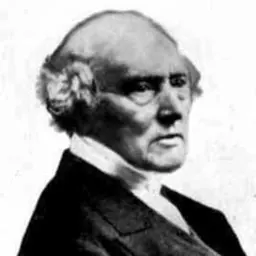
Charles "Buffalo" Jones
American hunter, rancher, and conservationist
About Charles "Buffalo" Jones
Lived 1844 – 1919 (aged 75). Charles "Buffalo" Jones was an American politician, rancher and conservationist.
Charles Jesse Jones, known as "Buffalo Jones" (January 31, 1844 – October 1, 1919), was an American frontiersman, farmer, rancher, hunter, conservationist, and politician. He cofounded Garden City, Kansas. He has been cited by the National Archives as one of the "preservers of the American bison".
He was the first game warden of Yellowstone National Park.
Life Jones was born January 31, 1844, in rustic McLean County, Ill; he was the second son out of 12 children. Jones developed an early interest in wild animals. Schooling for Jones was limited; he could only attend two or three days out of the week or when the weather was too cold. Jones attended Wesleyan University (now called Illinois Wesleyan University) in Bloomington, Illinois when he was 21. He left due to eye problems caused by typhoid fever. In 1866, at the age of 21, he moved to Troy, in northeast Kansas with little more than the clothing he wore and a sack of Osage orange seeds brought from Illinois.
Luck was with Jones and his new wife Martha Walton. Osage orange wood was in high demand among Kansas settlers; its tough wood made sturdy fence posts, its thorny branches a natural barbed wire for penning livestock. Jones found a partner, George Baker, and began a nursery.
This venture soon proved too tame for Jones. On the Plains, buffalo hunting was the startup business of the 1870s (see “Western Enterprise,” P. 24 In addition, it seemed the animals lost none of the spirited buffalo temperament. He also developed the “seal cow” (buffalo crossed with short-horned Scottish Galloway cattle). The latter's fine, lustrous hair resembled the seal fur fashionable in the era. These hybrids mainly were treated like any other livestock. Cattalo robes were thicker and more uniform than the purebred bison's, and their meat was delicious. Seal cows’ pelts substituted for those of Arctic fur seals, another animal close to extinction.
Jones served two terms in the Kansas House of Representatives as a Republican, first in the 1885–1886 session, then in the 1889 session, having lost a contested election to Howell P. Myton in 1886. In 1890, he sought the Republican nomination to succeed Samuel R. Peters as the representative of Kansas's 7th congressional district. However, he garnered minimal support, losing at the Republican convention in Dodge City to James Reed Hallowell, who would go on to lose to Populist Jerry Simpson.
Taming buffalo and even successfully training buffalo proved more successful for Jones who even worked a pair in harness. Jones' herd grew to become the largest private bison herd in the country, close to 150 head. But financial troubles during the hard times of the 1890s forced Jones to sell his herd to pay off his debts.
Jones lost his stock to creditors due to a severe national recession in the 1890s, selling his bison at public auction to pay his debts. Jones participated in the Oklahoma Land Run of 1893 and went to the Arctic Circle to find musk oxen. Toward decade's end, Mr. Jones went to Washington. One of the last wild buffalo herds—30 or so—lived in Yellowstone National Park, and poachers were quickly thinning its meager ranks. Jones petitioned the secretary of the Interior, proposing to “corral the once mighty herds of American bison” and relocate them at Yellowstone.
His first efforts met with indifference. In 1900 the government leased Jones 20,000 acres in New Mexico Territory to maintain a buffalo herd. In 1901 Congress finally acted on the Yellowstone situation, allocating $15,000 for an enclosure and stock to replenish the park's diminished herd. In 1902 conservationist U.S. President Theodore Roosevelt appointed Jones Yellowstone's first game warden. As one of his first official acts, Jones obtained three breeding bulls from Goodnight's buffalo herd. The following year, Yellowstone's superintendent proudly reported to Washington that the herd, “under the immediate charge of Mr. C.J. Jones, is doing exceedingly well".
Jones held the post for five years, but collected and bred buffalo for years afterward. This, along with his exploits in Africa (where among other feats he lassoed lions), made him a celebrity. Besides Hubbard, Grey and Roosevelt, his circle of friends included hide hunter William F. “Buffalo Bill” Cody (all of these men, including Jones, were also members of The Camp-Fire Club). Jones spent his last years in great demand on the lecture circuit, where he demonstrated his roping prowess and told thrilling—if embellished—tales.
Jones died October 1, 1919, from malaria contracted on his last African sojourn. Cody once dubbed him “King of the Cowboys.” Hubbard had crowned him “a king of nature, if anything is or can be". Yellowstone turned his former quarters into a Buffalo Jones museum. By the time he died, Jones was probably sure the buffalo no longer faced extinction. He'd have been proud that less than a century later the Yellowstone herd would number nearly 4,000. His finest tribute may be a modern one; in 2000 Robert Pickering, a deputy director of the Buffalo Bill Historical Center, would write, “Bison may be the first American environmental success story". In 1976, a western film called Buffalo Rider was made. The movie was a loose depiction of Jones' life. The movie was also featured in the song "Guy on a Buffalo" by Austin band The Possum Posse. As well as shown during season 3 episode 6 of the TV series Yellowstone.
Don’t just read it —
keep it.
Full-length biographies made to live with: read them, listen on the way to work, watch them tonight.
- E-book
- Audio
- Video
Instant download · yours to keep · every purchase keeps this site free
Important facts
People in Charles "Buffalo" Jones's life
Named in this biography and alive at the same time
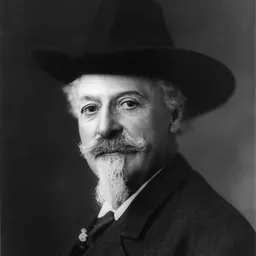
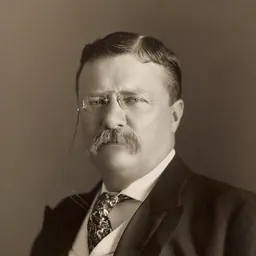


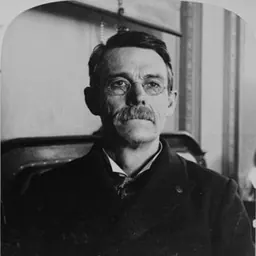
Related people
Same field, nearest in time


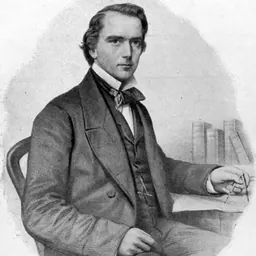



Contemporaries
People whose lives overlapped Charles "Buffalo" Jones's

Frequently asked questions
Who was Charles "Buffalo" Jones?
American hunter, rancher, and conservationist
When was Charles "Buffalo" Jones born?
Charles "Buffalo" Jones was born on 31 January 1844 in Tazewell County.
When did Charles "Buffalo" Jones die?
Charles "Buffalo" Jones died on 1 October 1919 in Topeka.
What was Charles "Buffalo" Jones's occupation?
Charles "Buffalo" Jones was a politician, rancher and conservationist.
What nationality was Charles "Buffalo" Jones?
Charles "Buffalo" Jones was American.
Sources & further reading
· Wikipedia: Charles "Buffalo" Jones
· DBpedia: Charles "Buffalo" Jones
Cite this page
APA: Biography.guide. (2026). Charles "Buffalo" Jones. https://biography.guide/charles-buffalo-jones/
MLA: "Charles "Buffalo" Jones." Biography.guide, https://biography.guide/charles-buffalo-jones/.
Chicago: "Charles "Buffalo" Jones." Biography.guide. https://biography.guide/charles-buffalo-jones/.
Data last updated: 2026-09-26 · Spot an error? Report a correction.
Page generated 2026-09-27 05:15 UTC