
Charles Brown
Officer of the Royal Navy, born 1678
About Charles Brown
Lived 1678 – 1753 (aged 74–75). Charles Brown was a British naval officer, military officer and commander.
Captain Charles Brown ( 1678 – 23 March 1753) was a Royal Navy officer. He saw service during the Nine Years' War, and the Wars of the Spanish Succession, Quadruple Alliance and Austrian Succession.
Brown entered the navy in about 1695, through the patronage of Sir George Byng, afterwards Lord Torrington. He was appointed captain of in 1709. He commanded in 1717, and in 1726 in the cruises up the Baltic Sea. In 1727, during the siege of Gibraltar by the Spaniards, he commanded , and in 1731 in the Mediterranean. In 1738 he was appointed to command , and was senior officer at this station until the arrival of Admiral Edward Vernon in the following year.
His opportunity arrived in 1739, when, during the War of Jenkins' Ear, he served under Vernon in the attack on Portobello, in the isthmus of Darien. He led the squadron into Boca Chica, placing his vessel, the Hampton Court, alongside the strongest part of the fortifications. When the fortress surrendered, the Spanish governor presented his sword in token of submission. Brown very properly declined to receive it, saying he was but 'second in command,' and took the governor in his boat to Admiral Vernon. But the Spaniard was obstinate, declaring that but for the insupportable fire of the commodore he never would have yielded. Thereupon Vernon, very handsomely turning to Brown, presented to him the sword, which is still in the possession of his descendants. In 1741 Brown was appointed to the office of commissioner of the navy at Chatham, a situation which he held with unblemished reputation until his death, on 23 March 1753. His daughter, Lucy, became the wife of Admiral William Parry, commander-in-chief of the Leeward Islands; and her daughter and namesake married Captain William Locker, under whom Lord Nelson served in his early days, and who subsequently became lieutenant-governor of Greenwich Hospital. There was a portrait of Brown in the Painted Hall at Greenwich, which subsequently passed in the hands of the successor institution, the National Maritime Museum.
Don’t just read it —
keep it.
Full-length biographies made to live with: read them, listen on the way to work, watch them tonight.
- E-book
- Audio
- Video
Instant download · yours to keep · every purchase keeps this site free
Important facts
People in Charles Brown's life
Named in this biography and alive at the same time
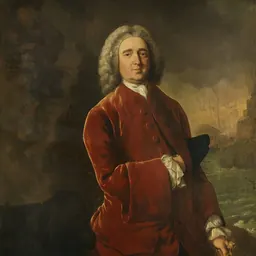
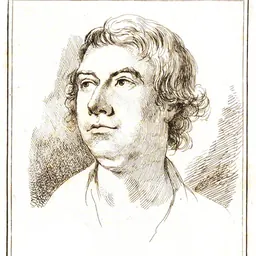
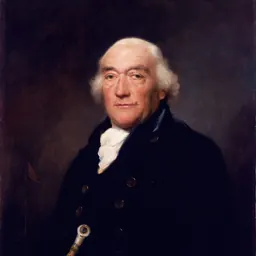

Related people
Same field, nearest in time



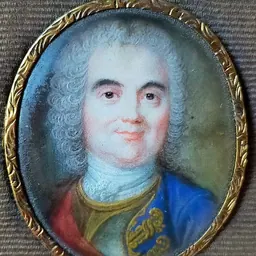
Contemporaries
People whose lives overlapped Charles Brown's



Frequently asked questions
Who was Charles Brown?
officer of the Royal Navy, born 1678
When was Charles Brown born?
Charles Brown was born in 1678.
When did Charles Brown die?
Charles Brown died on 23 March 1753.
What was Charles Brown's occupation?
Charles Brown was a naval officer, military officer and commander.
What nationality was Charles Brown?
Charles Brown was British.
Sources & further reading
· DBpedia: Charles Brown (Royal Navy officer)
Cite this page
APA: Biography.guide. (2026). Charles Brown. https://biography.guide/charles-brown-naval-officer/
MLA: "Charles Brown." Biography.guide, https://biography.guide/charles-brown-naval-officer/.
Chicago: "Charles Brown." Biography.guide. https://biography.guide/charles-brown-naval-officer/.
Data last updated: 2026-09-20 · Spot an error? Report a correction.
Page generated 2026-09-27 05:33 UTC