
About Charles Augustus Tulk
Lived 1786 – 1849 (aged 62–63). Charles Augustus Tulk was a British politician.
Charles Augustus Tulk (1786–1849) was an English Swedenborgian and politician.
Life The eldest son of John Augustus Tulk, he was born at Richmond, Surrey, on 2 June 1786. His father, a man of independent fortune, was an original member of the Theosophical Society formed (December 1783) by Robert Hindmarsh for the study of Emanuel Swedenborg's writings. Tulk was educated at Westminster School, of which he became captain, and was noted for his singing in the abbey choir. He was elected a king's scholar in 1801, and matriculated as a scholar at Trinity College, Cambridge, in 1806.
Reaching age 21 in 1807, Tulk had settled on him part of his father's estate in the area of Leicester Square in London. He sold the garden in the Square in 1808; forty years later this action led to the leading case Tulk v Moxhay on restrictive covenants. Leaving university, he began to read for the bar, and entered Lincoln's Inn. and then moved to Totteridge Park in Hertfordshire.
Tulk never joined the New Church or had any connection with its conference. After leaving Cambridge he rarely attended public worship, but conducted a service in his own family, using no prayer but the paternoster. He became connected with the "Hawkstone meeting", projected by George Harrison, translator of many of Swedenborg's Latin treatises, fostered by John Clowes and held annually in July for over fifty years from 1806, in an inn at Hawkstone Park, Shropshire. Tulk presided in 1814, and at intervals till 1830.
Tulk was an active county magistrate for Middlesex (1836–47), and took special interest in the management of prisons and asylums, acting (1839–47) as chairman of committee of the Hanwell asylum. He was an opponent of capital punishment. He also associated with Samuel Taylor Coleridge, whom he met at Littlehampton in 1817; Tulk was one of the recognised group of close disciples, with Thomas Allsop, Henry Francis Cary, John Hookham Frere and Joseph Henry Green. Coleridge's letters to Tulk are a source for his developed thoughts on a system of nature. In 1818 Tulk involved Coleridge in his political agitation, leading up to the Cotton Mills, etc. Act 1819; Tulk offered funding for a pamphlet, and Coleridge wrote several.
Tulk was a patron of William Blake, and took Coleridge to see one of Blake's pictures. Blake made drawings for Tulk, now untraced. When Allan Cunningham's Life of Blake appeared, there was an anonymous review sympathetic to Blake in the London University Magazine; Tulk has been suggested as the author, by Geoffrey Keynes and others. Elizabeth Barrett Browning learned something of Blake through knowing Tulk.
Last years In 1847 Tulk went to Italy, returning in the autumn of 1848. He died at 25 Craven Street, London, on 16 January 1849, and was buried in Brompton cemetery.
Works Tulk contributed for some years to the Intellectual Repository, started in 1812 under the editorship of Samuel Noble. His separate publications were: The Leicester Square property was divided seven ways among the children, and some remained in the family until 1947.
Don’t just read it —
keep it.
Full-length biographies made to live with: read them, listen on the way to work, watch them tonight.
- E-book
- Audio
- Video
Instant download · yours to keep · every purchase keeps this site free
Important facts
People in Charles Augustus Tulk's life
Named in this biography and alive at the same time

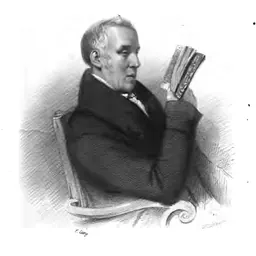
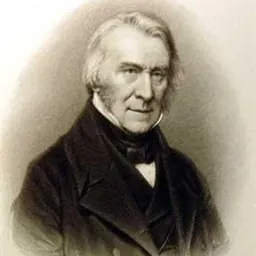



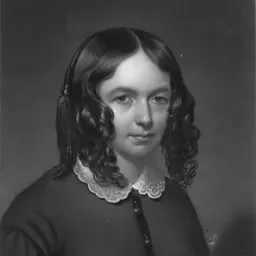
Related people
Same field, nearest in time

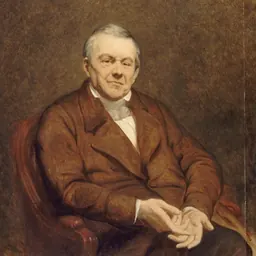
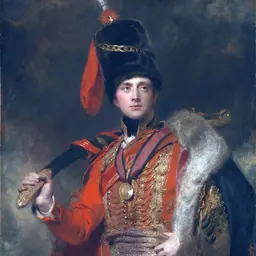
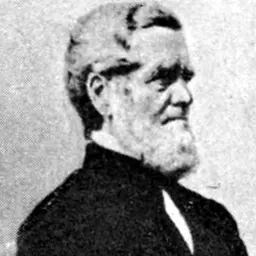
Contemporaries
People whose lives overlapped Charles Augustus Tulk's
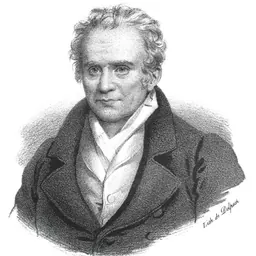

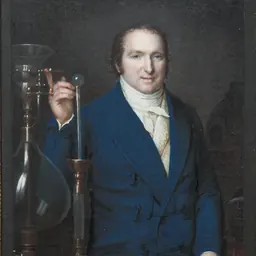
Frequently asked questions
Who was Charles Augustus Tulk?
British politician
When was Charles Augustus Tulk born?
Charles Augustus Tulk was born in 1786.
When did Charles Augustus Tulk die?
Charles Augustus Tulk died in 1849.
What was Charles Augustus Tulk's occupation?
Charles Augustus Tulk was a politician.
What nationality was Charles Augustus Tulk?
Charles Augustus Tulk was British.
Sources & further reading
· Wikipedia: Charles Augustus Tulk
· DBpedia: Charles Augustus Tulk
Cite this page
APA: Biography.guide. (2026). Charles Augustus Tulk. https://biography.guide/charles-augustus-tulk/
MLA: "Charles Augustus Tulk." Biography.guide, https://biography.guide/charles-augustus-tulk/.
Chicago: "Charles Augustus Tulk." Biography.guide. https://biography.guide/charles-augustus-tulk/.
Data last updated: 2026-09-20 · Spot an error? Report a correction.
Page generated 2026-09-27 05:11 UTC