
About Chancellor Williams
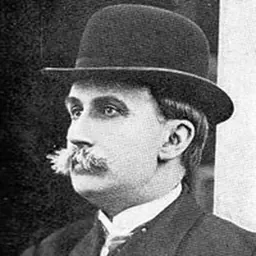
Lived 1893 – 1992 (aged 98). Chancellor Williams was an American historian, writer, sociologist and novelist.
Chancellor Williams (December 22, 1893 – December 7, 1992) was an American sociologist, historian and writer. He is known for his work on African civilizations prior to encounters with Europeans; his most notable work is The Destruction of Black Civilization (1971/1974), which is popular in Afrocentric circles.
Early life, migration, and education Williams was born on December 22, 1893, in Bennettsville, South Carolina, United States, as the last of five children. His father had been born into slavery and had grown up to gain freedom and voting rights after the American Civil War. His mother, Dorothy Ann Williams, worked as a cook, nurse, and evangelist. The family suffered after Democrats regained power in the state legislature in the late 19th century and passed bills disfranchising black citizens, as well as imposing racial segregation and white supremacy under Jim Crow. Williams' curiosity about racial inequality and cultural struggles, particularly those of African Americans, began as early as his fifth-grade year. Encouraged by a sixth-grade teacher, he sold The Crisis, published by the National Association for the Advancement of Colored People (NAACP); and The Norfolk Journal and Guide, as well as reading them and using their recommended books to direct his studies.
Years later, he was quoted in an interview as saying:
I was very sensitive about the position of black people in the town... I wanted to know how you explain this great difference. How is it that we were in such low circumstances as compared to the whites? And when they answered 'slavery' as the explanation, then I wanted to know where we came from.
As part of the Great Migration out of the rural South, the Williams family moved to Washington, DC, in 1910. His father hoped for more opportunity there, especially in education, and Williams graduated from Armstrong Technical High School. Williams' mother died in 1925, leaving his father a widower. All their children were grown by then.
After working for a while, Williams entered college at Howard University, a historically black college. He earned an undergraduate degree in education in 1930, followed by a master's degree in history in 1935. After completing a doctoral dissertation on the socioeconomic significance of the storefront church movement in the United States since 1920, he was awarded a Ph.D. in sociology by American University in 1949. The following year, the book received an award from the Black Academy of Arts and Letters (BAAL), founded in New York in 1969. Williams asserted the validity of the Black Egyptian hypothesis and that Ancient Egypt was predominantly a black civilization. Williams' central thesis is that Egypt, particularly Upper Egypt constituted the Northern boundary of a larger Ethiopian empire rooted in Napata and Kerma. Further, Williams asserts the king Narmer unifies Upper and Lower Egypt by compelling political unity among 'Asiatics' then resident in the Nile Delta. He further asserts in Chapter III, Egypt: The Rise and Fall of Black Civilization, that the name "Egyptian" becomes a referent to the children of Africans and Asians who reside throughout the country, rather than to either Africans or Asiatics residing at the respective ends of the Nile Valley and beyond (p. 103).
Death Williams died of respiratory failure on December 7, 1992, aged 98, at Providence Hospital in Washington, DC. He had been a resident of the Washington Center for Aging Services for several years. He was survived by his wife of 65 years, Mattie Williams of Washington, and 14 children; 36 grandchildren; 38 great-grandchildren; and 10 great-great-grandchildren.
Books The Raven: A Novel of Edgar Allan Poe (1943) And If I Were White, Shaw Publications (1946) Have You Been to the River?, Exposition Press (1952) Problems in African History, Pencraft Books (1964) The Rebirth of African Civilization (1961); revised edition, introduction by Baba Zulu, United Brothers and Sisters Communications Systems (reprint 1993), The Destruction of Black Civilization: Great Issues of a Race Between 4500 B.C. and 2000 A.D. (1971/1974/1987), , scanned version online The Second Agreement with Hell Carlton Press (1979)
Legacy and honors 1972: award from Black Academy of Arts and Letters
Don’t just read it —
keep it.
Full-length biographies made to live with: read them, listen on the way to work, watch them tonight.
- E-book
- Audio
- Video
Instant download · yours to keep · every purchase keeps this site free
Important facts
People in Chancellor Williams's life
Named in this biography and alive at the same time

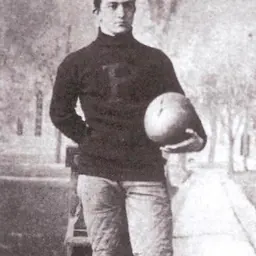




Related people
Same field, nearest in time
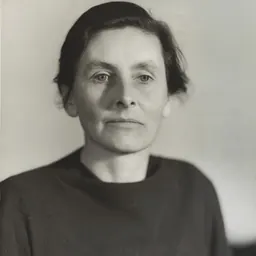
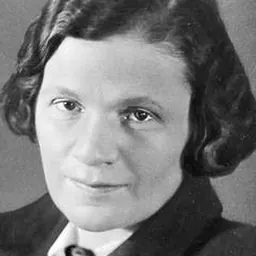
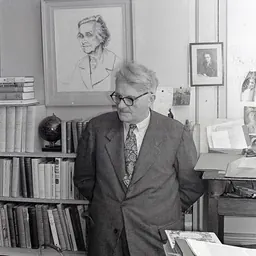
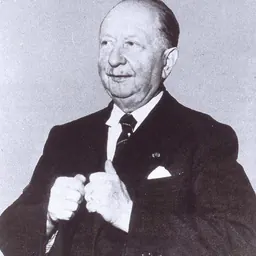
Contemporaries
People whose lives overlapped Chancellor Williams's
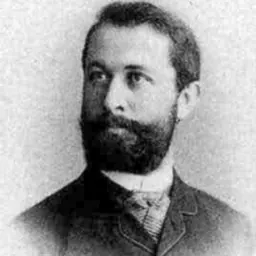

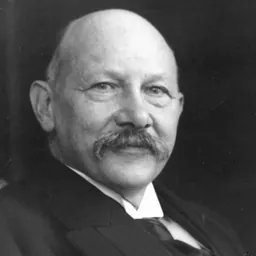
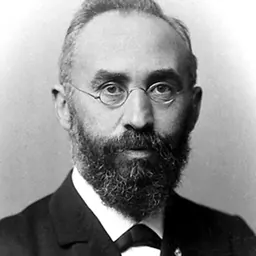

Frequently asked questions
Who was Chancellor Williams?
American historian and writer (1893–1992)
When was Chancellor Williams born?
Chancellor Williams was born on 22 December 1893 in South Carolina.
When did Chancellor Williams die?
Chancellor Williams died on 7 December 1992 in Washington, D.C..
What was Chancellor Williams's occupation?
Chancellor Williams was a historian, writer, sociologist and novelist.
What nationality was Chancellor Williams?
Chancellor Williams was American.
Sources & further reading
· Wikipedia: Chancellor Williams
· DBpedia: Chancellor Williams
Cite this page
APA: Biography.guide. (2026). Chancellor Williams. https://biography.guide/chancellor-williams/
MLA: "Chancellor Williams." Biography.guide, https://biography.guide/chancellor-williams/.
Chicago: "Chancellor Williams." Biography.guide. https://biography.guide/chancellor-williams/.
Data last updated: 2026-09-20 · Spot an error? Report a correction.
Page generated 2026-09-27 05:10 UTC