
Catherine Mulgrave
Angolan-Jamaican Moravian educator and missionary
About Catherine Mulgrave
Lived 1827 – 1891 (aged 63). Catherine Mulgrave was an Angolan and Jamaican missionary, educator and school administration, known for Christian ministry and Women's empowerment.
Catherine Elisabeth Mulgrave also Gewe (19 November 1827 – 14 January 1891) was an Angolan-born Jamaican Moravian pioneer educator, administrator and missionary who accompanied a group of 24 Caribbean mission recruits from Jamaica and Antigua and arrived in the Danish Protectorate of Christiansborg, now Osu, Accra in Ghana in 1843. Mulgrave was a leading figure in pedagogy and the education programme for girls in both Jamaica and on the Gold Coast. Some scholars such as the Swiss German church historian, Hans Werner Debrunner posited that Mulgrave may have been born earlier in around 1825 or in 1826. Other records list 1820 and 1822. The slave traders arrived in a small boat with some sailors and attempted to lure the three children with sweets. One child managed to run away before she could be captured into the boat. After a few weeks, land came into view. British colonial authorities patrolling the high seas inspected the ship but they did not discover the slaves who were hidden in a basement. The captain of the ship with his crew of kidnappers were arrested by the British authorities in Jamaica and jailed in Kingston as the system of slavery was already in the early phase of abolishment. The "apprenticeship act", granting immediate and full freedom to children six years of age and younger, and an intermediate status for those older, was also enacted 1833, kicking off the step-by-step abolishment of the system of slavery in Jamaica. The Earl of Mulgrave was created Marquess of Normanby in 1835 and was styled as Constantine Henry Phipps, 1st Marquess of Normanby. In the first few months at the Governor's official residence in Spanish Town, they were home-schooled by the Governor's wife who was a devout Christian, most likely of Anglican faith. There were theological similarities between the Basel Mission and the Moravian Church due to their shared Lutheran heritage. The Basel mission group that came to Jamaica also included missionary, Johann Georg Widmann, Americo-Liberian and first African Basel missionary, George Peter Thompson as well as Riis’ wife, Anna Wolters Riis. The founding schoolteachers were George Thompson, Catherine Mulgrave and young Jamaican teacher, Alexander Worthy Clerk who was part of the same group of 24 Moravian Caribbean emigrants who had earlier arrived in April 1843. Salem's school curriculum was rigorous: It included English and Ga languages, arithmetic, geography, history, religious knowledge, nature study, hygiene, handwriting and music. The Danes sold their forts to the British in 1850. Pupils were trained in practical skills such as vinegar making, soap making, starch and flour production. Born in 1819, Thompson was orphaned as a child, he was taken to Europe by the Basel missionary, the Rev. J. F. Sessing. He was raised in a Beuggen mission house in Baden-Wurttemberg, Germany, from where the Pietist movement originated. Thompson had been educated as a mission assistant in Basel Mission training school and seminary in Basel, Switzerland. In the legal documentation for separation, it was recorded that she first filed for divorce and as stipulated by the mission won full custody of the children and could remarry if she desired.
On 5 June 1851, Johannes Zimmermann married Catherine Mulgrave. Thus, Zimmermann became a local missionary on the Gold Coast for the next twenty-two years. In 1852, Johannes Zimmermann set up catechist-training seminary at Christiansborg.
Zimmermann and Mulgrave made the Gold Coast their home. They had six children but only five, two daughters and three sons lived to adulthood. Their first child, Johanna was born in 1852. The second child, Johannes was born 1854. Their second daughter, Auguste Amalia, born in Christiansborg in 1858, was named after August and Amalie Steinhauser, a German missionary couple. Auguste Amalia was educated in Wurttemberg, Germany and became a teacher at the Basel Mission Girls’ Boarding School at Aburi. Between 1889 and 1892, she was a mission teacher at the Christiansborg Girls’ School. Mulgrave's son Gottfried, born in Odumase in 1861, later became an employee of the Basel Mission. Their last child Christoph was born in 1866. In 1871, Mulgrave's two eldest sons Johannes and Gottfried were sent to the mission house in Basel. Auguste Zimmermann was twice married to mission merchants. She first married Josua Leuze, a merchant with the company called Victor in 1883. Leuze joined the NMG in 1885 and was transferred to the Basel Mission in 1886 where he worked until his death in 1888. She then married the Basel missionary, Oskar Thal in 1892, becoming widowed for the second time in 1896. She returned to Germany and died in Korntal in 1923.
Johannes Zimmermann's dream of creating a Germano-African agricultural settlement in Abokobi never came to fruition although his descendants still live in Ghana. Additionally, his own children and brother, Christoph, also married African spouses. A few Mulgrave-Zimmermann's descendants are still in Germany as some of their children remained in Gerlingen and Korntal after the death of Zimmermann.
Later years
Missionary-wife
Mulgrave continued to manage the girls’ at Christiansborg she founded. She was later transferred to be a housemistress of a new girls’ boarding school in the same town. Upon the suggestion of Basel missionaries in Christiansborg, Mulgrave started a prayer meeting for women in Christiansborg in 1854. She also ran the missionary household which included her mentee, a Euro-African teacher, Regina Hesse and Zimmermann's Euro-African linguist assistant as well as their children. As the household matriarch, she was lauded for her culinary skills, specialising in cuisine from the Gold Coast, Germany and Jamaica. They often invited their neighbours to their home to share her freshly baked pancakes.
After the 1854 bombardment of Christiansborg by the H. M. S. Scourge, following the riots against the British poll tax ordinance, Zimmermann sought refuge at the Methodist mission house in Accra. Together with his family and students, he was evacuated to Abokobi, inland from Accra where, with the assistance of another missionary, August Steinhauser, he set up a small Christian village community. At Abokobi, Catherine Mulgrave established a girls’ boarding school before staying briefly at Akropong. In 1858, the Zimmermann-Mulgrave household returned to Christiansborg and Catherine became a missionary wife again and resumed leading the weekly women's prayer meetings, usually held on Tuesday evening. Catherine Mulgrave gained respect from other missionary wives like Amalie Steinhauser who was on friendly terms with her. Mrs. Steinhauser had within that period lost her husband, the Basel missionary, August Steinhauser. Catherine and Amalie jointly paid regular house visits to women congregants of the church in Christiansborg.
Mulgrave challenged the edict of two European unmarried teachers who were co-heads at the girls’ boarding school, Wilhelmine Maurer and Katharina Ruedi who wanted to abolish the social system where pupils helped their teachers in doing household chores. In 1860, Mulgrave and her husband were posted to Odumase, where once again she started a girls’ boarding school. At Odumase, they lived in the heart of the town as they wanted to be closer to the indigenous people.
Controversies In 1871, the wife of missionary Klaiber died suddenly and Catherine Mulgrave was accused by the missionary of poisoning his wife. Another missionary, Weber also accused Zimmerman of financial irregularities, pertaining to disbursement of mission funds. Senior missionaries appointed by the Basel board exonerated them. From 1860s onwards, the Home Committee softened its stance and attempted to recall him for furlough in order to be re-socialised into European culture but like Jon Miller's “strategic deviant” concept, he rebuffed these calls. The Basel board felt he had become ‘too Africanised’ due to his marriage to Mulgrave and long stay on the Gold Coast.
Life in Europe In 1870s, Catherine's husband began to have bouts of exhaustion and illness. In the spring of 1872, he went to Gerlingen with his whole family to recuperate for a year. On their return to the Gold Coast in 1873, they lived and worked at Abokobi until 1876, when they moved to Christiansborg. Shortly thereafter, Zimmermann fell ill again, and returned to Gerlingen, Germany with Catherine Mulgrave via Basel, Switzerland in September 1876, where he died at the end of the same year, on 13 December 1876, at the age of fifty-one. Accompanied by her three younger children, Mulgrave then returned to the Gold Coast in the spring of 1877 as a missionary widow and lived at Christiansborg, her longtime adopted home, until her death, fourteen years later, in 1891.
Final years She then permanently settled in Christiansborg where she continued to be active in women's evangelism and the women's class, visiting its members in their homes to share the Gospel. As a missionary, she witnessed the death-bed conversion and baptism of a former houseboy of Andreas Riis.
Death and legacy Catherine Mulgrave died of pneumonia in Christiansborg on 14 January 1891 and her body was buried at the Basel Mission Cemetery in Osu, Accra. Commenting on her pioneering role in women's empowerment through education and evangelisation in a largely patriarchal environment, the Gold Coast historian and Basel Mission pastor, Carl Christian Reindorf described her as “our spiritual mother.” Many of her pupils went on to become Christian wives to new African Christians who formed the nucleus of the emerging clergy and catechist class of the Gold Coast. Her second marriage also reflected the successful symbiosis of cultures, in this case, African-Caribbean and European, as well as religious traditions, Pietist and Jamaican Moravian which created a “golden bridge” for intercultural relations, in spite of a rigid or absolute system that separated the living arrangements of the two groups in nineteenth century colonial Ghana.
Don’t just read it —
keep it.
Full-length biographies made to live with: read them, listen on the way to work, watch them tonight.
- E-book
- Audio
- Video
Instant download · yours to keep · every purchase keeps this site free
Important facts
Family & relationships
People in Catherine Mulgrave's life
Named in this biography and alive at the same time
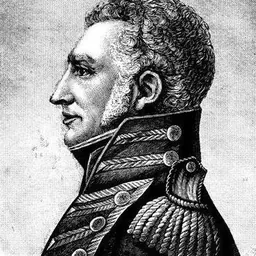

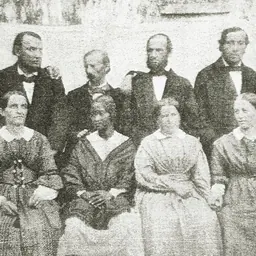
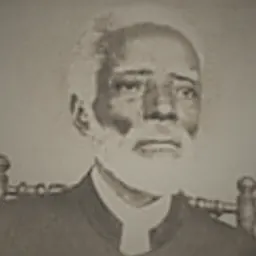


Related people
Same field, nearest in time
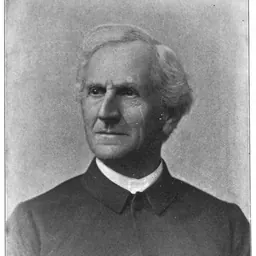


Contemporaries
People whose lives overlapped Catherine Mulgrave's





Frequently asked questions
Who was Catherine Mulgrave?
Angolan-Jamaican Moravian educator and missionary
When was Catherine Mulgrave born?
Catherine Mulgrave was born on 19 November 1827 in Luanda.
When did Catherine Mulgrave die?
Catherine Mulgrave died on 14 January 1891 in Accra, Gold Coast (British colony).
What was Catherine Mulgrave's occupation?
Catherine Mulgrave was a missionary, educator and school administration.
What was Catherine Mulgrave known for?
Catherine Mulgrave was known for Christian ministry and Women's empowerment.
What nationality was Catherine Mulgrave?
Catherine Mulgrave was Angolan and Jamaican.
Sources & further reading
· Wikipedia: Catherine Mulgrave
Cite this page
APA: Biography.guide. (2026). Catherine Mulgrave. https://biography.guide/catherine-mulgrave/
MLA: "Catherine Mulgrave." Biography.guide, https://biography.guide/catherine-mulgrave/.
Chicago: "Catherine Mulgrave." Biography.guide. https://biography.guide/catherine-mulgrave/.
Data last updated: 2026-09-22 · Spot an error? Report a correction.
Page generated 2026-09-27 05:25 UTC