
About Alexander Worthy Clerk
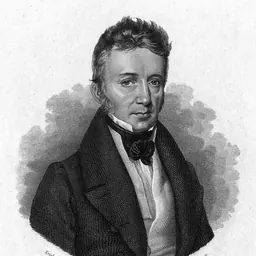
Lived 1820 – 1906 (aged 85). Alexander Worthy Clerk was a Jamaican missionary.
Alexander Worthy Clerk (4 March 1820 He was part of the first group of 24 West Indian missionaries from Jamaica and Antigua who worked under the aegis of the Basel Evangelical Missionary Society of Switzerland. Caribbean missionary activity in Africa fit into the broader "Atlantic Missionary Movement" of the diaspora between the 1780s and the 1920s. Shortly after his arrival in Ghana, the mission appointed Clerk as the first Deacon of the Christ Presbyterian Church, Akropong, founded by the first Basel missionary survivor on the Gold Coast, Andreas Riis in 1835, as the organisation's first Protestant church in the country. In 1848, Clerk was an inaugural faculty member at the Basel Mission Seminary, Akropong, now known as the Presbyterian College of Education, where he was an instructor in Biblical studies. The college is the second oldest higher educational institution in early modern West Africa after Fourah Bay College in Freetown, Sierra Leone which was established in 1827. A. W. Clerk was also the progenitor of the historically important Clerk family from the suburb of Osu in Accra.
Early life and education
Alexander Worthy Clerk was born on 4 March 1820 on Fairfield Plantage near Spur Tree, Manchester Parish under British colonial rule. Little is known of Clerk's parentage and childhood other than his parents were Jamaican Christians. He was the third son among five brothers and four sisters. In 1833, when Alexander Clerk was about thirteen years old, the "apprenticeship act", granting immediate and full freedom to children six years of age and younger, and an intermediate status for those older, was enacted. Zorn was also a missionary of the London-based Missions of the Church of the United Brethren and its sister organisation, The Brethren's Society for the Furtherance of the Gospel. The Jamaican branch of the Moravian Church, which had its early beginnings in 1754, had by then been in the West Indies for nearly hundred years. As part of his classical education, Clerk also studied languages: German, Latin, Greek and Hebrew. The training institute was established by Zorn at the behest of the Moravian mission leadership to prepare young Jamaican men for Christian evangelism, catechism and the propagation of the Gospel in the West Indies after the abolishment of slavery in the British Empire in 1834 A. W. Clerk maintained correspondence with his English benefactor when he later worked on the Gold Coast as a teacher-missionary.
Missionary activities on the Gold Coast
Historical context
Early accounts indicate that the Moravian Church in Herrnhut in Saxony, Germany, recruited an inhabitant of the Gold Coast in 1735 and trained him in the arts and philosophy at the University of Copenhagen. However, on his return to the Gold Coast, the man found out that he could barely speak his mother tongue. European missionaries who operated in the Caribbean, Latin America and Southeast Asia were also infected with dengue fever. A group of Christian Protestants from the Lutheran Moravians and other sister Reformed Churches in Germany and Switzerland founded the German Missionary Society in 1815 as "the result of a pledge taken by a few dedicated Christians at Basel in the face of a military threat." "If God would spare their city, they pledged to begin a seminary for the training of missionaries," the Christian believers asserted. They envisioned working with established missionary societies already operating in "unevangelized areas" in the world. For a decade and half, the chaplain's station at the Christiansborg Castle had remained vacant. They were skilled tradesmen with practical training experience in pottery, carpentry, shoe-making, masonry, joinery, hat-making and black-smithing. Five weeks after their arrival, the medical doctor who was supposed to take care of the health needs of the other two missionaries died of malaria on 26 April 1832. The Rev. P. P. Jager also died on 18 July 1832. Stranger died on Christmas Eve in 1837 and Riis' own infant died at the close of 1838. Riis had become the symbol of hope for the evangelical revival in the missionary work. The Jamaicans were essentially a bridge to share the Gospel with the Gold Coast natives while connecting with their ancestral and cultural roots in Africa. While in Accra, half of the group stayed with Lutterodt while the rest of the West Indians stayed in the home of another Euro-African called Yestrop. in Antigua
In addition, the West Indians were accompanied by an Angolan-born, Jamaican-raised school teacher named Catherine Mulgrave, also from Fairfield who was the bride of George Peter Thompson and became the Headmistress of the then Danish-run Christiansborg Castle School in Osu, Accra, which was taken over by the Basel Mission. Riis also had the Rev. Johann Georg Widmann, a German clergyman as his assistant. They also had donkeys, horses, mulls and other animals and agricultural seeds and cuttings such as mango seedlings which they were going to introduce to the Gold Coast economy. Other tropical seedlings brought by the West Indian missionaries include cocoa, coffee, breadnut, breadfruit, guava, yam, cassava, plantains, cocoyam, variety of banana species and pear. Cocoyam, for example, is now a Ghanaian staple.
Mission enterprise at Akropong
Majority of the West Indians relocated to Akropong from Frederiksgave between 17 and 18 June 1843. Based on an 1851 headcount, 25 out of the total 31 Christians at Akropong were West Indian. According to historical archives,"...the mission took steps to secure farming land for the West Indian families that decided to stay. The mission purchased land near Adami for the Miller and the Hall families and at Adobesum on the road to Amanprobi for the Mullings and Rochester families. Land was secured for the Clerk family in Aburi at a place called Little Jamaica today." The Gold Coast historian, Carl Christian Reindorf was ordained six weeks later on 13 October 1872. This ceremony was the beginning of ordination of local pastors for mission work. in Freetown, Sierra Leone. At the seminary, Clerk was given a new role as an instructor of Biblical studies. Some of these Jamaican slaves were possibly of Asante origin as per some oral narratives, and from the middle belt of present-day Ghana, while others originated from the Ghanaian coastal corridor, largely populated by Gas and Fantes. Later on, many slaves were also taken from Igbo and Yoruba communities in modern-day Sierra Leone and Nigeria. Pauline Hesse's paternal grandfather, Dr. Lebrecht Wilhelm Hesse, was an eighteenth-century Danish physician of German ethnicity. One of her schoolteachers was Catherine Mulgrave, the Basel Mission's first woman educator on the Gold Coast. The Christiansborg Castle School, opened in 1722, was very similar to the Cape Coast Castle School established by the Anglican vicar, the Reverend Thompson and the Society for the Propagation of the Gospel in Foreign Parts (SPG) affiliated to the Church of England Danish was the medium of instruction at the Christiansborg School. Mɔ ni ji Kristo kaselɔ - All you that follow Jesus Christ (PHB 528), translated from a German hymn, originally written by the Swiss-Italian Pietist theologian and hymn composer, Hieronymus Annoni (1697 – 1770)
Death and legacy Clerk died of natural causes on 11 February 1906, at age 85 at his home, Fairfield House, in Aburi, 20 miles (32 km) north of Accra. He was buried at the old Basel Mission Cemetery near the Aburi Botanical Gardens in Aburi. The names of Alexander Clerk and his son Nicholas Clerk appear on a commemorative plaque in the sanctuary of the Ebenezer Presbyterian Church, Osu, listing pioneering missionaries of the church, in recognition of their contributions to formal education and the growth of the Presbyterian faith in Ghana. In the sanctuary of the Christ Presbyterian Church, Akropong, a tablet memorialises the life and work of Alexander W. Clerk and his Caribbean compatriots, Joseph Miller, John Hall, John Rochester, James Mullings, John Walker, James Green and Antiguan Jonas Horsford.
In addition to increased access to education, A. W. Clerk and other Basel Mission and West Indian missionaries were also instrumental in the expansion of hospitals, social welfare programs, medical services or healthcare as well as the development of infrastructure including roads and the growth of commerce and agriculture to support church mission activities. Other second generation descendants of the Jamaicans who were instrumental in strengthening the country's educational foundations laid by their Caribbean forebears include John Powell Rochester, Timothy Mullings, Henry Hall, James Hall, Caroline Clerk, Patrick Clerk, Charles Clerk, Rose Ann Miller and Emil Miller. An individual named John Clerk (the older) had his two children, James Shaw Clerk and Mary Ann Clerk baptised on 21 November 1793 at St. James, Trelawny in the county of Cornwall, Jamaica. Other members of this family were Fanny, Richard Brian and John Clerk (the younger), all christened on 30 August 1798 in Hanover, Jamaica.
Don’t just read it —
keep it.
Full-length biographies made to live with: read them, listen on the way to work, watch them tonight.
- E-book
- Audio
- Video
Instant download · yours to keep · every purchase keeps this site free
Important facts
Family & relationships
People in Alexander Worthy Clerk's life
Named in this biography and alive at the same time


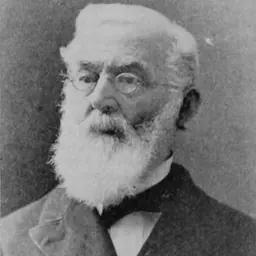
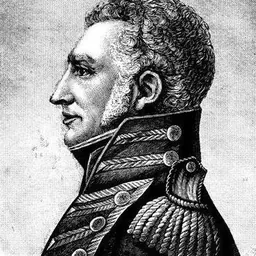


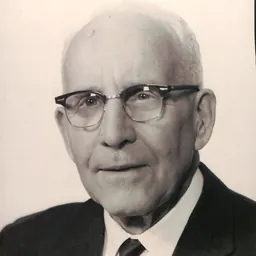
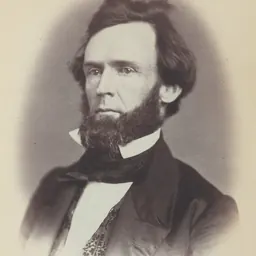
Related people
Same field, nearest in time
Contemporaries
People whose lives overlapped Alexander Worthy Clerk's




Frequently asked questions
Who was Alexander Worthy Clerk?
Jamaican Moravian educator and missionary
When was Alexander Worthy Clerk born?
Alexander Worthy Clerk was born on 4 March 1820 in Jamaica, Jamaica Province of the Moravian Church, Manchester Parish.
When did Alexander Worthy Clerk die?
Alexander Worthy Clerk died on 11 February 1906 in Aburi.
What was Alexander Worthy Clerk's occupation?
Alexander Worthy Clerk was a missionary.
What nationality was Alexander Worthy Clerk?
Alexander Worthy Clerk was Jamaican.
Sources & further reading
· Wikipedia: Alexander Worthy Clerk
· DBpedia: Alexander Worthy Clerk
Cite this page
APA: Biography.guide. (2026). Alexander Worthy Clerk. https://biography.guide/alexander-worthy-clerk/
MLA: "Alexander Worthy Clerk." Biography.guide, https://biography.guide/alexander-worthy-clerk/.
Chicago: "Alexander Worthy Clerk." Biography.guide. https://biography.guide/alexander-worthy-clerk/.
Data last updated: 2026-09-20 · Spot an error? Report a correction.
Page generated 2026-09-27 05:22 UTC