
About Carolyn Parker
Lived 1917 – 1966 (aged 48). Carolyn Parker was an American physicist and university teacher, known for Dayton Project.
Carolyn Beatrice Parker (November 18, 1917 – March 17, 1966) was a research physicist and educator whose scientific contributions helped expand our understandings of physics and aircraft radio technologies during WWII. After obtaining her undergraduate degree at Fisk University, in 1938, Parker taught at public schools in Florida before attending the University of Michigan to earn a M.A. in physics in 1941. From 1943 to 1947, Parker contributed to the war effort by working in the Aircraft Radio Laboratory and subsequently returned to Fisk University as an assistant professor. In 1949, Parker enrolled as a doctoral student at MIT but switched to a masters program. She graduated with her M.S. in physics in 1951. She died at the age of 48, in 1966. Today, Parker is celebrated in biographical dictionaries, various blogs, newspapers, and social media post for being the first African-American woman known to have obtained a postgraduate degree in physics. Also, there are scholarships and facilities named in her honor such as Carolyn Beatrice Parker Elementary School and Carolyn Beatrice Parker Park in Gainesville, Florida.
Early life Carolyn Beatrice Parker was born in Gainesville, Florida, on November 18, 1917, to Delia Ella Murrell Parker and Julius Augustus Parker. Her mother had trained and worked as an elementary school teacher. Her father served the African American community as a physician and pharmacist. Dr. Parker obtained his degrees from Fisk University and Meharry Medical College, an historically Black medical school established to train African-Americans. Parker grew up in a two-story family home (inherited from her grandfather who also worked as a physician) with her grandmother (Eliza Parker), parents and siblings. During her time as a research physicist in the Aircraft Radio Laboratory at Wright Field in Dayton, Ohio. She took courses in electrical engineering and physics in Ohio State University's Graduate Center at Wright Field, a joint program between the US Army Air Forces and the university.
Career Parker began her career, in 1938, as an educator in Florida's segregated public school system. As documented in the Black Teacher Archives and by other historians, African American teachers worked in segregated schools but had their own professional organizations and infrastructures for supporting their student's success. During her first year, she worked at Rochelle elementary school were her mother also worked and then joined the faculty at Lincoln High School in 1939. At the time, Lincoln was one of two accredited high schools for African American students in Florida. After a year, Carolyn left Lincoln to further her education. Parker aided in this schools mission by teaching eight grade and coaching girls' basketball. After one academic year, she began teaching on the collegiate level in West Virginia. However, her time at Bluefield State was short lived as she joined the war effort in March 1943. Carolyn was assigned to the radio and radar subdivision of the engineering division located in the Aircraft Radio Laboratory at Wright Field. She worked with Chandler Stewart Jr. an electrical engineer and Army corps member. Their project focused on improving the testing procedures for radio antenna, specifically coaxial cables, on the airplanes to ensure the sound quality was clear, with limited noise, and interference. Carolyn co-authored a paper with Stewart entitled: A method of measuring attenuation of short lengths coaxial cable. A method of measuring the radio frequency resistance of wires , and Electrical testing of coaxial radio-frequency cable connectors. Stewart also applied and received a patent for their work (US Patent No. 2,459,197). The exact reason why Carolyn did not co-author these subsequent publications or patent remains unknown but may be a result of race and gender politics in the United States. The Fermi National Accelerator Laboratory, located in Batavia, Illinois established the Carolyn B. Parker Fellowship for the Superconducting Quantum Materials and System Center.
In 2025, during the International Year of Quantum Physics, an award-winning essay was written to honor her legacy and draw connections to other African American physicists that came after her.
Don’t just read it —
keep it.
Full-length biographies made to live with: read them, listen on the way to work, watch them tonight.
- E-book
- Audio
- Video
Instant download · yours to keep · every purchase keeps this site free
Important facts
People in Carolyn Parker's life
Named in this biography and alive at the same time

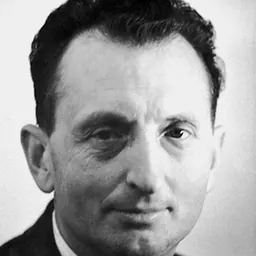
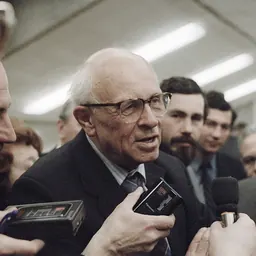
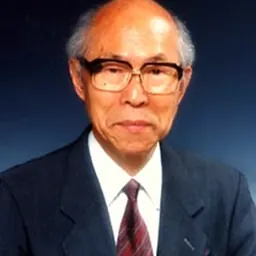
Related people
Same field, nearest in time

Contemporaries
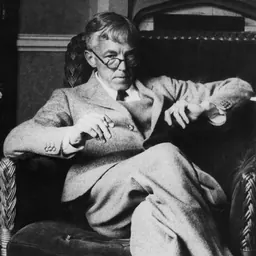
People whose lives overlapped Carolyn Parker's

Frequently asked questions
Who was Carolyn Parker?
American physicist
When was Carolyn Parker born?
Carolyn Parker was born on 18 November 1917 in Gainesville.
When did Carolyn Parker die?
Carolyn Parker died on 17 March 1966 in Gainesville.
What was Carolyn Parker's occupation?
Carolyn Parker was a physicist and university teacher.
What was Carolyn Parker known for?
Carolyn Parker was known for Dayton Project.
What nationality was Carolyn Parker?
Carolyn Parker was American.
Sources & further reading
Cite this page
APA: Biography.guide. (2026). Carolyn Parker. https://biography.guide/carolyn-parker/
MLA: "Carolyn Parker." Biography.guide, https://biography.guide/carolyn-parker/.
Chicago: "Carolyn Parker." Biography.guide. https://biography.guide/carolyn-parker/.
Data last updated: 2026-09-20 · Spot an error? Report a correction.
Page generated 2026-09-27 05:23 UTC